Best Sleeping Positions During Pregnancy: A Trimester-by-Trimester Guide
Best Sleeping Positions During Pregnancy: A Trimester-by-Trimester Guide
Getting comfortable in bed is one of the most common struggles expectant mothers face, and the "right" sleeping position actually shifts as pregnancy progresses. What feels fine in month two can feel impossible by month eight. Here's a trimester-by-trimester breakdown of the best sleeping positions during pregnancy, along with how a wedge pillow can help you adapt as your body changes.
Why Sleep Position Matters During Pregnancy
Sleep position affects more than just comfort. As your body changes, certain positions can:
- Reduce pressure on your back, hips, and joints
- Support healthy blood flow to you and your baby
- Minimize common discomforts like heartburn, swelling, or shortness of breath
- Help you actually fall and stay asleep
Because comfort needs evolve throughout pregnancy, it helps to know what to expect (and adjust for) at each stage.
First Trimester: Most Positions Are Still Comfortable
In the early weeks, your bump likely isn't large enough yet to significantly limit your sleep positions. Back, side, or even stomach sleeping (if it was your habit before) are generally still comfortable during this stage.
What to focus on instead:
- Managing early pregnancy symptoms like nausea or fatigue that can affect sleep quality
- Starting to build side-sleeping habits early, since this is generally the most recommended position later on
- Using a small pillow between the knees if you're already noticing hip discomfort
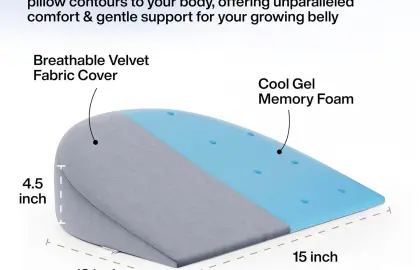
Wedge pillow tip: Even in the first trimester, tucking a wedge pillow behind your back or between your knees can help you get used to side-sleeping before it becomes a necessity later on.
Second Trimester: Side-Sleeping Becomes More Important
As your belly grows and your center of gravity shifts, side-sleeping — particularly on the left side — is generally the most recommended position during this stage and beyond. Left-side sleeping is often favored because it can support healthy blood flow to the uterus, placenta, and baby, though sleeping on either side is generally considered fine.
Common discomforts at this stage:
- Lower back ache from postural changes
- Hip discomfort, especially with side-sleeping on a firm mattress
- Early belly pressure when lying flat
Wedge pillow tip: Placing the wedge under your belly while side-sleeping helps take pressure off your abdomen and lower back. You can also try it between your knees to keep your hips aligned and reduce joint strain.
Third Trimester: Side-Sleeping With Extra Support
By the third trimester, back-sleeping is generally advised against for extended periods, since the weight of the growing uterus can press on major blood vessels and potentially affect circulation and blood pressure. Side-sleeping especially on the left remains the go-to recommendation.
Common discomforts at this stage:
- Significant belly weight causing pressure while side-sleeping
- Increased lower back and hip pain
- Difficulty staying in one position through the night
- Heartburn or shortness of breath when lying flat
Wedge pillow tip: This is often when a wedge pillow becomes most valuable. Try:
- Under the belly for direct support and pressure relief
- Behind the back to discourage rolling onto your back during sleep
- Under the hips for additional pelvic support
- Propped slightly to elevate the upper body if heartburn or shortness of breath is an issue
Many mothers find they need to reposition the wedge multiple times during the night as discomfort shifts — which is one of the advantages of a compact, easy-to-move pillow over a larger, fixed-position body pillow.
What If You Wake Up on Your Back?
It's common to shift positions unconsciously during sleep, and many mothers worry about waking up on their back later in pregnancy. If this happens occasionally, it's generally not a cause for alarm — simply roll back onto your side. Using a wedge pillow behind your back can help reduce how often this happens by making it physically less comfortable to roll backward.
General Tips for Better Pregnancy Sleep
- Layer your support. Combining a wedge pillow with your regular pillow setup often works better than relying on just one.
- Adjust throughout the night. Don't hesitate to reposition the wedge as your comfort needs shift there's no need to stay locked into one setup.
- Elevate if needed. If heartburn or breathlessness is an issue, propping the upper body slightly can help, especially in the third trimester.
- Stay consistent. Building a side-sleeping habit early, even before it's medically necessary, can make the transition smoother as your bump grows.
- Listen to your body. Comfort is individual use these guidelines as a starting point, not a strict rule, and adjust based on what actually helps you sleep.
When to Talk to Your Doctor
If you're experiencing persistent difficulty sleeping, significant pain, or symptoms like swelling, dizziness, or shortness of breath that concern you, it's worth discussing with your doctor or midwife. They can offer guidance specific to your pregnancy and rule out anything that needs closer attention.
Final Thoughts
Your ideal sleep position will naturally evolve as your body changes throughout pregnancy, and there's no single "perfect" setup that works for everyone. A wedge pillow's versatility supporting the belly, back, hips, or knees depending on how you position it makes it a practical tool for adapting to those changes night by night, helping you find more restful, comfortable sleep at every stage.
Latest Posts