Complete Guide to DVT Pumps: Benefits, Uses, and How They Prevent Blood Clots
DVT Pumps: What They Are, How They Work, and Who Needs One
Deep vein thrombosis (DVT) is a serious but often preventable condition. One of the most widely used tools for reducing its risk both in hospitals and at home is the DVT pump, also known as a sequential compression device (SCD) or intermittent pneumatic compression (IPC) device. Here's a complete guide to understanding what these devices do, how they work, and who typically benefits from using one.
What Is a DVT Pump?
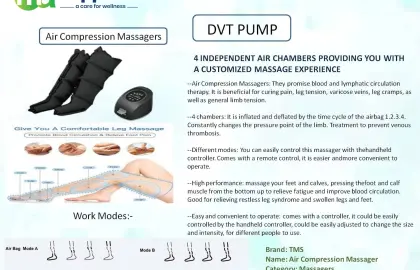
A DVT pump is a medical device that uses inflatable sleeves, usually wrapped around the calves, thighs, or feet, to apply gentle, rhythmic pressure to the legs. This pressure mimics the natural muscle contractions that occur during walking, helping to keep blood moving through the veins and back toward the heart.
The system typically consists of two parts:
- A pump unit the machine that generates and controls air pressure
- Compression sleeves or garments inflatable wraps that fit around the legs and connect to the pump via tubing
How Do DVT Pumps Work?
DVT pumps work through a process called intermittent pneumatic compression. The pump inflates the sleeves in a sequential pattern, usually starting at the ankle and moving upward toward the thigh, applying pressure and then releasing it in a repeating cycle.
This sequential squeezing action does a few key things:
- Promotes venous blood flow By compressing the veins, the device pushes pooled blood upward, reducing the chance it will stagnate and clot.
- Reduces venous stasis Blood that sits still in the veins for long periods (common during bed rest, surgery recovery, or long-haul travel) is more prone to clotting. Compression keeps circulation active.
- Supports the body's natural clot-prevention mechanisms Improved circulation also helps the body clear clotting factors more efficiently.
Most DVT pumps cycle every 30 to 60 seconds and can be used continuously for extended periods, such as overnight or throughout a hospital stay.
Who Needs a DVT Pump?
DVT pumps are commonly recommended for people who are at elevated risk of developing blood clots due to reduced mobility or other risk factors, including:
- Post-surgical patients especially after orthopedic, cardiac, or abdominal surgery, when mobility is limited during recovery
- Hospitalized patients on bed rest reduced movement significantly increases clot risk
- People with limited mobility due to injury or chronic illness
- Individuals with a history of DVT or pulmonary embolism to help lower the risk of recurrence
- People with certain risk factors such as obesity, cancer, pregnancy, or clotting disorders
- Long-distance travelers some portable DVT pump models are used preventively during extended flights or car trips
Hospitals frequently use DVT pumps as a standard precaution for surgical and bedridden patients, and many patients continue using a home device during recovery on a doctor's recommendation.
Benefits of Using a DVT Pump
1. Non-Invasive Clot Prevention Unlike blood-thinning medications, DVT pumps work mechanically, offering a non-drug option for reducing clot risk often used alongside medication for higher-risk patients.
2. Reduces Swelling and Improves Circulation Beyond clot prevention, the compression action can help reduce leg swelling (edema) and improve overall circulation, which can ease discomfort during recovery.
3. Convenient for Home Use Many DVT pumps today are compact and designed for home use, allowing patients to continue therapy after leaving the hospital without needing to stay in a clinical setting.
4. Comfortable, Adjustable Compression Modern devices allow for adjustable pressure settings and cycle timing, so therapy can be tailored to comfort level and medical need.
Choosing the Right DVT Pump
When selecting a DVT pump, a few factors are worth considering:
- Coverage area Some devices compress just the calf, while others cover the calf and thigh, or even the foot.
- Portability Home-use models vary in size and portability; some are designed for easy use during travel or daily mobility.
- Pressure and cycle settings Adjustable settings can help match the device to individual comfort and medical requirements.
- Sleeve material and fit Comfortable, breathable sleeve material matters for long or overnight use.
A Note on Medical Guidance
DVT pumps are typically prescribed or recommended by a physician based on individual risk factors, medical history, and recovery needs. This article is intended for general educational purposes and isn't a substitute for personalized medical advice always consult a healthcare provider before starting or adjusting DVT prevention therapy.
Final Thoughts
DVT pumps offer a simple, effective, and non-invasive way to help reduce the risk of dangerous blood clots, particularly for those recovering from surgery or dealing with limited mobility. Understanding how these devices work can help patients and caregivers feel more confident about incorporating them into a recovery or prevention plan, in partnership with their healthcare provider.
Latest Posts