
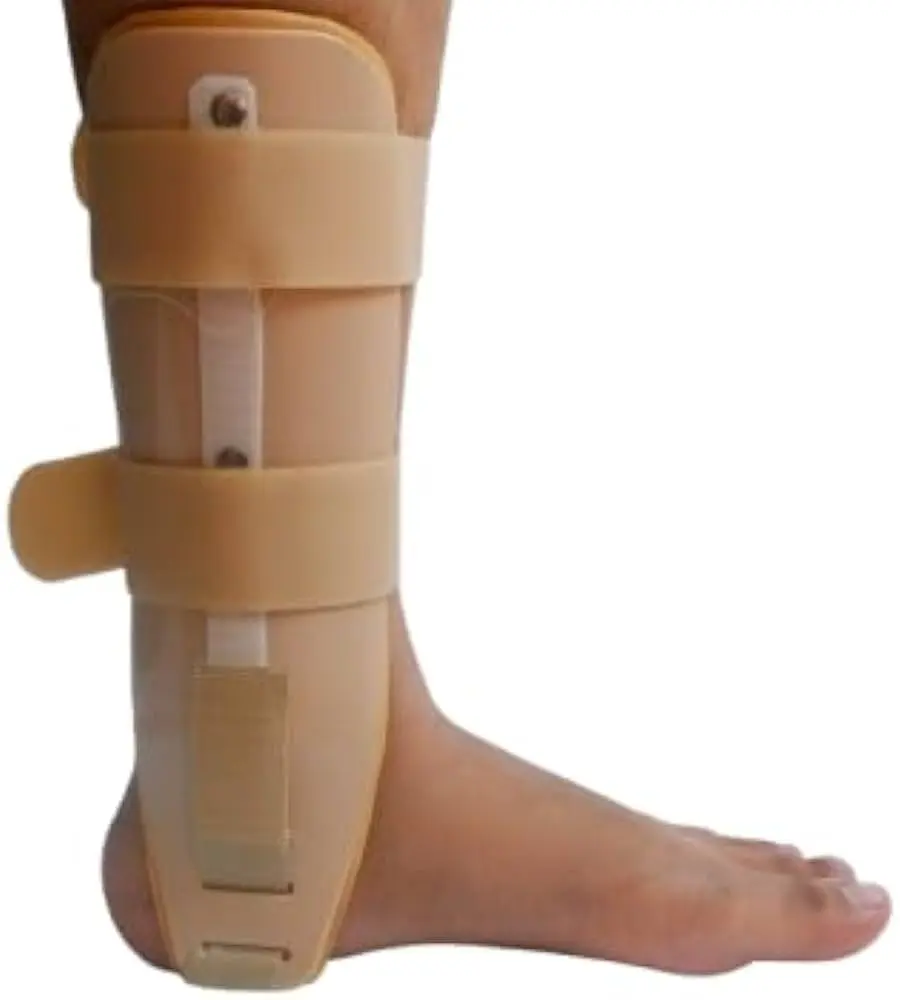
Ankle Brace
Features
- Medial & Lateral Ligament Support for Inversion & Eversion Control
- Enhanced Proprioceptive Feedback for Neuromuscular Stability
- Adjustable Lace-Up & Strap Closure for a Customised, Secure Fit
- Clinically Recommended for Grade I & II Ankle Sprains
- Semi-Rigid Shell for Superior Inversion Velocity Reduction
- Slim, Low-Profile Design for Standard Footwear Compatibility
- Breathable, Moisture-Wicking Lining for All-Day Comfort
Ankle Brace Evidence-Based Ankle Support for Sprain Treatment, Chronic Instability Management & Sports Injury Prevention
The Ankle Brace is a clinically designed, semi-rigid ankle support engineered to address the full spectrum of ankle injury presentations from the initial management of acute lateral ankle sprains through to the long-term control of chronic ankle instability and the prophylactic protection of high-risk athletes during training and competition. Combining targeted mechanical joint support with enhanced proprioceptive feedback, a secure and adaptable closure system, and an activity-compatible slim profile, this ankle brace delivers a clinically proven, practically versatile solution for one of the most common musculoskeletal injuries affecting both the general population and sporting community.
The Clinical Burden of Ankle Sprains & Instability
Ankle sprains are among the most frequently occurring musculoskeletal injuries worldwide, affecting athletes and non-athletes alike across a wide range of sports and everyday activities. What is often underestimated, however, is the significant proportion of acute ankle sprains that progress to a chronic condition. Approximately 32% to 47% of ankle sprain patients progress to functional ankle instability after the initial injury, and once functional ankle instability is confirmed, patients often fall into a vicious cycle of sprains, instability, and re-sprains. Without effective management, this cycle carries serious long-term consequences: long-term repetitive sprains can lead to degenerative ankle joint disease such as ankle osteoarthritis in 78% of these patients, severely limiting physical activity and quality of life. The ankle brace is a primary clinical tool for interrupting this cycle protecting the healing ligament complex during acute recovery and providing the ongoing mechanical and neuromuscular support that prevents recurrence.
Mechanical Protection: How the Ankle Brace Works
The semi-rigid construction of the ankle brace provides direct mechanical restraint against the inversion and eversion forces that drive lateral and medial ankle ligament injuries. Braces reduce inversion velocities and secure more time for the surrounding muscles to counteract the movement and stabilise the ankle joint actively buying critical milliseconds that allow the peroneal muscles to fire a protective response before damaging ligament strain occurs. This mechanical deceleration of injurious movement is particularly significant during high-demand activities such as sports cutting manoeuvres, uneven terrain walking, and landing from height, where the speed and magnitude of destabilising forces routinely exceed the ankle's unassisted protective capacity in individuals with ligament laxity or neuromuscular deficits.
Key features of effective ankle braces include support for high ankle sprains, improved inversion and eversion control, reduced foot slippage, calcaneus support, incremental adjustability, and enhanced comfort, support, and stability for the wearer a comprehensive feature set that this ankle brace delivers through its semi-rigid shell, adjustable dual-closure system, and anatomically contoured fit.
Proprioception: The Neurological Dimension of Ankle Brace Effectiveness
The clinical benefit of ankle bracing extends beyond purely mechanical joint restriction. The ankle brace applies consistent tactile pressure to the skin and subcutaneous soft tissues surrounding the ankle, stimulating the mechanoreceptors Ruffini endings, Meissner's corpuscles, and Golgi tendon organs that provide the central nervous system with real-time information about joint position and movement velocity. This enhanced proprioceptive input improves the quality and speed of the neuromuscular protective responses that the body generates in response to destabilising forces effectively training the ankle's intrinsic protective mechanism to become more responsive and reliable during functional activities. A subsequent systematic review concluded that the body of available research strongly supports the positive effect of ankle braces on dynamic balance in those with chronic ankle instability validating proprioceptive enhancement as a genuine and clinically meaningful mechanism of brace effectiveness, not merely a secondary benefit.
Clinical Evidence: Sprain Prevention, Treatment & Return to Sport
The evidence base supporting ankle brace use is robust and clinically compelling. All major clinical guidelines recommend ankle braces for the treatment of Grade I and II ankle sprains and for the prevention of recurring sprains reflecting a broad international consensus that bracing is a first-line, evidence-graded intervention for the most prevalent ankle injury presentations. A randomised controlled trial involving athletes with a history of lateral ankle sprain found that bracing was more effective than neuromuscular training alone in preventing recurrence a finding that underscores the unique mechanical contribution of the brace to injury prevention, over and above the benefits of rehabilitation exercise alone. For patients approaching return to sport, by providing a sense of stability during early return to running or sport-specific drills and allowing graded exposure to higher-risk movements, a brace can help an individual move more naturally, reducing the hesitant or protective patterns that often persist long after the physical injury has resolved addressing the psychological as well as physical dimension of rehabilitation.
Design for Daily Compliance & Athletic Performance
The clinical effectiveness of an ankle brace is only realised if it is worn consistently and consistent wear requires a brace that is comfortable, practical, and compatible with the user's daily activities and footwear. The slim, low-profile design of this ankle brace fits inside most standard athletic and everyday footwear without creating pressure points or requiring specialist shoes. The breathable, moisture-wicking inner lining maintains wearing comfort across extended periods and high-intensity activities. The adjustable lace-up and strap closure system allows rapid, independent fitting without clinical assistance supporting the self-management and daily compliance that are essential for achieving the full therapeutic benefit of ankle bracing across the acute, subacute, and return-to-activity phases of rehabilitation.
Indicated For:
Acute lateral ankle sprains (Grade I and II), medial ankle sprains, chronic ankle instability, functional ankle instability, post-sprain rehabilitation and return to sport, prophylactic ankle protection in high-risk sports (basketball, football, volleyball, trail running, racket sports), post-cast rehabilitation following ankle fracture, peroneal tendon pathology, mild ankle osteoarthritis, and oedema management in the sub-acute ankle injury phase.
أضف مراجعتك
لن يتم نشر عنوان بريدك الإلكتروني. الحقول المطلوبة مميزة بـ *
الرجاء تسجيل الدخول لكتابة مراجعة!
يبدو أنه لا توجد مراجعات بعد.

M. A. Medical Supports