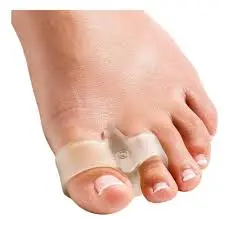
Buddy Finger Toe Sperator
Features
- Soft Foam Interdigital Padding for Skin Protection During Buddy Immobilisation
- Dual Application: Clinically Effective for Both Fingers & Toes
- Prevents Interdigital Skin Maceration, Intertrigo & Pressure Sores
- Hallux Valgus & Foot Deformity Conservative Management
- Neurological Foot & Hand Management: Post-Stroke & Cerebral Palsy Applications
- Reusable, Washable, Hygienic & Skin-Safe Foam Construction
- Applicable Across a Broad Spectrum of Finger, Toe & Foot Conditions
Buddy Finger Toe Separator Soft Foam Interdigital Spacer for Buddy Immobilisation, Hallux Valgus, Neurological Digit Management & Interdigital Skin Protection
The Buddy Finger Toe Separator is a purpose-designed soft foam interdigital spacer serving dual clinical roles across both hand and foot care: as an essential padding component within buddy immobilisation systems for digital fractures, sprains, and post-surgical management, and as a standalone therapeutic spacer for hallux valgus correction, hammer toe management, neurological digit positioning, and interdigital skin protection. Constructed from soft, skin-safe, moisture-resistant foam that conforms comfortably to the individual contours of the interdigital space, the buddy separator addresses the most universal practical challenge of digit-to-digit immobilisation preventing the skin maceration, friction injury, and interdigital moisture accumulation that develop when adjacent digits are held together without adequate interpositioned padding while simultaneously providing the passive corrective or protective force that its broader clinical applications demand.
The Fundamental Problem: Why Interdigital Padding Is Clinically Essential
Buddy taping the technique of securing an injured finger or toe to its uninjured neighbour is one of the simplest, most widely used, and clinically most effective first-line interventions for stable digit fractures, interphalangeal joint sprains, and minor ligament injuries across both the hand and foot. The healthy adjacent digit provides mediolateral stability, controlled motion guidance, and alignment support that effectively substitutes for a rigid external splint in presentations where some controlled movement is clinically preferred over complete immobilisation. The clinical literature consistently supports buddy taping as a safe, effective primary management strategy across this broad indication spectrum with 87% of surgeons using buddy taping across indications including finger fractures, MCP and PIP joint injuries of the hand, toe fractures, metatarsal fractures, and PIP joint injuries of the foot.
However, the clinical effectiveness and patient tolerability of buddy taping are both critically dependent on adequate interdigital padding between the secured digits. Without padding, direct skin-to-skin contact between the taped digits creates a microenvironment of sustained pressure, friction, moisture accumulation, and thermal insulation that rapidly progresses from mild discomfort to frank skin maceration, maceration-related ulceration, fungal intertrigo, and bacterial interdigital infection complications that are both clinically significant in their own right and among the most common reasons patients remove their buddy taping prematurely, exposing the incompletely healed injury to the mechanical forces that drive malunion, ligament re-injury, and chronic instability.
The buddy separator eliminates these complications by providing a consistent, reliably positioned, appropriately sized foam spacer that maintains a dry, cushioned, friction-free interface between the adjacent digits throughout the entire wearing period replacing the improvised gauze and cotton wool that clinical instructions traditionally recommend with a purpose-engineered, reusable, anatomically designed foam product that maintains its spacer function and skin-protective properties across the extended wearing periods that fracture healing and post-surgical digital management require.
Buddy Taping for Toes: Clinical Protocol & Separator Application
Toe buddy taping follows a well-defined clinical protocol that places the separator as its central protective element. The injured toe is positioned adjacent to its healthy neighbour, with the buddy separator placed firmly into the interdigital web space between the two digits before taping is applied ensuring that at no point during the wearing period do the two skin surfaces come into direct contact. Medical tape is then applied around both toes proximal to the PIP joint and distal to the MCP joint, avoiding circumferential taping over the bony prominences of the knuckles that would create pressure-related skin injury securing the buddy arrangement while leaving the separator in position as a permanent component of the immobilisation construct.
Clinical guidance emphasises checking circulation after taping pushing a fingertip against the toes and confirming that colour returns within two seconds and changing the tape and separator padding at least once daily and any time it becomes wet, to maintain the hygienic skin environment that effective buddy immobilisation requires. The buddy separator facilitates this daily tape change by providing a stable, repositionable foam spacer that can be removed with the old tape and replaced cleanly with fresh tape without losing its shape or cushioning properties between applications.
Hallux Valgus: The Most Prevalent Foot Deformity Indication
Among its standalone therapeutic applications, the buddy separator's most clinically significant role is in the conservative management of hallux valgus the progressive medial deviation of the first metatarsal and lateral deviation of the hallux at the first metatarsophalangeal (MTP) joint that produces the characteristic bunion deformity affecting a substantial proportion of the adult population, with higher prevalence in women and increasing incidence with advancing age. The insole with toe separator significantly decreased pain intensity in hallux valgus patients and was a good option for pain reduction a finding that validates the clinical utility of interdigital separation as a therapeutic intervention in its own right, operating through the mechanism of applying a gentle passive abduction force to the hallux that reduces the lateral deviation at the MTP joint, offloads the medial eminence from footwear contact pressure, and improves the mechanical alignment of the forefoot during the stance and push-off phases of the gait cycle.
The buddy separator's soft foam construction applies this corrective abduction force gently and continuously during both weight-bearing and rest, without generating the discomfort that rigid hallux valgus splints can produce during dynamic foot loading in footwear making it an effective and practically accessible conservative intervention for the daily management of hallux valgus pain and deformity across the broad population of patients who cannot tolerate or do not yet require surgical correction.
Hammer Toe, Crossover Toe & Lesser Digital Deformities
For lesser digital deformities including hammer toe, mallet toe, claw toe, and crossover toe the buddy separator provides the interdigital cushioning that prevents the painful interdigital corns, calluses, and pressure ulcers that develop where adjacent deformed digits press against each other during ambulation and footwear use. Non-operative treatments including shoe modifications, metatarsal pads, toe separators, and protective sleeves are recommended for managing lesser toe deformities to prevent painful calluses positioning the buddy separator as a first-line conservative protective measure that reduces footwear-related pain and skin breakdown without requiring surgical correction of the underlying deformity.
Neurological Applications: Stroke, Cerebral Palsy & Spastic Digit Management
In neurological rehabilitation settings, the buddy separator addresses the specific interdigital skin protection challenges that arise when spastic flexion and adduction of the toes or fingers cause the digits to curl into positions of sustained interdigital contact. In patients with post-stroke spastic foot, cerebral palsy lower limb involvement, and traumatic brain injury lower extremity spasticity, the curled, adducted toe posture creates precisely the warm, moist, compressed interdigital environment that drives maceration, intertrigo, and ulceration complications that are particularly serious in neurologically impaired patients who may lack the sensory awareness to detect early skin breakdown in the interdigital spaces. The buddy separator, placed between the compressed toes, creates the interdigital clearance needed to allow air circulation, moisture evaporation, and skin monitoring a simple but clinically impactful intervention in the comprehensive skin integrity management programme of neurologically impaired patients.
Dermatological Applications: Intertrigo, Tinea Pedis & Diabetic Foot Protection
In dermatological and podiatric practice, the buddy separator has important applications in the management of interdigital tinea pedis (athlete's foot), interdigital intertrigo, and diabetic foot interdigital protection. The warm, moist interdigital web spaces of the foot particularly in patients with narrow toe boxes, foot deformities, or reduced foot hygiene capacity are the primary anatomical sites of fungal and bacterial interdigital infection. By maintaining interdigital separation and promoting air circulation and moisture evaporation in the web spaces, the foam buddy separator reduces the microenvironmental conditions that support fungal colonisation and interdigital skin breakdown serving as a passive environmental modification tool that complements topical antifungal treatment and footwear advice in the comprehensive management of interdigital skin conditions.
Product Specifications, Materials & Care
The buddy finger toe separator is manufactured from medical-grade, hypoallergenic, closed-cell foam that is soft enough to conform comfortably to the interdigital contour without generating pressure, firm enough to maintain its spacer geometry and interdigital separation function under the compressive forces of footwear and digital taping, and moisture-resistant enough to resist the perspiration and interdigital fluid exposure inherent in the interdigital environment. The foam is fully washable with mild soap and warm water, allowing daily cleaning that maintains hygienic performance throughout extended courses of use a significant practical advantage over single-use gauze and cotton wool padding that must be replaced at every tape change. The separator is available in sizing configurations appropriate for both finger and toe web spaces, accommodating the range of digit sizes encountered in paediatric through adult clinical practice.
Indicated For:
Buddy immobilisation of stable, non-displaced finger and toe fractures, PIP and MCP joint sprains and ligament injuries of the hand and foot, post-reduction toe dislocation management, hallux valgus interdigital padding and MTP joint abduction force application, hammer toe and lesser digital deformity interdigital corn and callus prevention, crossover toe management, post-surgical digital care for finger and toe procedures, neurological spastic digit positioning and interdigital skin protection in stroke, cerebral palsy and traumatic brain injury, interdigital tinea pedis and intertrigo management, diabetic foot interdigital protection, and any clinical application requiring consistent, hygienic, comfortable interdigital separation between adjacent fingers or toes.
أضف مراجعتك
لن يتم نشر عنوان بريدك الإلكتروني. الحقول المطلوبة مميزة بـ *
الرجاء تسجيل الدخول لكتابة مراجعة!
يبدو أنه لا توجد مراجعات بعد.

M. A. Medical Supports