
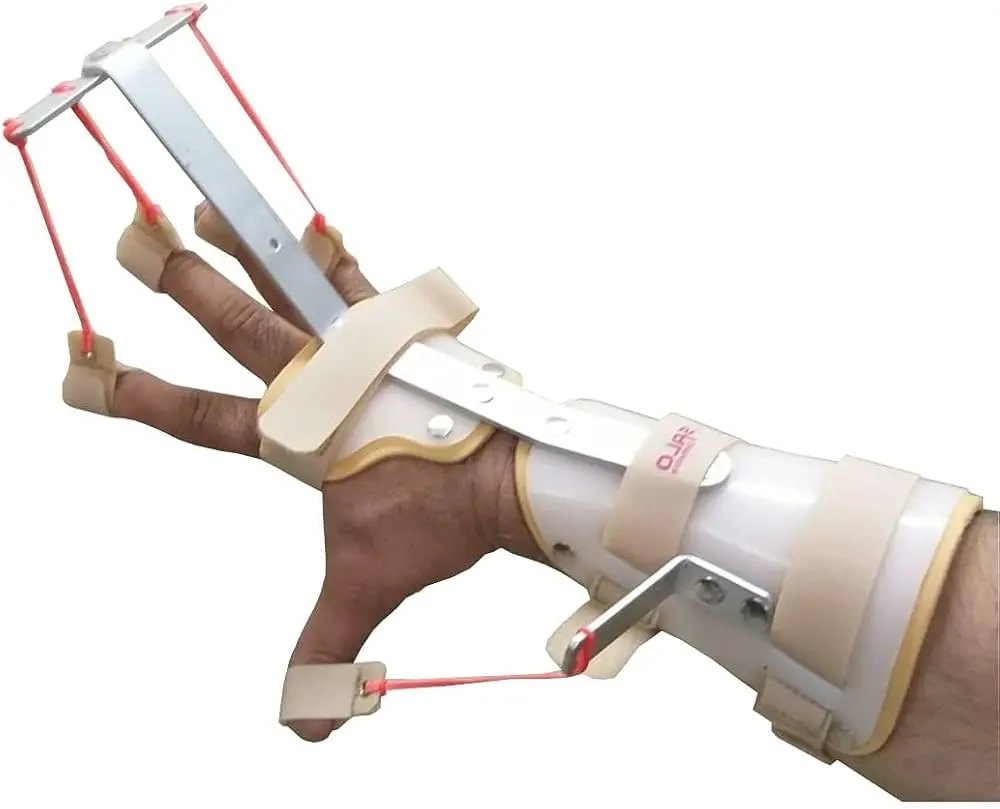
Dynamic Extension Splint
Features
- Dynamic Traction Force for Passive Prolonged Extension Stretch
- Spring-Loaded Outrigger System for Independent Finger & MCP Joint Extension
- Thermoplastic Volar Forearm Base for Stable Wrist Positioning
- Clinically Effective for Post-Traumatic, Post-Surgical & Neurological Contractures
- Adjustable Traction Tension for Progressive, Graduated Contracture Correction
- Enables Functional Grasp-Release Therapy During Wear
- Lightweight, Low-Profile Design for Extended Therapeutic Wear Compliance
Dynamic Extension Splint Spring-Loaded Hand Orthosis for Finger & Wrist Extension Contracture, Post-Stroke Spasticity & Hand Therapy Rehabilitation
The Dynamic Extension Splint is a clinically designed hand and wrist orthosis that delivers continuous, calibrated traction forces to the finger and wrist joints through a spring-loaded or elasticated outrigger system providing the passive, prolonged-duration extension stretch that is the evidence-supported gold standard intervention for the progressive reduction of hand and wrist flexion contractures across a wide spectrum of post-traumatic, post-surgical, and neurological clinical presentations. Unlike static splints that hold joints in a fixed position without applying corrective traction, the dynamic extension splint maintains a consistent low-load extensional force at the end range of the available motion actively driving the viscoelastic elongation of contracted periarticular structures and generating measurable, cumulative gains in passive and active extension range of motion with each wearing session.
The Biomechanical Rationale for Dynamic Extension Splinting
The fundamental biological principle underlying dynamic extension splinting is the low-load prolonged duration stretch (LLPS) the application of a gentle, sustained traction force maintained over extended periods to achieve progressive tissue elongation through viscoelastic creep and collagen remodelling, in contrast to the brief, high-force stretching that generates micro-tearing, inflammation, and paradoxical scar formation. Prolonged stretching has been shown to have a significant effect on connective tissue in molecular examination and clinical trials at the cellular level, sustained low-load stretch drives the gradual reorganisation of disordered collagen cross-links within contracted scar and capsular tissue, elongating the fibrous matrix and increasing the functional extensibility of the shortened structure over time.
The dynamic splint operationalises this principle through its spring or rubber band outrigger system maintaining a precisely calibrated traction force at the patient's end range of extension throughout the wearing session, so that the tissue remains under sustained therapeutic load throughout the entire treatment duration rather than for the brief seconds of manual stretching that physiotherapy sessions can deliver. This extended tissue loading time is the critical factor that produces the structural tissue changes and therefore the lasting range of motion gains that distinguish effective contracture management from temporary, session-dependent mobility improvements that dissipate between treatment appointments.
Construction & Mechanical Design
The dynamic extension splint consists of two primary structural components that work in mechanical partnership. The volar forearm base is a custom heat-moulded thermoplastic shell that conforms to the palmar and volar forearm surface, positioning the wrist at the clinician-prescribed extension angle and providing a stable, anatomically accurate anchor for the entire outrigger mechanism. The precise wrist angle set within the base is clinically significant the appropriate wrist position optimises the length-tension relationship of the extrinsic finger flexors, maximising the extensional traction delivered at the finger joints by the outrigger system and determining the overall effectiveness of the corrective force system.
The dynamic outrigger is the spring or elastic component extending from the forearm base over the dorsum of the hand, from which finger slings or cuffs are suspended and attached to the dorsal surface of each targeted phalanx. The spring tension or elastic resistance of these attachments generates the traction force that is transmitted through the sling to the individual finger segment applying a dorsally directed force that passively extends the finger at the targeted joint level. The outrigger is positioned at the correct angle to ensure that the traction force is directed at 90 degrees to the proximal phalanx at the MCP joint the angle at which the corrective traction is most efficient and the perpendicular component of the force is maximised, minimising the compressive joint loading that occurs when the sling angle deviates from 90 degrees.
Clinical Applications: Post-Traumatic & Post-Surgical Hand Rehabilitation
In hand trauma and surgical rehabilitation, the dynamic extension splint addresses the finger and wrist flexion contractures that are among the most common and functionally disabling complications of hand injuries and surgical procedures. Following distal radius fractures, wrist flexion contracture is a common pathology and dynamic splinting employs passive, prolonged stretching which has proven responsible for contracture reduction, with the initial effect of dynamic splinting on wrist extension demonstrated in both surgical and non-surgical patients following distal radius fractures making it a clinically justified and evidence-supported adjunct to the post-fracture rehabilitation programme.
Following flexor tendon repair, the dynamic extension splint provides the passive extension assistance needed to maintain the repaired tendon at the appropriate tension for healing while simultaneously preventing the joint stiffness that would otherwise develop during the protected mobilisation phase. In Dupuytren's contracture management following needle aponeurotomy or surgical fasciectomy, the dynamic extension splint maintains the corrected finger extension achieved through the procedure opposing the tendency of the residual palmar fascia and skin to retract back towards the pre-operative position during the healing and scar maturation phase.
Following burn injuries involving the palmar surface and fingers, the dynamic extension splint is a critical component of scar contracture prevention maintaining the web spaces in maximum abduction and the fingers in extension during the scar maturation period, directly opposing the contractile forces of the maturing hypertrophic scar that would otherwise rapidly draw the fingers into a functionally devastating claw posture.
Neurological Applications: Spasticity & Post-Stroke Hand Rehabilitation
In neurological upper limb rehabilitation, the dynamic extension splint serves a fundamentally different but equally important clinical role. For patients with upper limb spasticity following stroke, traumatic brain injury, or cerebral palsy, the flexed finger and wrist posture that results from increased flexor tone creates both the musculoskeletal contracture risk of prolonged positioning and the functional barrier to voluntary hand opening and object release that severely limits upper limb rehabilitation progress. The splint features a dynamic component that promotes gentle stretching and extension of your fingers and wrist, reducing muscle stiffness and contractures by maintaining the proper alignment of your hand, it encourages neuroplasticity, aiding in the rewiring of your brain after injury positioning the dynamic extension splint as both a musculoskeletal protection device and a neurological rehabilitation tool.
The capacity of the dynamic splint to enable functional grasp-release activity during wear is particularly valuable in this neurological context. By positioning the fingers in extension between voluntary flexion episodes, the splint allows the patient to practice repetitive grasp and release the mass practice of task-oriented movement that drives the neuroplastic cortical reorganisation underpinning motor recovery after neurological injury. This transformation of the splint from a passive positioning device into an active functional rehabilitation tool significantly elevates its clinical value in the neurological hand rehabilitation programme beyond what any static splint can deliver.
Wearing Schedule, Progression & Outcome Monitoring
The recommended wearing schedule for the dynamic extension splint is typically six to eight hours per day divided between therapeutic wearing sessions during rest periods and overnight use where the degree of contracture and patient tolerance permit. The traction tension is advanced progressively at each clinical review as the available range of motion improves, maintaining the splint consistently at the patient's new end range to sustain the corrective traction effect across the full course of treatment. Range of motion measurements passive extension range, total active motion, and tip-to-palm distance are documented at each review to objectively track treatment progress, guide tension adjustments, and determine the appropriate endpoint of dynamic splinting therapy.
Indicated For:
Post-traumatic finger and wrist flexion contracture, distal radius fracture rehabilitation, flexor tendon repair and adhesion management, Dupuytren's contracture post-procedural management, palmar burn scar contracture prevention and correction, MCP and PIP joint stiffness following hand surgery or prolonged immobilisation, post-stroke finger flexor spasticity and contracture, traumatic brain injury upper limb spasticity management, cerebral palsy hand deformity management, boutonnière deformity correction, and any clinical presentation requiring progressive passive extension traction at the finger and wrist joints.
أضف مراجعتك
لن يتم نشر عنوان بريدك الإلكتروني. الحقول المطلوبة مميزة بـ *
الرجاء تسجيل الدخول لكتابة مراجعة!
يبدو أنه لا توجد مراجعات بعد.

M. A. Medical Supports