
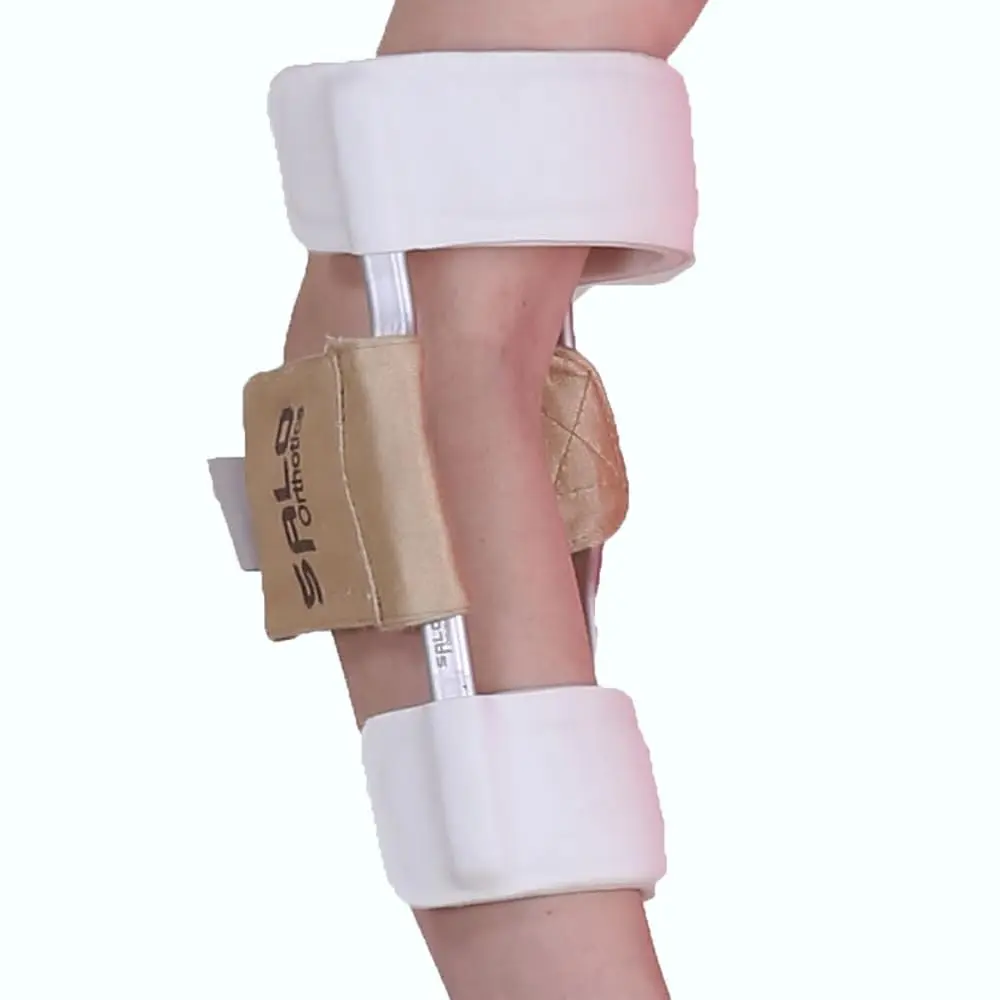
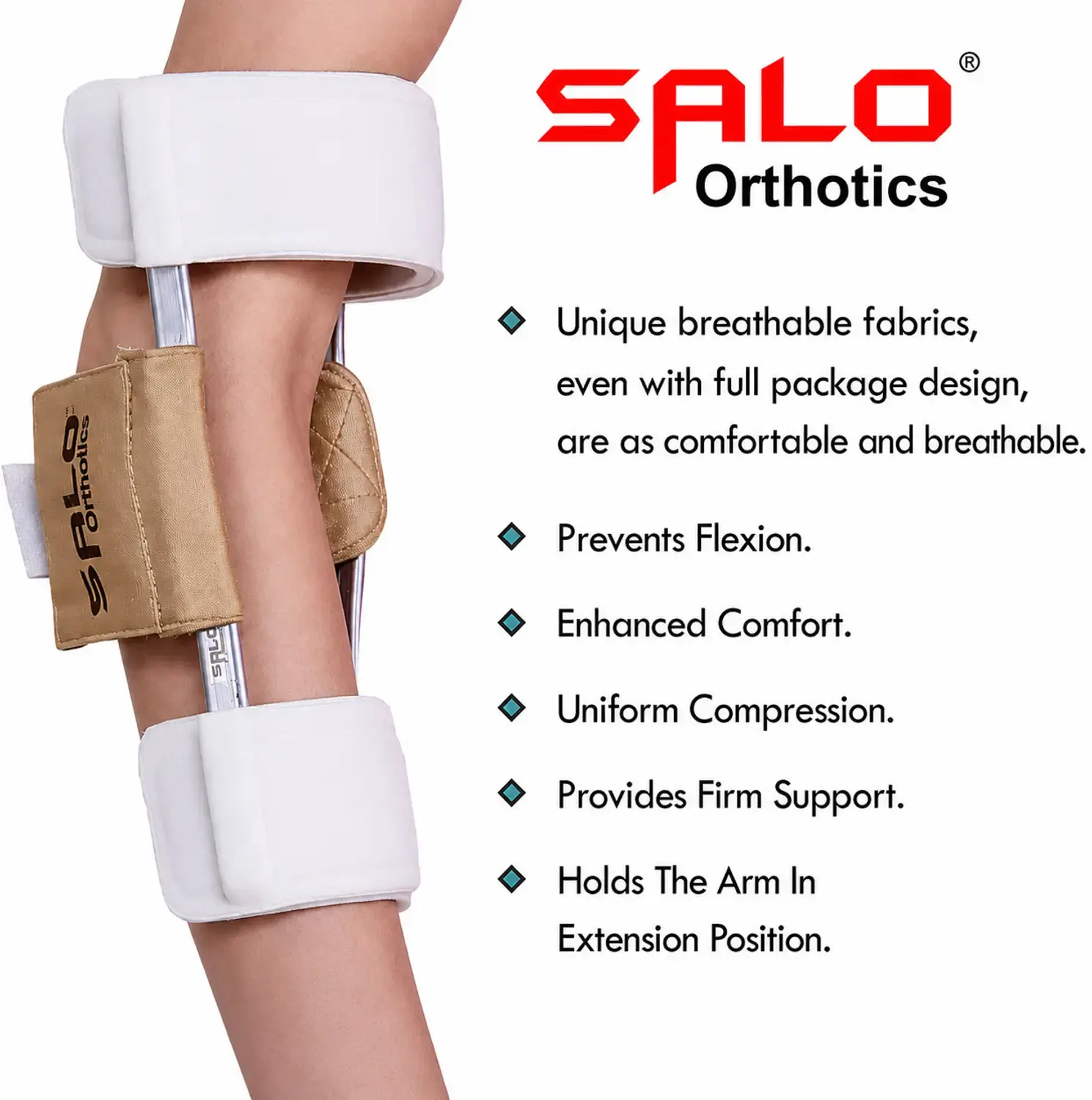
Elbow Extension Splint
Features
- Low-Load Prolonged Duration Stretch for Progressive Contracture Correction
- Adjustable Metal Frame for Clinician-Controlled Progressive Extension
- Effective for Both Neurological & Orthopaedic Elbow Flexion Contractures
- Padded Upper Arm & Forearm Cuffs for Pressure Distribution & Comfort
- Adjustable Velcro Straps for Volume-Responsive Independent Application
- Suitable for Serial Static, Static Progressive & Maintenance Splinting Protocols
- Lightweight, Skin-Safe & Easy to Maintain for Long-Term Daily Use
Elbow Extension Splint Low-Load Prolonged Stretch Orthosis for Elbow Flexion Contracture, Post-Stroke Spasticity & Post-Surgical Range of Motion Rehabilitation
The Elbow Extension Splint is a clinically designed upper limb orthosis engineered to deliver the sustained, low-load extensional forces required to progressively lengthen shortened periarticular structures, reduce elbow flexion contracture, and restore or maintain functional range of motion at the elbow joint. Applicable across a broad spectrum of neurological and orthopaedic conditions in which elbow flexion contracture is a primary clinical problem, this splint provides occupational therapists, physiotherapists, and rehabilitation teams with a versatile, adjustable, and evidence-aligned orthotic tool that can be integrated into conservative contracture management programmes, post-operative rehabilitation protocols, and long-term deformity prevention strategies for patients of all ages and clinical backgrounds.
The Clinical Problem of Elbow Flexion Contracture
Elbow flexion contracture the progressive loss of full passive elbow extension due to adaptive shortening of the flexor muscles, joint capsule, and periarticular connective tissues is one of the most functionally limiting upper limb complications encountered in rehabilitation practice. Even modest loss of elbow extension, measured in tens of degrees, significantly restricts the reach envelope of the upper limb, impairs the ability to perform essential activities of daily living such as dressing, grooming, and object handling, and reduces overall upper limb functional independence. Elbow joint contractures are often treated by using static progressive, dynamic, turnbuckle, or serial static splinting, with these splint designs effective in regaining functional elbow range of motion due to the forces applied to the contracted tissue positioning orthotic splinting as the primary, evidence-supported intervention for non-fixed and adaptive elbow contracture across a wide range of clinical aetiologies.
Elbow flexion contractures are a frequent cause of ambulation and function problems that often require extensive rehabilitation, with traditional methods of limited benefit in severe and fixed contracture underscoring the clinical imperative of early, consistent orthotic intervention with an appropriately designed extension splint before the contracture becomes fixed and surgical management becomes the only remaining option.
The Biomechanical Rationale: Why Low-Load Prolonged Duration Stretch Works
The fundamental mechanism through which the elbow extension splint achieves its corrective effect is the low-load prolonged duration stretch (LLPS) principle the application of a relatively gentle extensional force maintained for an extended period, typically six to twelve hours per day, in contrast to the brief, high-force stretching historically used in manual therapy and short-duration casting. The biological basis for the superiority of LLPS over high-load short-duration stretch lies in the viscoelastic properties of the biological tissues that constitute the contracture specifically the creepand stress relaxation phenomena through which collagenous soft tissue progressively elongates and accommodates under sustained low mechanical loading, without the micro-tearing, inflammatory response, and paradoxical scar formation that high-force stretching can generate.
The static progressive splint combines static stretching with stress relaxation to help elongate contracted tissue when the splint is applied at the end of the patient's available range and a gentle extension force is maintained, the contracted capsular, ligamentous, and musculotendinous tissues gradually yield and elongate over hours of sustained loading, producing measurable gains in passive extension range that can be progressively built upon at each subsequent wearing session as the end range advances. This cumulative, incremental approach to range of motion restoration is both more effective and substantially more comfortable and therefore more clinically sustainable than aggressive manipulation.
Neurological Applications: Spasticity & Post-Stroke Elbow Management
In patients with upper limb spasticity following stroke, traumatic brain injury, or cerebral palsy, elbow flexion contracture arises from the combination of increased flexor muscle tone, reduced volitional extension control, and prolonged positioning of the elbow in a flexed posture during periods of rest and sleep. The elbow extension splint addresses this clinical problem by providing a sustained, passive extensional force that works against the resting tone of the spastic biceps brachii and brachialis musculature not by attempting to overcome the dynamic component of spasticity during active muscle contraction, but by exploiting the relative reduction in tone that occurs during rest and sleep to achieve gradual soft tissue lengthening and prevent the progressive joint capsule fibrosis that drives contracture formation.
Supports elbow alignment and extension designed to treat mild to moderate flexion contractures, spasticity, and post-stroke or post-surgical elbow conditions with the adjustable splint allowing clinicians or caregivers to set the desired range of motion and adjust as progress occurs making the splint a dynamically adjustable intervention that follows the patient's rehabilitation progress in real time rather than requiring complete device replacement at each range of motion milestone.
Orthopaedic Applications: Fractures, Burns & Post-Surgical Management
In orthopaedic contexts, elbow extension splinting is indicated following a range of conditions that produce joint stiffness through intra-articular adhesion formation, pericapsular fibrosis, and heterotopic ossification. Post-traumatic elbow stiffness following distal humerus fractures, radial head fractures, olecranon fractures, and elbow dislocations is a well-recognised and clinically challenging complication that frequently requires prolonged orthotic management to restore the functional extension range necessary for independent upper limb use. Burn scar contractures of the elbow where the maturation and contraction of hypertrophic scar tissue across the anterior cubital fossa drives progressive flexion deformity represent one of the most demanding indications for elbow extension splinting, requiring both serial static and dynamic splinting strategies across the prolonged scar maturation period to achieve and maintain extension gains.
Utilisation of serial casting followed by a dynamic elbow extension splint was successful in maintaining range of motion gains and further improved contractures, with follow-up use of the dynamic functional splint preventing re-contracture during the scar maturation process highlighting the critical role of extension splinting as a maintenance and consolidation intervention that protects the gains achieved through more intensive acute management from the rebound contracture that is an ever-present clinical risk during the healing and remodelling phases.
Wearing Schedule, Clinical Progression & Outcome Monitoring
The recommended daily dosage for extension splinting is six to twelve hours per day a wearing schedule that is typically divided between daytime rest periods and overnight wear to maximise the cumulative stretching dose while preserving the patient's capacity for upper limb activity and therapy participation during the hours the splint is removed. The adjustable extension angle is advanced incrementally typically by five to ten degrees at each clinical review in response to documented gains in passive extension range, maintaining the splint consistently at the end of the patient's available range where the greatest viscoelastic elongation effect is achieved. Regular skin inspection at every review is essential to identify any pressure-related complications at the olecranon or epicondylar prominences before they progress to skin breakdown.
Indicated For:
Post-stroke elbow flexion spasticity and contracture, traumatic brain injury upper limb management, cerebral palsy elbow contracture prevention and correction, burn scar elbow flexion contracture, post-traumatic elbow stiffness following distal humerus, radial head, or olecranon fractures, post-surgical elbow range of motion restoration following arthroplasty or open reduction and internal fixation, prolonged immobilisation-related joint stiffness, septic arthritis sequelae, juvenile rheumatoid arthritis elbow contracture, and heterotopic ossification management following elbow trauma or neurological injury.
أضف مراجعتك
لن يتم نشر عنوان بريدك الإلكتروني. الحقول المطلوبة مميزة بـ *
الرجاء تسجيل الدخول لكتابة مراجعة!
يبدو أنه لا توجد مراجعات بعد.

M. A. Medical Supports