
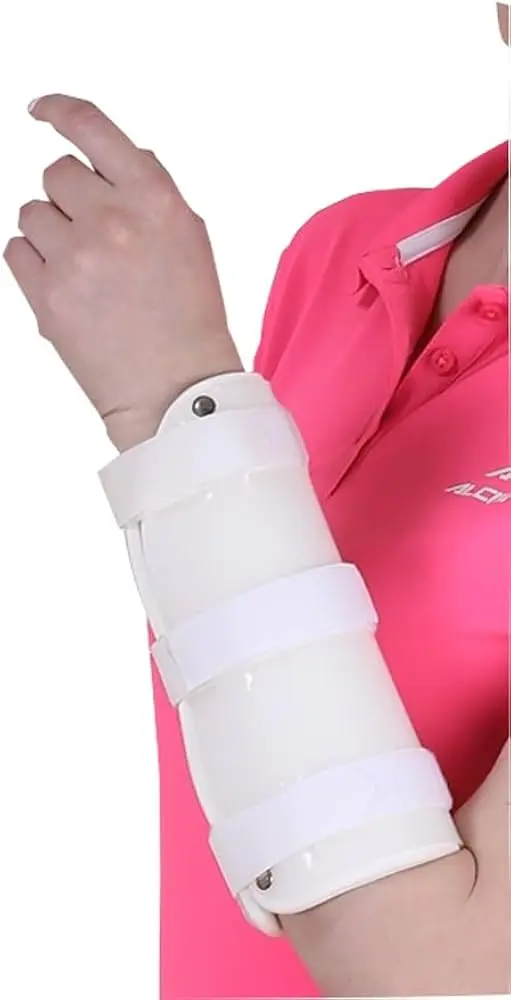
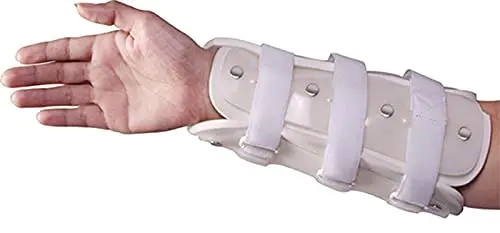
Forearm Brace
Features
- Targeted Counterforce Compression for Epicondyle Pain Relief
- Shock-Absorbing Gel or Foam Pad for Targeted Localised Support
- Adjustable Hook-and-Loop Closure for a Precisely Calibrated Fit
- Clinically Indicated for Lateral & Medial Epicondylitis
- Promotes Tissue Healing Through Warmth, Circulation & Mechanical Offloading
- Suitable Across a Broad Range of Sports, Occupational & Daily Living Contexts
- Lightweight, Breathable Neoprene Construction for All-Day Wearability
Forearm Brace Counterforce Compression Band for Tennis Elbow, Golfer's Elbow, Forearm Tendonitis & Repetitive Strain Injury
The Forearm Brace is a clinically designed counterforce compression orthosis developed specifically to address the lateral and medial epicondylitis pain, forearm tendonitis, and repetitive strain injuries that are among the most prevalent and functionally limiting upper limb conditions affecting both the sporting and working population. By applying targeted, adjustable compression to the proximal forearm musculature precisely below the inflamed tenoperiosteal attachment sites of the common extensor and flexor tendons at the lateral and medial epicondyle the forearm brace interrupts the repetitive mechanical loading cycle that perpetuates tendon micro-tearing, inflammatory tissue response, and chronic epicondylitis pain, providing the controlled mechanical environment required for effective tendon healing without requiring complete rest from daily activities.
Understanding the Clinical Problem: Why Forearm Tendons Become Injured
Tennis elbow is a painful condition of the elbow caused by overuse of the forearm muscles responsible for extending the wrist back while it can certainly be brought on by a groundstroke in tennis, any repetitive wrist motion such as that required in painting, cooking, or hammering can cause it at its worst, it can impact tasks important to everyday life such as holding a glass of water or gripping a toothbrush a clinical description that captures both the breadth of activities that can precipitate epicondylitis and the severity of functional limitation that the condition can impose at its most advanced.
Lateral epicondylitis affects roughly 1% to 3% of the general population representing a substantial clinical and economic burden in terms of lost working days, reduced sporting participation, healthcare utilisation, and quality of life impact. The condition arises when repetitive eccentric loading of the wrist extensor musculature particularly the extensor carpi radialis brevis (ECRB) generates cumulative micro-tearing at the tenoperiosteal junction with the lateral epicondyle that exceeds the tendon's capacity for repair between activity sessions. The resulting cycle of repetitive injury, incomplete healing, and progressive collagen degeneration produces the characteristic pattern of lateral elbow pain, point tenderness over the epicondyle, and pain-limited grip strength that defines established lateral epicondylitis.
The Counterforce Mechanism: How the Forearm Brace Reduces Epicondyle Loading
The therapeutic mechanism of the forearm brace is the counterforce principle a biomechanically elegant approach to tendon protection that achieves pain reduction and injury offloading without restricting overall upper limb movement or imposing the functional limitations associated with full wrist and elbow immobilisation. A forearm or elbow strap helps limit pain by compressing and isolating injured tendons in the elbow, as well as restricting their movement allowing the damaged tissue the time it requires to repair itself without the risk of constant reinjury with the strap worn a short distance below the actual source of pain in the arm, not directly over it a positioning principle that is clinically critical to the brace's effectiveness and that distinguishes the counterforce approach from simple compression applied at the pain site.
By applying circumferential compression to the forearm musculature proximal to the epicondyle, the brace creates a new, more distal mechanical origin for the extensor or flexor muscle mass effectively intercepting the tensile force that would otherwise be transmitted undiminished to the inflamed tendon attachment at the epicondyle. The extensor muscles in the forearm are attached at a small point on the humerus called the lateral epicondyle tennis elbow occurs when repeated motions cause these extensor muscles to pull on the epicondyle, causing irritation over time the counterforce strap compresses the extensor muscles just below the epicondyle, moving the point of tension and preventing pulling on the epicondyle, allowing it to heal a force redistribution mechanism that reduces the peak tensile stress at the inflamed insertion with every grip and wrist movement the patient performs during daily activities.
The Integrated Compression Pad: Maximising Therapeutic Force Delivery
The compression pad integrated into the forearm brace whether constructed from high-density foam, viscoelastic gel, or a pneumatic air cell is the component through which the counterforce mechanism's therapeutic force is concentrated and transmitted to the forearm muscle belly. The pad creates a focal pressure zone over the extensor or flexor muscle mass that concentrates the circumferential strap compression into a targeted therapeutic interface, maximising the muscle-belly compression effect while the rest of the strap delivers the encircling counterforce required to distribute loading along the forearm segment rather than allowing it to concentrate at the epicondyle.
Some advanced forearm brace designs incorporate pneumatic air cell pads that can be inflated to a precise pressure level, allowing the therapeutic compression to be individually calibrated and adjusted in response to activity changes and patient feedback throughout the rehabilitation programme. Gel-filled pad variants offer the additional benefit of being refrigerator-chillable for cold therapy application combining the mechanical counterforce effect of the brace with the analgesic and anti-inflammatory benefits of cryotherapy in a single wearable device.
Clinical Evidence & Orthotic Management of Epicondylitis
Orthotic treatments for tennis elbow offer a suitable alternative for those with persistent or severe pain who do not respond to other forms of treatment like steroid injections and physical therapy while braces promote relief as quickly as these alternatives, consistent wear has proven to reduce pain in the long term nonsurgical treatment using orthotics involves wearing a supportive brace on the afflicted arm to support pain-free grip strength positioning the forearm brace not merely as a first-line conservative intervention but as a clinically relevant option for the significant proportion of epicondylitis patients whose condition proves refractory to standard conservative measures.
The forearm brace is most effectively used as a component of a comprehensive, multi-modal epicondylitis management programme that also incorporates activity modification, eccentric forearm strengthening exercises, manual therapy, and progressive return to sport or occupational activities with the brace providing the mechanical pain relief and force redistribution that enables the patient to participate in these rehabilitation activities with tolerable discomfort, building the tendon loading capacity needed for sustained recovery.
Lateral vs Medial: Application for Both Epicondylitis Presentations
While lateral epicondylitis (tennis elbow) is the more prevalent presentation, the forearm brace is equally clinically applicable to medial epicondylitis (golfer's elbow) in which the common flexor origin at the medial epicondyle is the site of repetitive tensile overload and degenerative tendinopathy. In golfer's elbow, the brace is positioned over the proximal flexor muscle mass on the medial forearm applying counterforce compression to the flexor carpi radialis, pronator teres, and flexor carpi ulnaris muscle bellies to redistribute the tensile load away from the medial epicondyle during gripping and wrist flexion activities. The bilateral applicability of the forearm brace across both the lateral and medial epicondylitis presentations makes it the most versatile and broadly applicable first-line orthotic intervention for elbow tendon overuse pathology.
Occupational & Sporting Application: Who Benefits Most
The forearm brace is clinically relevant across a remarkably diverse population of patients reflecting the wide range of activities that generate the repetitive wrist extension and gripping loading patterns that drive epicondylitis. In sporting contexts, it benefits tennis, badminton, squash, and racket sport players managing lateral epicondylitis; golfers and baseball players managing medial epicondylitis; and weightlifters and CrossFit athletes managing forearm tendonitis from high-volume grip-intensive training. In occupational contexts, it is commonly prescribed for painters, carpenters, plumbers, electricians, keyboard operators, musicians, and manual labourers whose working activities involve the sustained repetitive forearm loading patterns that precipitate and perpetuate epicondylitis. The brace's slim, low-profile design allows it to be worn during all of these activities without restricting the range of motion or dexterity required for sporting or occupational performance.
Wearing Schedule, Fitting & Practical Guidance
The forearm brace should be positioned two to three finger-widths below the lateral or medial epicondyle over the muscle belly, not directly over the painful epicondyle itself. The compression level should be firm enough to feel a noticeable pressure effect on the forearm musculature during active hand use, but should not generate a tourniquet-like sensation, numbness, tingling, or distal hand colour change that would indicate excessive circulatory compression. The brace is typically worn during all activities that provoke epicondylitis pain including sporting, occupational, and daily living activities and removed at rest, during sleep, and when specific therapeutic exercises are being performed. Regular position checks throughout the wearing session ensure that the pad remains correctly located over the target muscle belly as the brace shifts during dynamic forearm use.
Indicated For:
Lateral epicondylitis (tennis elbow), medial epicondylitis (golfer's elbow), forearm extensor and flexor tendonitis, repetitive strain injury of the forearm, occupational overuse syndrome, sports-related forearm tendinopathy, de Quervain's tenosynovitis (forearm component), forearm muscle strain and fatigue, post-epicondylitis rehabilitation return to sport and work, and prophylactic forearm protection for athletes and workers in high-risk repetitive upper limb loading occupations.
أضف مراجعتك
لن يتم نشر عنوان بريدك الإلكتروني. الحقول المطلوبة مميزة بـ *
الرجاء تسجيل الدخول لكتابة مراجعة!
يبدو أنه لا توجد مراجعات بعد.

M. A. Medical Supports