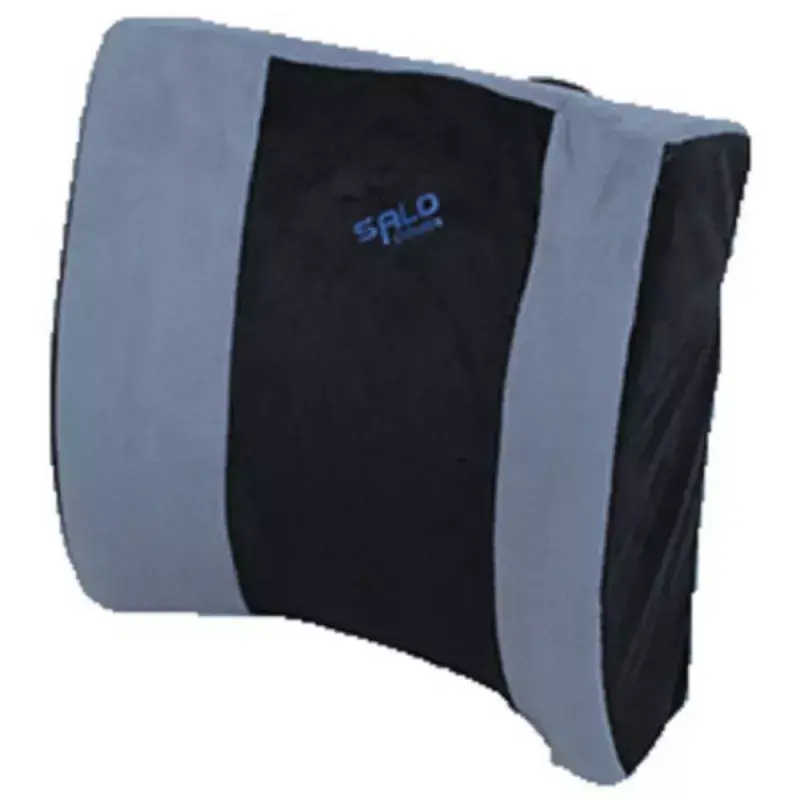
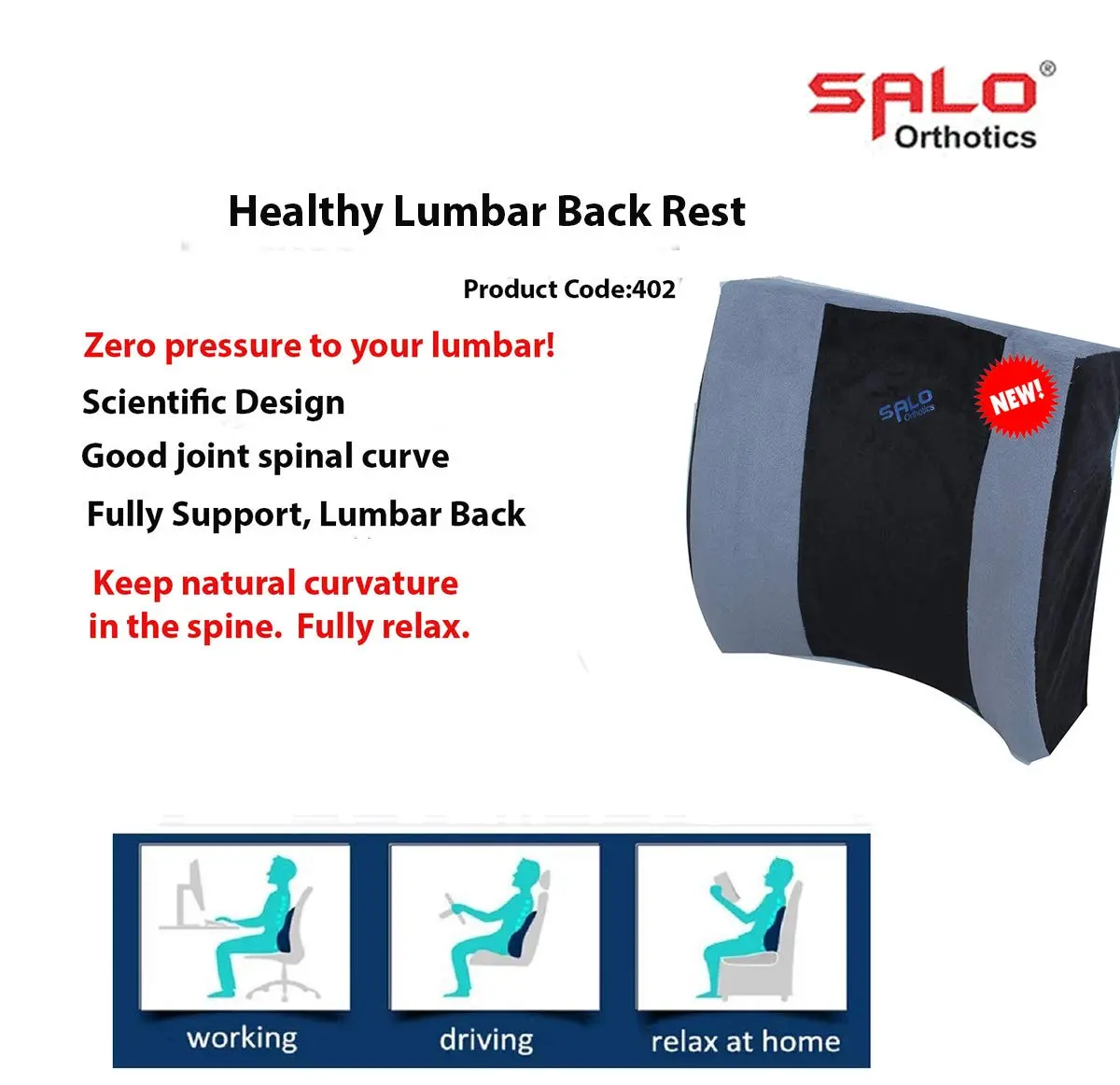
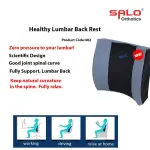
Healthy Lumbar Back Rest
Features
- Anatomically Contoured S-Curve Design for Natural Lumbar Lordosis Restoration
- High-Density Memory Foam That Never Flattens for All-Day Reliable Support
- Reduces Intervertebral Disc Pressure & Spinal Nerve Compression from Prolonged Sitting
- Dual Adjustable Straps for Secure, Stable Positioning on Any Chair or Seat
- Breathable 3D Mesh Cover for Cool, Dry & Comfortable All-Day Seated Use
- Clinically Validated: Lumbar Support Improves Posture, Comfort & Back Pain in Sitting
- Universally Compatible for Office, Home, Car, Gaming & Travel Seating
Healthy Lumbar Back Rest Ergonomic Memory Foam Lumbar Support Cushion for Lower Back Pain Relief, Posture Correction & Healthy Spinal Alignment During Prolonged Seated Use
The Healthy Lumbar Back Rest is a clinically informed, ergonomically engineered lumbar support cushion designed to address one of the most prevalent and economically significant musculoskeletal health challenges of the modern working environment the lower back pain, postural dysfunction, and spinal disc loading generated by prolonged daily seated use in chairs and car seats that fail to provide adequate lumbar support. By restoring and maintaining the natural lumbar lordotic curve throughout every hour of seated use, the Healthy Lumbar Back Rest eliminates the foundational biomechanical cause of sitting-related back pain the progressive flattening and reversal of the lumbar lordosis that occurs when the lower back is unsupported against the flat or minimally contoured backrests of standard office chairs, car seats, and domestic seating providing the targeted, consistent lower back support that transforms any seated environment into an ergonomically healthy and spinal-health-supportive workstation.
The Seated Posture Problem: Why Standard Seating Fails the Lumbar Spine
The human spine is designed for a dynamic, upright posture characterised by four natural spinal curves two lordotic (cervical and lumbar) and two kyphotic (thoracic and sacral) that together distribute the mechanical loads of the body weight across the spinal column with maximum biomechanical efficiency. When standing, these curves are maintained by the integrated action of the postural muscles, ligaments, and bony architecture of the spine. When sitting, however, the biomechanical conditions change fundamentally: the hip flexion of the seated position rotates the pelvis posteriorly, flattening and frequently reversing the lumbar lordosis, while the absence of active postural engagement in many sedentary seated workers allows the thoracolumbar spine to sag progressively into the C-shaped slumped posture that concentrates compressive and bending forces at the posterior intervertebral disc margin.
Several risk factors exist for the development of low back pain, including prolonged sitting and flexed spinal curvature lumbar flattening was decreased and thoracolumbar curvature was increased with the use of a lumbar support pillow a research finding that directly validates the biomechanical rationale for the Healthy Lumbar Back Rest and quantifies the spinal alignment improvement that consistent lumbar support delivers in real seated conditions. The cumulative effect of hours of daily lumbar flexion loading across weeks, months, and years of occupational sitting is the primary mechanism through which desk work and professional driving generate the intervertebral disc degeneration, facet joint arthropathy, and paraspinal muscle fatigue that manifest as the chronic lower back pain affecting a substantial proportion of the adult working population worldwide.
The Biomechanical Mechanism: How Lumbar Support Protects the Spine
The Healthy Lumbar Back Rest works through a precisely defined biomechanical mechanism that addresses the seated lumbar pain problem at its anatomical root. When positioned at the correct lumbar height typically at the level of L3–L4, the apex of the natural lumbar lordotic curve the cushion's anteriorly convex contoured profile contacts the posterior lumbar soft tissues and pushes the lumbar spine gently forward into its natural lordotic position. This anterior displacement of the lumbar spine simultaneously tilts the pelvis anteriorly, repositioning the sacrum and ischial tuberosities in their neutral relationship and re-establishing the postural foundation from which the thoracic and cervical spinal curves naturally align above.
When the lumbar support system is correctly positioned, it aligns with the natural curve of the lower back, preventing the spine from flattening or slumping lumbar support also alleviates pressure on the spinal discs which act as cushions between each vertebra, and relieves pressure on the nerves in the lower back which can otherwise become irritated or pinched, causing leg pain the multi-level spinal protection that correctly positioned lumbar support provides extends from the lumbar intervertebral disc level, where reduced posterior disc bulging decreases the risk of annular fissure and nuclear herniation, through the lumbar nerve roots, where reduced foraminal compression decreases the risk of radiculopathic leg pain, to the paraspinal musculature, where restored spinal alignment reduces the sustained eccentric muscle contraction that generates the fatigue, tension, and trigger point formation characteristic of chronic sitting-related lower back pain.
Memory Foam: The Superior Lumbar Support Material
The premium high-density memory foam construction of the Healthy Lumbar Back Rest reflects a deliberate material selection decision rooted in the specific mechanical requirements of an effective lumbar support cushion. Memory foam's viscoelastic properties specifically its capacity to conform to the individual contours of the user's lumbar region under body weight and warmth, and to return to its pre-compressed shape when unloaded make it significantly superior to standard foam, gel, and air-filled lumbar supports for several clinically relevant reasons.
First, the personalised contouring of memory foam to the individual's lumbar curve depth and width ensures that the supportive contact between the cushion and the lumbar region is distributed across the broadest possible surface area — reducing peak contact pressures at bony lumbar prominences and providing the comfortable, even-pressure support that enables sustained use throughout a full working day without generating the localised discomfort that rigid or poorly fitting lumbar supports produce. Second, the high-density construction of the memory foam resists the progressive compression set the permanent flattening under sustained load that afflicts lower-density foam lumbar cushions after weeks of daily use, maintaining the cushion's supportive profile and effective contact with the lumbar spine consistently across months and years of regular use. Third, the foam's thermal responsiveness means it provides firmer support in the cooler ambient temperatures of air-conditioned offices and consistent year-round comfort across seasonal temperature variations.
Posture Correction: The Long-Term Health Investment
Beyond the immediate pain relief and comfort benefits of lumbar support during seated use, the Healthy Lumbar Back Rest delivers a longer-term postural health benefit through the progressive neuromuscular re-education of healthy upright sitting posture. When the lumbar support cushion consistently maintains the lumbar lordosis throughout the seated working day, it simultaneously trains the postural proprioception and muscular engagement patterns that support independent upright spinal alignment gradually reducing the degree of passive lumbar support required as the paraspinal musculature develops the endurance and activation patterns of healthier seated posture.
According to clinical data, the lumbar region carries the most significant load when sitting a dedicated lumbar support provides a convex curve that pushes the pelvis slightly forward, preventing the C-shaped slouch and chiropractors recommend lumbar support pillows to prevent this slouching and significantly relieve low back pain from sitting reflecting the professional healthcare community's recognition that lumbar support is not merely a comfort accessory but a clinically meaningful occupational health intervention that addresses a genuine, evidence-documented musculoskeletal health risk of the modern sedentary work environment.
Universal Compatibility: One Backrest for Every Seated Environment
The practical value of the Healthy Lumbar Back Rest extends beyond the office desk its dual adjustable strap system and portable, compact construction make it immediately applicable across the full range of seated environments that modern working and commuting life encompasses. In the office, it transforms a standard desk chair into a properly supported ergonomic workstation without requiring expensive chair replacement. In the car, it provides the driving-specific lumbar support that car seats consistently fail to deliver across the full range of body types and lumbar curve depths that the seat must accommodate. In the home, it converts the living room sofa, dining chair, or recliner into a supportive seating option for home office work, leisure reading, and post-work relaxation. On long-distance travel by air or rail, it provides the portable, immediately deployable lumbar support that airline and train seating universally lacks.
Fitting, Positioning & Usage Guidance
Correct positioning of the Healthy Lumbar Back Rest is essential for achieving its maximum therapeutic benefit. The cushion should be placed at the level of the natural lumbar curve approximately at the belt line or slightly above with the convex surface facing outward against the chair back and the user's lower back resting against the flat anterior surface of the cushion. The adjustable straps are secured around the chair back at the same height, preventing downward migration during seated activity. The user should then sit back fully into the chair, allowing the lumbar cushion to push the lower back gently forward into the natural lordotic position a posture that should feel comfortably upright rather than forcefully arched. Regular position checks throughout the working day ensure the cushion remains correctly positioned as postural fatigue and movement cause small changes in the user's seated position.
Indicated For:
Occupational lower back pain from prolonged desk and computer work, driving-related lumbar pain and paraspinal fatigue, lumbar disc disease and disc herniation symptom management during seated activities, lumbar spondylosis and facet joint pain from sitting, sciatica and lumbar radiculopathy aggravated by prolonged sitting, poor seated posture and forward head posture secondary to lumbar slumping, pregnancy-related lower back pain in the seated position, post-operative lumbar spine rehabilitation return to office work, chronic non-specific lower back pain in office workers and professional drivers, and any individual spending more than two hours per day in seated posture who requires consistent, portable, ergonomically effective lumbar support across all seated environments.
أضف مراجعتك
لن يتم نشر عنوان بريدك الإلكتروني. الحقول المطلوبة مميزة بـ *
الرجاء تسجيل الدخول لكتابة مراجعة!
يبدو أنه لا توجد مراجعات بعد.

M. A. Medical Supports