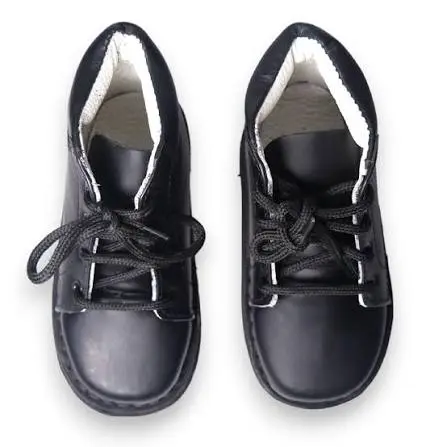
Ortho CTEV Shoes
Features
- Straight-Last Construction for Forefoot Adduction Correction
- Raised Outer Border for Hindfoot Varus & Inversion Control
- Firm High-Top Ankle Support for Precise Positional Capture
- Denis Browne Bar Compatible with Secure Sole Plate Mounting
- Open-Toe Design for Continuous Foot Position Monitoring
- Soft Padded Inner Lining for Infant Skin Protection & Comfort
Ortho CTEV Shoes Paediatric Clubfoot Correction Footwear for Ponseti Method Bracing, Foot Abduction Maintenance & Long-Term CTEV Relapse Prevention
Ortho CTEV Shoes are purpose-engineered orthopaedic footwear designed specifically for the management of Congenital Talipes Equinovarus (CTEV) commonly known as clubfoot throughout the post-correction bracing phase of the internationally established Ponseti treatment protocol. Functioning as the critical interface between the child's foot and the Denis Browne foot abduction bar, these shoes are not merely footwear in the conventional sense they are precision orthopaedic devices whose design features directly determine how effectively the prescribed corrective positional forces are transmitted to the developing foot, and whether those forces are maintained consistently enough throughout the bracing period to prevent the deformity relapse that remains the primary clinical risk following successful Ponseti casting.
Understanding CTEV and the Role of Corrective Footwear
CTEV is a complex three-dimensional congenital deformity of the tarsal bones of the feet, generally characterised by midfoot cavus, forefoot adductus, hindfoot varus, and ankle equinus positioning. The globally accepted Ponseti method addresses each of these deformity components through serial manipulation and progressive plaster casting, achieving correction rates of up to 92–100% when the full protocol is followed. However, the correction achieved through casting is biologically unstable in the infant foot the immature bones, ligaments, and tendons retain a strong intrinsic tendency to revert towards their original pathological position unless held continuously in the overcorrected alignment throughout the critical years of early skeletal development.
An orthosis often called boots and bar is used to overcorrect the feet and hold them in dorsiflexion, external rotation, and valgus. The Ortho CTEV Shoe is the boot component of this system, and its design is calibrated to achieve precisely this positional outcome: capturing the foot in the externally rotated, dorsiflexed, and slightly everted position that maintains the correction delivered by the casting programme and guides the ongoing biological remodelling of the foot's bony and soft tissue architecture towards a functional, pain-free structure.
The Structural Features That Make Ortho CTEV Shoes Clinically Effective
Every design feature of the Ortho CTEV Shoe serves a specific corrective or protective clinical function. The straight last — the absence of the medial curve present in standard footwear ensures that the forefoot is held in a position of abduction rather than the adduction that characterises untreated CTEV. The raised outer border applies a passive corrective moment to the subtalar joint, maintaining the hindfoot in a neutral or mildly everted alignment that directly counteracts the varus component of the deformity. The firm high-top ankle section encases the ankle in a rigid positional envelope that prevents internal rotation within the shoe the most common failure mode of inadequately designed clubfoot footwear, and a direct cause of reduced treatment efficacy and deformity recurrence.
Together, these three structural features work in concert with the Denis Browne crossbar to deliver a comprehensive, multi-plane corrective force system that addresses all four components of the CTEV deformity simultaneously not merely in the frontal or sagittal plane in isolation.
Compliance: The Clinical Priority That Shoe Design Must Serve
Clinical evidence consistently demonstrates that non-compliance with the bracing schedule is the leading preventable cause of CTEV relapse. The most commonly used bracing schedule is full-time bracing for 23 hours per day for the first two to six months following Ponseti casting, after which bracing for two to five years is recommended at night only. Across this extended period, parental fatigue, infant discomfort, and practical challenges of shoe application are the primary drivers of premature splint removal and the non-compliance that leads directly to recurrence.
The Ortho CTEV Shoe addresses every major compliance barrier through its design. The padded inner lining eliminates the pressure sores, blistering, and skin abrasion that are the most frequently cited reasons for parents reducing wearing time. The adjustable ankle strap provides a secure, reproducible heel-seating mechanism that is straightforward for parents to apply correctly at home without specialist assistance. The open-toe design allows rapid visual reassurance that the foot is correctly seated within the shoe without requiring complete removal — reducing the frequency of unnecessary undressing that disrupts the wearing schedule and increases infant distress. These features collectively support the consistent, long-term compliance that clinical outcomes demand.
Compatibility with the Full Denis Browne Bar System
The reinforced sole plate and standardised screw-mount interface of the Ortho CTEV Shoe ensure a secure, rigid connection to the Denis Browne aluminium crossbar without play or rotational loosening a critical mechanical requirement, since any looseness at the shoe-to-bar interface reduces the precision of the abduction angle and allows the foot to adopt a less corrected position during wear. The mounting system also allows the rotation angle of each shoe to be set and adjusted independently, enabling the treating clinician to prescribe different abduction angles for the left and right foot in asymmetric or unilateral presentations and to progress or modify the prescription as the foot responds to treatment over time.
Long-Term Sizing & Developmental Support
The rapid pace of foot growth during infancy and early childhood means that shoe sizing must be monitored regularly and updated as the child develops. Ortho CTEV Shoes are available across a comprehensive paediatric size range from the neonatal period through to the toddler years, with sizing guidance provided to support accurate selection at each clinical review. Regular size checks typically at every orthopaedic follow-up appointment ensure that the shoe continues to capture the foot correctly and that the corrective features of the straight last, raised outer border, and firm ankle support remain effectively positioned relative to the relevant anatomical landmarks as the foot grows.
Indicated For:
Congenital talipes equinovarus (idiopathic, syndromic, and neurogenic clubfoot), post-Ponseti serial casting maintenance, post-Achilles tenotomy foot abduction bracing, Denis Browne bar and foot abduction orthosis use, hindfoot varus and forefoot adduction correction maintenance, long-term CTEV relapse prevention across the full bracing schedule from post-casting through to age four to five years, and post-operative paediatric foot positioning following soft tissue release or tendon transfer procedures.
أضف مراجعتك
لن يتم نشر عنوان بريدك الإلكتروني. الحقول المطلوبة مميزة بـ *
الرجاء تسجيل الدخول لكتابة مراجعة!
يبدو أنه لا توجد مراجعات بعد.

M. A. Medical Supports