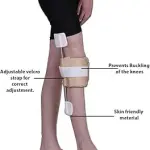
Push Knee Splint
Features
- Full Knee Extension Immobilisation for Post-Operative Protection
- Rigid Metal Stays for Structural Knee Stabilisation
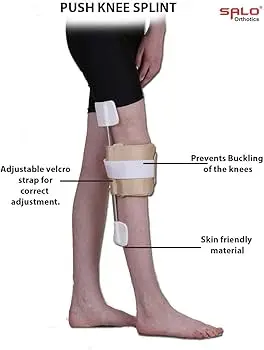
- Multi-Strap Adjustable Closure for Volume-Responsive Secure Fit
- Breathable, Padded Inner Lining for Extended Wearing Comfort
- Mid-Thigh to Mid-Calf Coverage for Maximum Lever Arm Control
- Clinically Indicated Across a Wide Spectrum of Knee Conditions
- Easy Donning & Doffing for Independent Patient Self-Management
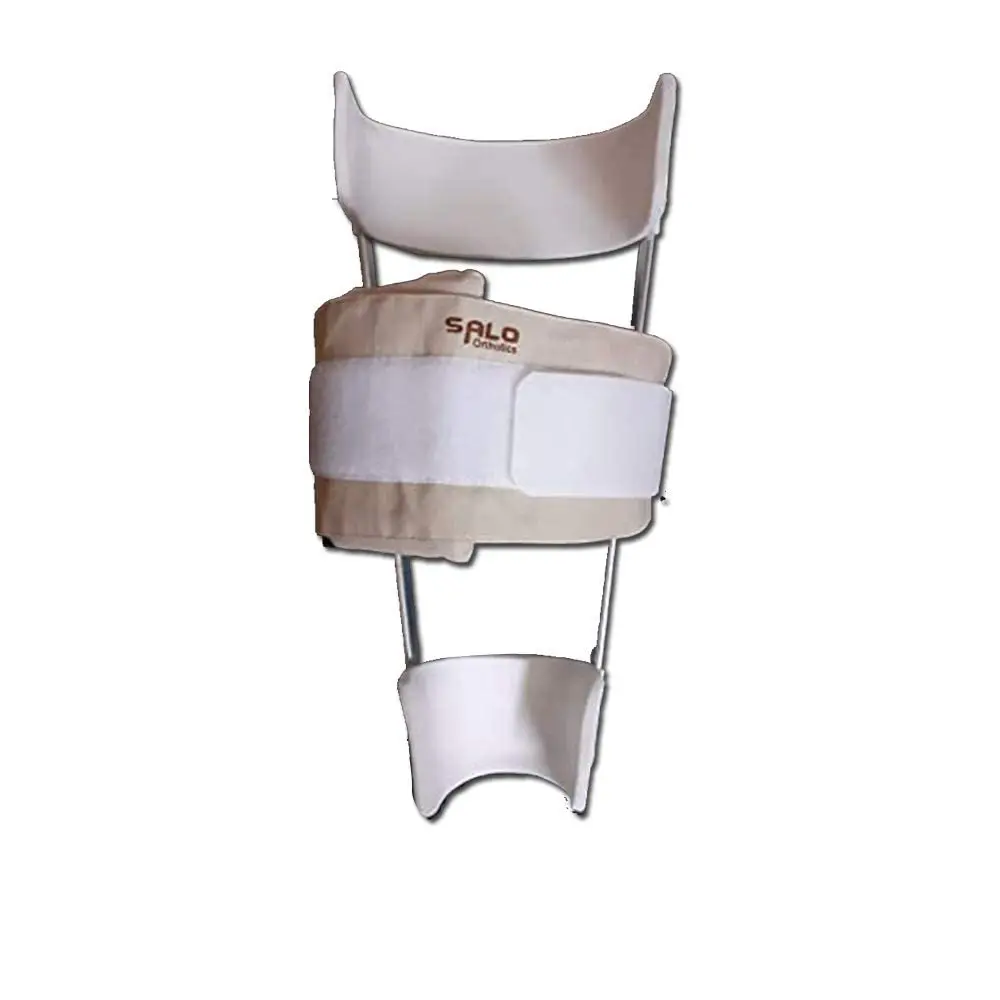
Push Knee Splint Full-Length Rigid Knee Immobiliser for Post-Operative Care, Ligament Protection, Fracture Stabilisation & Knee Extension Control
The Push Knee Splint is a clinically essential rigid knee immobilisation device designed to maintain the knee in a secure, controlled extension position during the acute and early recovery phases following knee surgery, significant ligament injury, patellar fracture, or acute traumatic knee pathology. Extending from the mid-thigh to the mid-calf and incorporating bilateral rigid metal stays within a padded, breathable outer wrap, the push knee splint provides the mechanical knee stabilisation and soft tissue protection that is a foundational requirement of safe, effective orthopaedic and post-operative knee management delivering the firm, consistent immobilisation that allows healing to proceed without interruption from inadvertent joint movement during daily activities, sleep, or patient transfer.
The Clinical Imperative for Post-Operative Knee Immobilisation
Following knee surgery, the healing soft tissue structures whether a repaired ligament, a sutured meniscus, a reconstructed tendon, or a fixed patellar fracture are at their most biomechanically vulnerable during the immediate post-operative period. The inflammatory phase of tissue healing, typically spanning the first one to two weeks following surgery, is characterised by a fragile fibrin scaffold and early collagen deposition that lacks the mechanical strength to resist the tensile and shear forces generated by even modest knee flexion. Knee immobilisers are often used after surgery to help prevent unwanted movement that could re-injure the leg or cause harm to the healing area a clinical concern that is particularly significant during sleep, when patients may toss and turn and inadvertently load the recovering knee joint without the conscious protective reflexes that operate during waking hours.
Extension-locked splinting immediately after total knee arthroplasty is a noninvasive, non-pharmacological, and inexpensive intervention with possible promising effects on knee range of motion, short-term functional improvement, and acute post-operative pain management a finding that reflects the broader clinical evidence base supporting knee immobilisation as a meaningful component of post-operative pain control, not merely a protective mechanical measure. By reducing the muscular co-contraction and inadvertent knee loading that drives post-operative pain and swelling in the early recovery phase, the push knee splint contributes to a more comfortable, manageable, and clinically efficient recovery experience for the patient.
Structural Design: How the Push Knee Splint Achieves Effective Immobilisation
The mechanical effectiveness of the push knee splint is rooted in the combination of its rigid metal stay system, full-length lever arm coverage, and multi-point adjustable closure. The bilateral metal stays are positioned along the medial and lateral columns of the splint, running the full length from thigh to calf creating a rigid structural frame that resists knee flexion forces from all directions simultaneously. This dual-upright design mirrors the medial and lateral upright architecture used in formal KAFO systems, delivering the same fundamental mechanical principle of full-length rigid column support within a lightweight, rapidly applicable, and clinically accessible format.
The full mid-thigh to mid-calf length is a critical dimensional feature. A shorter device one that covers only the popliteal region would create high localised pressure at the proximal and distal pad edges while providing a short lever arm that is easily overcome by the forces generated during leg movement. The extended coverage of the push knee splint distributes all closure forces broadly across the thigh and calf, eliminates the localised skin pressure that short devices create, and ensures that the mechanical moment required to resist knee flexion is generated across the longest possible lever arm maximising immobilisation effectiveness while minimising the interface pressure that is the primary cause of skin complications with rigid knee splints during extended wear.
Broad Clinical Applicability: From Emergency to Rehabilitation
The clinical scope of the push knee splint spans the full spectrum from acute emergency management through to the post-operative rehabilitation phase. In the emergency setting, it provides immediate, rapid stabilisation of acute patellar dislocations, condylar fractures, severe ligament injuries, and traumatic knee pathology while the patient undergoes assessment and imaging preventing further injury and providing pain relief through mechanical support before definitive management is initiated. In the post-operative setting, it is the standard of care following a wide range of knee procedures including ACL and PCL reconstruction, collateral ligament repair, meniscal surgery, patellar fracture fixation, quadriceps and patellar tendon repair, and total knee arthroplasty providing the protected immobilisation environment that each of these procedures requires during the initial healing phase.
After posterior lateral corner reconstruction, the patient is instructed to remain in a knee immobiliser locked in full extension at all times for the first six weeks, except when performing range of motion and quadriceps strengthening exercises an example of the extended immobilisation schedules that some complex knee reconstructions demand, and for which the comfort, adjustability, and wearability of the push knee splint are clinically significant advantages over less patient-friendly immobilisation options.
Transition from Cast to Splint: Supporting the Rehabilitation Continuum
The push knee splint is also commonly prescribed as part of the transition from plaster cast immobilisation to functional rehabilitation a clinical juncture at which the patient requires continued mechanical knee protection but is beginning to participate in physiotherapy exercises, wound care, and increasing levels of daily activity. The removable nature of the splint in contrast to the fixed plaster cast allows the physiotherapist to remove the device for controlled range of motion and strengthening exercises, then reapply it for walking, transfers, and sleeping, progressively adjusting the wearing schedule as the knee's mechanical stability and the patient's confidence develop during the rehabilitation programme.
Hygiene, Durability & Practical Patient Management
The breathable outer wrap and moisture-wicking inner padding maintain wearing comfort and skin health during extended daily use, while the non-porous outer shell resists standard cleaning agents for easy decontamination between patients in institutional settings. The straightforward Velcro closure system is designed for independent patient self-management — a fundamental consideration for patients recovering at home who must apply the splint correctly multiple times per day without clinical assistance. The durable construction withstands the repeated application and removal cycles of a full post-operative rehabilitation programme without structural degradation or loss of closure security.
Indicated For:
Post-operative knee immobilisation following ACL, PCL, and collateral ligament reconstruction; meniscal repair and meniscectomy; patellar fracture fixation; quadriceps and patellar tendon repair; total and unicompartmental knee arthroplasty; posterior lateral corner reconstruction; acute patellar dislocation management; condylar fractures around the knee; cast-to-splint transition in knee rehabilitation; pre-operative pain management and knee stabilisation; and acute traumatic knee injury stabilisation in emergency settings.
أضف مراجعتك
لن يتم نشر عنوان بريدك الإلكتروني. الحقول المطلوبة مميزة بـ *
الرجاء تسجيل الدخول لكتابة مراجعة!
يبدو أنه لا توجد مراجعات بعد.

M. A. Medical Supports