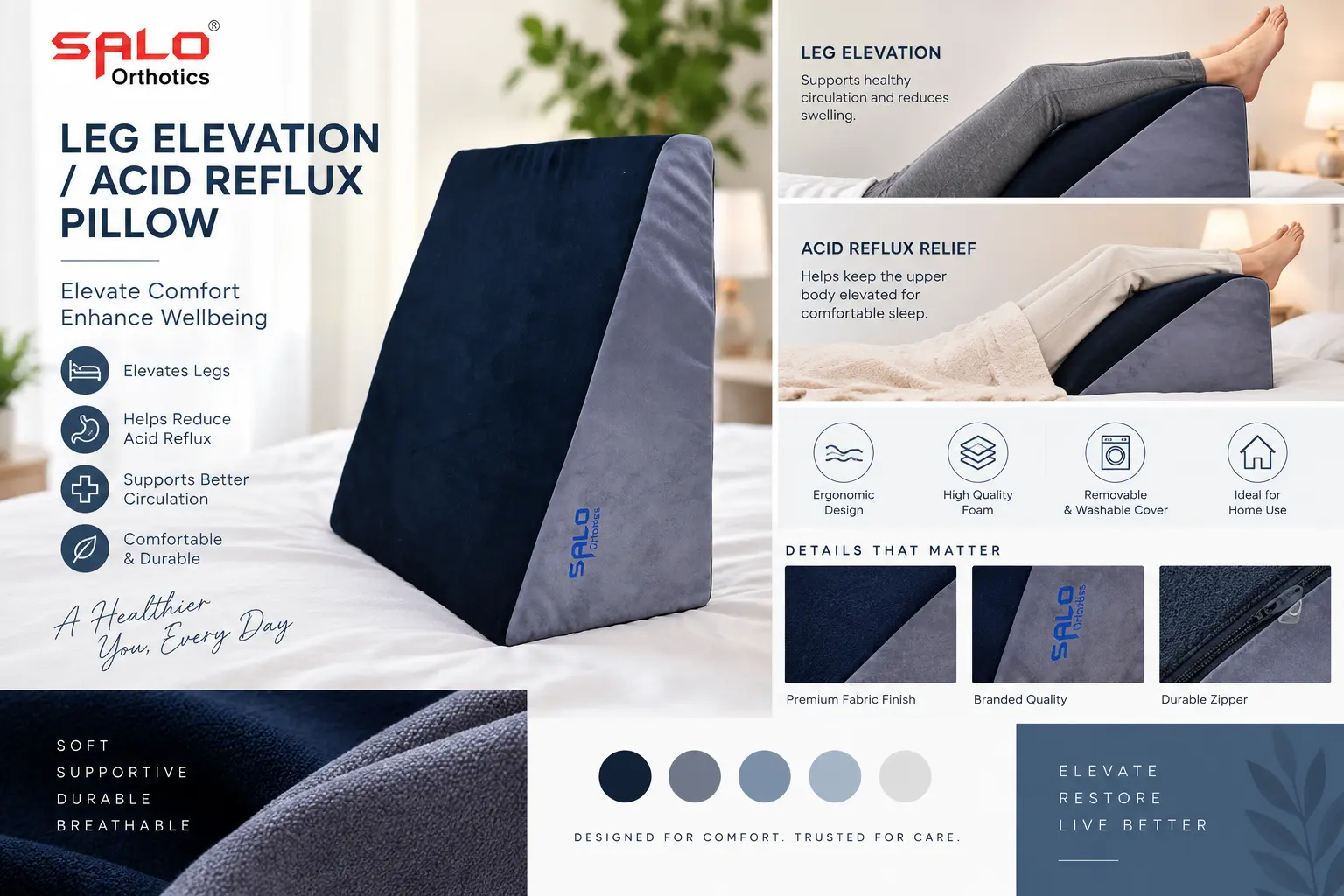
Reflex Acid (Bed)Wedge Leg Elevation Pillow for Back and Leg Support
Features
- Dual-Orientation Design for Both Upper Body & Leg Elevation in a Single Versatile Device
- Elevates the Entire Torso to Prevent Nocturnal Acid Reflux & GERD
- Clinically Effective for Acid Reflux, GERD, Heartburn, Snoring & Sleep Apnea
- Leg Elevation Mode for Oedema Reduction, Venous Drainage & Circulation Improvement
- Behind-the-Back Lumbar Support for Comfortable In-Bed Sitting & Reading
- High-Density Memory Foam Construction for Durable, Non-Flattening Support
- Removable, Machine-Washable Cover for Long-Term Hygiene & Easy Maintenance
Acid Reflux Bed Wedge Pillow Multi-Position Foam Incline Cushion for GERD, Heartburn, Snoring, Sleep Apnea, Leg Elevation, Lumbar Support & Post-Surgical Recovery
The Reflux Acid (Bed) Wedge Leg Elevation Pillow for Back and Leg Support is a premium, multi-position therapeutic foam wedge cushion designed to address the full spectrum of sleep-related, postural, and recovery support needs that a single, well-engineered inclined foam structure can fulfil from the specific medical management of nocturnal acid reflux, GERD, and sleep apnea through the therapeutic leg elevation of post-surgical oedema management and venous insufficiency care, to the practical in-bed lumbar support that comfortable daytime reading and convalescent rest require. By combining a carefully calibrated incline angle, premium foam construction, and a reversible dual-orientation design within a single portable, washable device, this bed wedge pillow provides the multi-functional positional support that replaces multiple separate therapeutic pillows and accessories with a single clinically versatile solution.
The Medical Case for Nocturnal Acid Reflux Management with a Bed Wedge
Acid reflux the retrograde movement of stomach acid from the gastric lumen into the oesophagus is a remarkably prevalent clinical condition affecting a substantial proportion of the adult population, with nocturnal symptoms representing one of the most disruptive and clinically significant manifestations of the disorder. Acid reflux, heartburn, and gastro-oesophageal reflux disease (GERD) are three related but distinct presentations of the same underlying pathological process: the failure of the lower oesophageal sphincter to prevent gastric acid from refluxing into the unprotected oesophageal mucosa, where it generates the burning discomfort of heartburn, the oesophageal inflammation of oesophagitis, and the potential long-term complications of Barrett's oesophagus and oesophageal adenocarcinoma with prolonged, poorly managed exposure.
People with GERD experience heartburn and a host of other symptoms, including trouble swallowing, hoarseness, a feeling of tightness or food being stuck in the throat, a dry cough, and less than fresh breath acid reflux tends to be at its worst after a meal, and we are most likely to lie down shortly after eating dinner or enjoying a nightcap. When lying down, the acid does not have to fight gravity to get to the throat this is precisely why the recumbent sleeping position is the most physiologically disadvantageous posture for individuals with GERD: the horizontal body position eliminates the gravitational advantage that keeps stomach acid in the stomach during upright waking hours, allowing the acid to pool at the oesophageal junction without the natural gravity-assisted clearance mechanism that swallowing and oesophageal peristalsis provide more effectively in the upright position.
Why a Bed Wedge Works When Standard Pillows Fail
Regular pillows only elevate the head, which is not enough to prevent acid reflux a pillow raises the head at an angle that is not continuous with the body, which can actually worsen symptoms by bending the body at the waist and increasing intra-abdominal pressure. The bed wedge resolves this problem through the fundamental mechanical difference between elevating the head alone and elevating the entire torso as a continuous, supported inclined unit. The gradual slope of the acid reflux bed wedge extends from the lumbar region through the thoracic spine, neck, and head creating a smooth, supported incline that elevates the entire torso as a single unit without the waist-bending and intra-abdominal pressure increase that pillow-stacking generates.
Wedge pillows are an effective way to manage reflux because they elevate your entire torso, making it harder for the acid to travel out of your stomach to begin with sleeping with your head and torso elevated makes it harder for acid and food to travel from your stomach up into your throat. The oesophagogastric junction remains above the pool of gastric acid at all elevations achieved by the bed wedge, and the intact gravitational vector continuously encourages any acid that does reflux to drain back into the stomach before it reaches the mid-oesophagus or upper airway where the most clinically significant GERD complications occur. For some people, using wedge pillows regularly can eliminate the need for acid-reducing medications or surgery a clinical outcome that positions the bed wedge as a pharmacologically complementary or potentially pharmacologically substituting intervention for mild-to-moderate GERD in appropriately selected patients.
Sleep Apnea & Snoring: The Airway Patency Mechanism
The acid reflux bed wedge's benefit for snoring and obstructive sleep apnea operates through a distinct but related gravitational mechanism the use of body positional tilting to maintain upper airway patency during sleep. In obstructive sleep apnea, the loss of upper airway muscle tone during sleep allows the soft palate, tongue base, and pharyngeal walls to collapse into the airway lumen, generating the partial or complete obstruction that produces the characteristic snoring sound and the repetitive apnoeic pauses that fragment sleep architecture, reduce nocturnal oxygen saturation, and generate the daytime somnolence, cognitive impairment, and cardiovascular risk that define the clinical burden of untreated sleep apnea.
Body positional therapy maintaining the sleeping position at an angle that reduces the gravitational collapse of upper airway soft tissue structures is a clinically recognised adjunct to CPAP and mandibular advancement device therapy in positional sleep apnea, where the severity of airway obstruction is substantially greater in the supine compared to the lateral or inclined position. The gradual incline of the acid reflux bed wedge keeps airways open and prevents stomach acid from refluxing into the oesophagus simultaneously providing dual symptomatic benefit in the common clinical presentation of co-existing GERD and sleep apnea, where the acid reflux-driven mucosal inflammation of the upper airway augments the anatomical airway obstruction of sleep apnea and vice versa.
Leg Elevation Mode: Reversing the Wedge for Lower Limb Therapeutic Use
The dual-orientation versatility of the acid reflux bed wedge the capacity to reverse the pillow's orientation and use it as a leg elevation platform with the higher end beneath the feet rather than the head transforms this single device into a comprehensive two-in-one sleep positioning and therapeutic recovery system. Alternatively, a wedge pillow can elevate the legs, improving blood circulation, reducing swelling, and alleviating pain in the lower back and legs to use as a leg elevator, place the wider end of the pillow near the thighs and the narrower end towards the feet.
In leg elevation mode, the acid reflux bed wedge positions the lower limbs at a clinically meaningful elevation above the recumbent heart level generating the gravitational venous drainage that reduces lower limb oedema, improves venous return, and relieves the leg heaviness and fatigue of venous insufficiency, varicose veins, and prolonged dependent positioning. For post-surgical patients recovering from lower limb procedures who also manage GERD or sleep apnea, this dual-orientation capability is particularly clinically valuable allowing a single device to serve both the post-surgical leg elevation requirement and the GERD management requirement within the same therapeutic arsenal, without requiring separate purchases of both a leg elevation pillow and an acid reflux wedge.
Lower Back Support Mode: Behind-the-Back Lumbar Positioning
Placing the bed wedge behind the back can help reduce strain on the neck, shoulders, and back while sitting up in bed the acid reflux bed wedge's firm foam construction provides the structural rigidity required to serve as a stable, functional lumbar backrest during in-bed sitting for reading, screen use, video calling, and daytime rest activities. This application is particularly valuable for post-surgical patients and those with acute lower back conditions who spend extended periods in bed and require consistent lumbar support during non-sleeping hours a support need that standard bed pillows cannot reliably provide due to their inadequate firmness and tendency to compress, migrate, and lose their positional stability under sustained lumbar contact forces during prolonged sitting.
Pregnancy Applications: Multi-Benefit Support Across All Trimesters
The acid reflux bed wedge is a particularly valuable pregnancy sleep support tool across all three trimesters providing the upper body elevation that reduces the pregnancy-related exacerbation of GERD during the third trimester when the growing uterus increases intra-abdominal pressure and reduces lower oesophageal sphincter competence, the leg elevation that reduces the dependent lower limb oedema of advanced pregnancy, and the behind-the-back lumbar support that maintains comfortable supported positioning during daytime rest. The wedge pregnancy pillow works as a leg rest pillow for elevation or a wedge pillow for legs post-surgery, improving circulation, reducing swelling, and providing much-needed comfort the single-device pregnancy support versatility of the acid reflux bed wedge eliminates the need for a separate GERD wedge, leg elevation pillow, and reading backrest providing comprehensive gestational sleep and rest support within a single, portable, easily repositionable wedge device.
Post-Surgical Recovery: Multi-Position Support Throughout the Recovery Period
Bed wedge pillows are often used post-surgery or during injury recovery to keep the affected area elevated and supported the acid reflux bed wedge's multi-position versatility is particularly clinically relevant in the post-surgical recovery context, where the patient's positional support requirements change throughout the day and across the stages of recovery. In the immediate post-operative period, leg elevation mode reduces surgical site swelling. During daytime rest, behind-the-back mode provides lumbar support for comfortable in-bed activities. During sleep, upper body elevation mode manages the post-operative exacerbation of GERD symptoms that general anaesthesia, perioperative medications, and altered dietary patterns frequently produce. The single device addresses all three of these distinct post-operative positional support requirements — simplifying the patient's recovery equipment and providing a clinically comprehensive support solution across the full post-operative recovery period.
Practical Guidance: Incline Selection, Positioning & Adaptation Period
Most wedge pillows have a height of 6 to 12 inches, or 30 to 45 degrees a lower incline is often preferred by sleepers who use a wedge pillow under their knees and legs, while mid-level inclines are often used by sleepers with acid reflux or sleep apnea. An adaptation period of approximately one to two weeks is expected when transitioning to bed wedge sleeping from flat-bed use the changed body angle during sleep requires progressive accommodation by the paraspinal and abdominal musculature, and alternating between the wedge and a standard flat sleeping position during the first week of use is a practically useful introduction strategy that improves overnight comfort and sleep compliance during the adaptation period. When first unboxing the bed wedge, there may be a slight factory odour and the foam may be slightly compacted it is important to let the bed wedge air out for three to four hours before first use to allow full expansion to the product's stated dimensions and complete off-gassing of any manufacturing-related odour.
Indicated For
Acid reflux and GERD nocturnal symptom management, heartburn prevention during sleep, obstructive sleep apnea and snoring positional therapy, post-surgical leg elevation for lower limb oedema control, chronic venous insufficiency and varicose vein symptom management, pregnancy-related GERD, leg swelling, and in-bed lumbar support, post-surgery recovery multi-position support, sinus congestion and post-nasal drip sleep positioning, lower back pain in-bed lumbar support during daytime rest and reading, C-section recovery positioning, sciatica and lumbar radiculopathy in-bed positional relief, and any individual requiring a single multi-position therapeutic sleep and rest support device that addresses both upper body elevation and leg elevation needs within a single portable, versatile bed wedge platform.
أضف مراجعتك
لن يتم نشر عنوان بريدك الإلكتروني. الحقول المطلوبة مميزة بـ *
الرجاء تسجيل الدخول لكتابة مراجعة!
يبدو أنه لا توجد مراجعات بعد.

M. A. Medical Supports