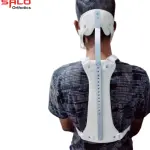
SOMI Brace
Features
- Four-Part Adjustable Cervicothoracic Construction for Comprehensive Cervical Control
- Clinically Proven Multi-Plane Cervical Motion Restriction
- Ideal for Supine Application in Acute & Critical Care Settings
- Removable Chin Plate for Independent Eating, Hygiene & Communication
- Lightweight Vinyl-Coated Aluminium Frame Shapeable to the Individual Wearer
- Clinically Indicated for C4/5–T3/4 Stable Fractures & Atlantoaxial Instability
- Completely Adjustable Mandibular & Occipital Supports for Precise Positioning
SOMI Brace Sternal Occipital Mandibular Immobiliser for Cervical Fracture Management, Atlantoaxial Instability & Post-Operative Cervical Spine Stabilisation
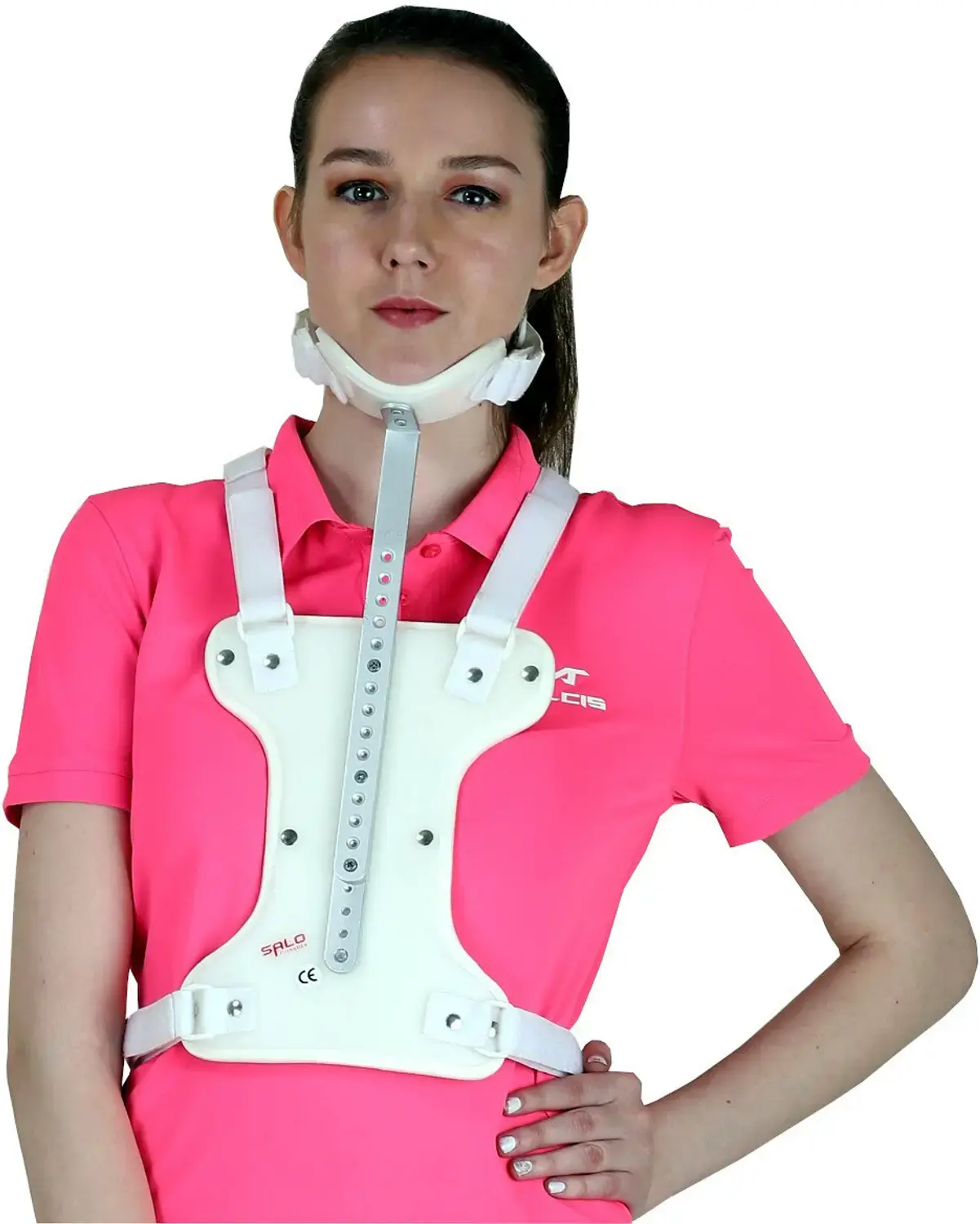
The SOMI Brace an acronym for Sternal Occipital Mandibular Immobiliser is a clinically established, rigid four-part cervicothoracic orthosis (CTO) designed to deliver controlled, multi-directional immobilisation of the cervical spine across a clinically significant range of spinal pathologies. A completely adjustable cervical orthosis that provides flexion, neutral or hyperextension positioning and immobilisation offering a level of support between a Philadelphia collar and a halo-type brace the SOMI brace occupies a precisely defined and clinically important position within the cervical orthosis hierarchy, providing a degree of motion restriction and biomechanical control that significantly exceeds that of soft and semi-rigid cervical collars while avoiding the surgical invasiveness and patient burden associated with halo vest fixation.
Historical Context & Clinical Significance
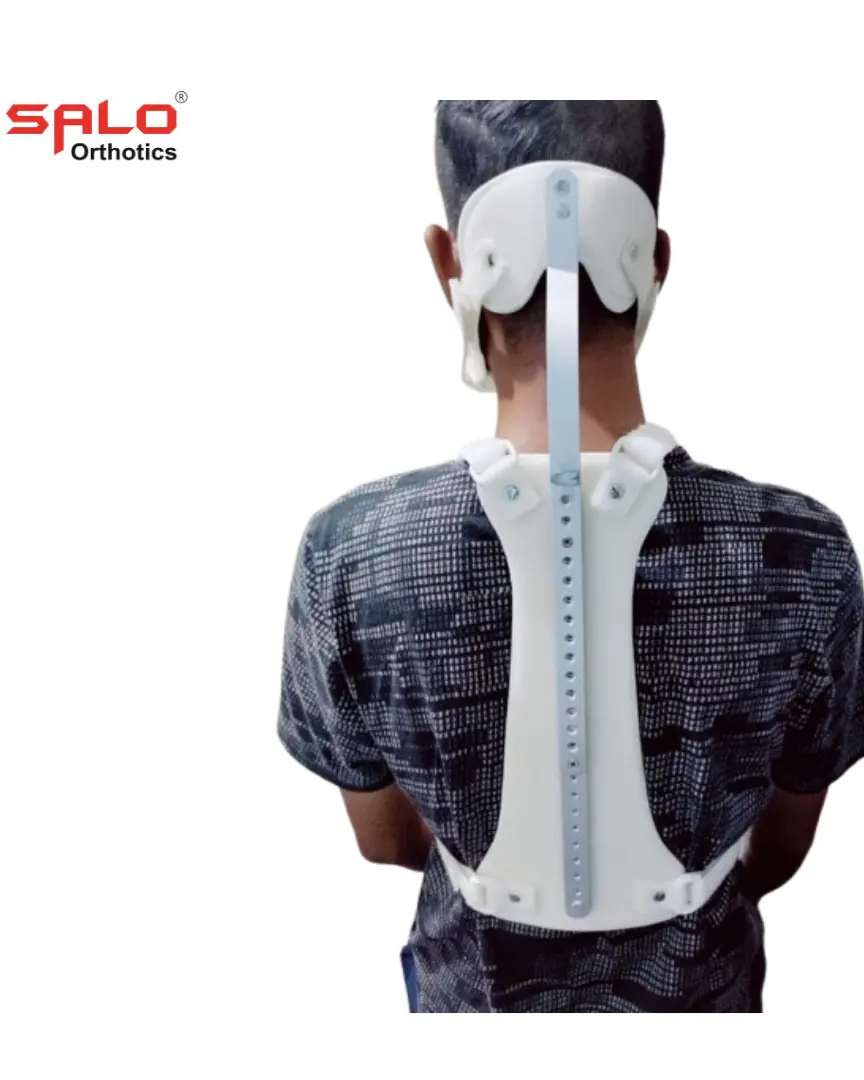
The SOMI brace was developed as a response to a clearly identified clinical need a cervicothoracic orthosis capable of providing meaningful cervical immobilisation in the sagittal and rotational planes while allowing supine application without posterior components that would require patient log-rolling during fitting. The SOMI is a rigid, three-poster cervicothoracic orthosis that has an anterior chest plate extending to the xiphoid process, as well as metal or plastic bars that curve over the shoulder with straps from the metal bars going over the shoulder and crossing to the opposite side of the anterior plate for fixation, and a removable chin piece attaching to the chest plate with an optional headpiece that can be used when the chin piece is removed for eating an engineering solution that achieves effective cervical immobilisation through an entirely anteriorly positioned structural system, making the SOMI uniquely suited to the supine patient management scenarios encountered in acute trauma care, intensive care units, and the immediate post-operative period.
The Four-Part Modular Design: Clinical Versatility Through Component Adjustability
The clinical effectiveness and practical versatility of the SOMI brace are both rooted in its four-part modular construction. The sternal chest plate is the primary structural anchor of the entire orthosis a broad anterior plate that contacts the sternum from the manubrium to the xiphoid process and serves as the fixed base from which all other components are suspended and adjusted. The chest plate's extensive sternal contact distributes the orthotic reaction forces broadly across the anterior thoracic surface, avoiding the localised bony pressure that narrow sternal contact would generate during prolonged daily wear.
The mandibular support the removable chin piece applies an inferiorly directed force to the mandible that, acting in combination with the chest plate's sternal anchor, creates the primary cervical flexion-restricting force couple of the SOMI system. The independent adjustability of the mandibular support height allows the cervical spine angle to be precisely set at the flexion, neutral, or hyperextension position required by the clinical prescription, with fine-tuning possible at each clinical review as the patient's condition and management requirements evolve.
The occipital support contacts the posterior skull at the occiput and serves as the primary posterior anchor point of the cervical immobilisation system the component through which extension and rotational control are delivered. The four-piece construction of the SOMI brace sternal chest bone support, occipital back of head support, mandibular lower jaw and chin support, and cervical and thoracic support can be easily shaped and fitted to the patient's form with a wide range of possible adjustments, and may be fitted onto the patient when they are lying flat a fitting capability that is clinically invaluable in acute and critical care settings.
The forehead headband with non-stretch nylon strap provides a supplementary anterior cranial anchor that completes the rotational control of the cervical immobilisation system preventing the axial rotation of the head and cervical spine that the sternal, mandibular, and occipital components alone do not fully restrict.
Biomechanical Performance: Motion Restriction Across All Planes
The SOMI brace's clinical effectiveness is most precisely understood through its quantified motion restriction profile across the three cardinal planes of cervical movement. Cervical flexion restriction of 70–75% reflects the SOMI's primary biomechanical strength its large lever arm from the sternal plate to the chin piece generates a powerful flexion-restricting force couple that is particularly effective at the mid and lower cervical levels where the sternal plate's inferior extension provides the greatest mechanical advantage. Rotational restriction of 60–65% is similarly clinically meaningful, achieved through the combination of the occipital support and forehead band that together resist axial rotation of the cranio-cervical complex. Lateral bending restriction of 35% reflects the SOMI's relative limitation in the frontal plane a recognised constraint of the SOMI's primarily sagittal plane architecture that clinicians should account for in patient selection.
Extension restriction the area where the SOMI's performance is most limited compared to alternative CTOs is less effective than its flexion control due to the brace's absence of posterior structural components. This biomechanical characteristic has specific clinical implications: the SOMI controls extension less effectively than do other orthoses with flexion and extension control at C3–T1 better served with a Minerva a prescribing consideration that guides patient selection towards the SOMI in clinical presentations where flexion restriction is the primary requirement, and towards alternative CTO designs where extension control is equally or more important.
Specific Clinical Indications: Where the SOMI Excels
The SOMI brace's clinical indication profile is shaped by the specific biomechanical characteristics of the conditions it most effectively manages. Atlantoaxial instability caused by rheumatoid arthritis where ligamentous disruption in rheumatoid arthritis affects flexion more than extension, because extension is held in check by the intact dens and neural arch fractures of C2, because flexion causes instability are the two conditions most precisely matched to the SOMI's biomechanical strengths, as both require primarily flexion restriction as the therapeutic priority, and both may present in patients for whom supine brace application is necessary due to pain, neurological precautions, or clinical fragility.
For the broader indication of stable C4/5–T3/4 cervical fractures, the SOMI provides the multi-directional motion restriction required for protected fracture healing during daily activities, while the removable chin piece maintains the quality of life advantages that distinguish the SOMI from full-contact immobilisation alternatives. In post-operative cervical spine stabilisation following anterior cervical discectomy and fusion (ACDF), posterior cervical fusion, and cervical corpectomy with reconstruction, the SOMI provides the additional external immobilisation that protects the surgical construct during the early post-operative period before bony fusion has been achieved.
The Supine Application Advantage: A Critical Practical Distinction
The doctor has prescribed the SOMI brace to assist in healing your cervical spine during your recovery process the orthosis is designed to immobilise your neck while your injury heals. To apply the anterior section, wrap shoulder straps around the back and fasten snugly at the front waist, then put the posterior occipital section behind the head and insert rods into sternal slots and close the fastener a fitting sequence that, crucially, does not require the patient to be sat upright or to support their head during the application process. This supine applicability is the SOMI's single most clinically important practical advantage over CTOs with posterior components, as it eliminates the need to log-roll or sit up the patient during fitting a manoeuvre that introduces risk of neurological injury, pain, and spinal alignment disturbance in the acute trauma or post-operative patient population for whom the SOMI is most frequently prescribed.
Patient Management, Skin Care & Wearing Compliance
Patients wearing the SOMI brace require regular clinical monitoring of all skin contact surfaces particularly the sternal plate, mandibular support, and occipital pad contact areas for signs of pressure-related skin compromise. The vinyl-coated aluminium frame is fully wipe-cleanable with standard healthcare-grade cleaning agents, and the padded contact surfaces can be cleaned with mild soap and water to maintain hygiene throughout the wearing period. The removable chin piece should be detached during meals and reinstated immediately afterwards to maintain the prescribed cervical immobilisation during all other daily activities. Patients are advised to wear a thin cotton undershirt beneath the sternal plate to improve comfort, absorb perspiration, and reduce the risk of skin irritation at the chest contact zone during the weeks or months of wearing that cervical fracture management typically requires.
Indicated For:
Stable cervical fractures between C4/5 and T3/4, atlantoaxial instability in rheumatoid arthritis and other inflammatory arthropathies, neural arch fractures of C2 requiring primary flexion control, post-operative cervical spine stabilisation following ACDF, posterior cervical fusion and corpectomy reconstruction, minimally unstable cervical fractures requiring a level of immobilisation exceeding that of a Philadelphia or semi-rigid collar, cervical neck pain and improper cervical curve management, and acute trauma cervical immobilisation in patients requiring supine brace application without spinal disturbance.
أضف مراجعتك
لن يتم نشر عنوان بريدك الإلكتروني. الحقول المطلوبة مميزة بـ *
الرجاء تسجيل الدخول لكتابة مراجعة!
يبدو أنه لا توجد مراجعات بعد.

M. A. Medical Supports