
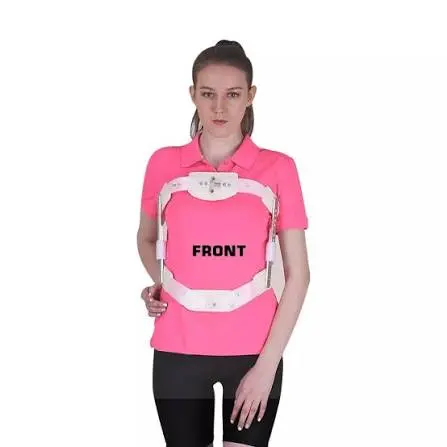
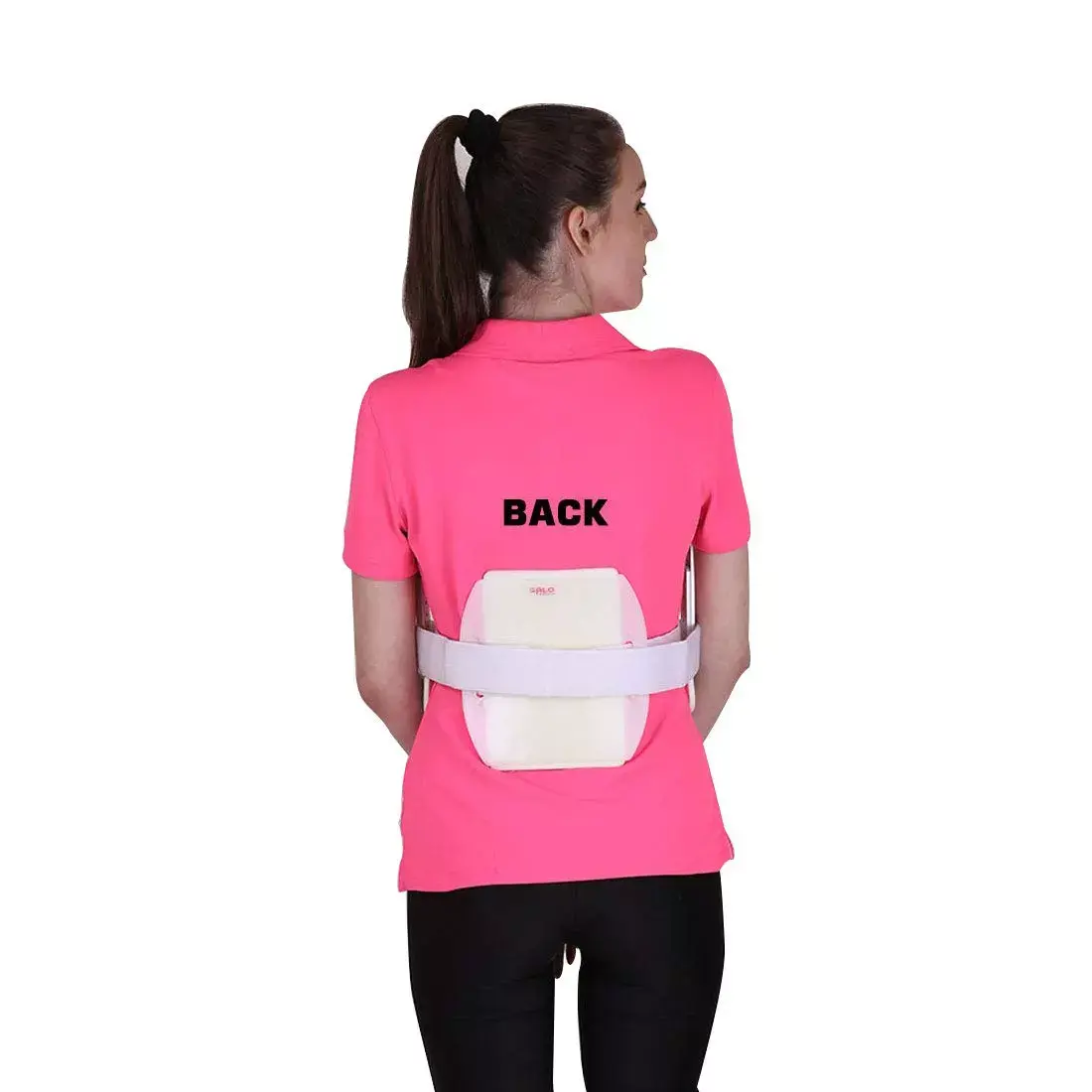
TLSO- Jewett Hyper Extension Brace
Features
- Three-Point Pressure Hyperextension System for Anterior Vertebral Offloading
- Restricts Forward Flexion to Protect the Anterior Column
- Height & Width Adjustable Aluminium Frame for Precise Anatomical Fit
- Indicated for Stable Compression Fractures, Kyphosis & Osteoporotic Vertebral Injuries
- Rigid Frame for Side-Bending & Rotational Movement Restriction
- Quick-Release Closure System for Independent Patient Application
- Post-Operative Thoracolumbar Stabilisation & Conservative Fracture Management
TLSO Jewett Hyperextension Brace Three-Point Pressure Spinal Orthosis for Thoracolumbar Compression Fractures, Kyphosis Correction & Post-Operative Spinal Stabilisation
The TLSO Jewett Hyperextension Brace is a clinically established thoracolumbosacral orthosis (TLSO) designed to deliver controlled spinal hyperextension through a precisely engineered three-point pressure system providing anterior vertebral offloading, forward flexion restriction, and multi-plane spinal stabilisation for patients managing thoracolumbar compression fractures, osteoporotic vertebral injuries, kyphotic deformity, and post-operative spinal rehabilitation. The Jewett brace is a medical orthotic device primarily used for stabilising and supporting the thoracic and upper lumbar regions of the spine, particularly effective in treating compression fractures of the thoracolumbar spine which can occur due to conditions like mild osteoporosis or minor trauma a clinical profile that makes it one of the most widely prescribed and clinically indispensable spinal orthoses in both trauma and elective orthopaedic practice worldwide.
The Biomechanical Principle: Three-Point Pressure Hyperextension
The therapeutic mechanism of the Jewett hyperextension brace is rooted in the three-point pressure principle a foundational biomechanical concept in orthotics in which three strategically positioned forces act on the body to generate a corrective moment at a target spinal segment. In the Jewett brace, this system operates as follows: an anteriorly directed sternal pad applies a posteriorly directed force at the upper thoracic level; a suprapubic pad at the lower abdomen applies a second posteriorly directed force at the lumbar level; and a posterior dorsolumbar pad positioned at the thoracolumbar junction applies an anteriorly directed counter-force at the apex of the region being managed. Together, these three forces create a hyperextension moment a mechanical tendency to extend the thoracolumbar spine away from the pathological flexion posture that compressive vertebral injuries produce actively unloading the anterior vertebral column and reducing the compressive forces that would otherwise drive progressive vertebral body collapse during weight-bearing.
The Jewett TLSO supports the thoracic and lumbar spine by preventing twisting and flexion, keeping the back in the correct position while healing from injury and/or surgery a succinct clinical description that captures both the mechanical mode of action and the clinical outcome that the brace is designed to achieve. By maintaining the spine in a neutral or mildly extended posture throughout the wearing period, the brace creates the mechanical environment in which the compromised vertebral body experiences the minimum possible compressive and bending stress during the active healing phase the fundamental prerequisite for reliable bony consolidation without progressive deformity.
Indications: Defining the Appropriate Clinical Population
The Jewett hyperextension brace is indicated for a specifically defined clinical population patients with stable anterior column thoracolumbar injuries in whom the posterior ligamentous complex and posterior bony elements are intact, and in whom the degree of vertebral body compromise and kyphotic angulation falls within the parameters for safe conservative management. The classic indication is the stable thoracolumbar compression fracture a wedge-shaped vertebral body injury in which the anterior cortex of the vertebra has fractured and collapsed while the posterior wall remains intact and the spinal canal is uncompromised. In this injury pattern, the three-point hyperextension system of the Jewett brace delivers precisely the corrective mechanical force needed to address the specific deformity mechanism anterior column failure under flexion loading making it biomechanically the most logically and mechanically appropriate orthotic intervention available.
Beyond acute fracture management, the Jewett brace is a clinically well-established tool in the management of osteoporotic vertebral insufficiency fractures the most common fragility fractures in the elderly population, arising when the mechanical strength of osteoporotic bone is exceeded by the compressive loads of normal daily activities. In this context, the brace both reduces pain by offloading the fractured vertebral body and prevents the progressive anterior wedging that, if unchecked, accumulates across multiple levels over time into the clinical picture of osteoporotic hyperkyphosis the stooped posture characterised by significant height loss, respiratory compromise, and chronic thoracic pain that is among the most functionally disabling complications of long-term vertebral osteoporosis.
Kyphosis Management: Postural Correction Through Sustained Hyperextension
The Jewett hyperextension brace is also the device of choice in the conservative management of thoracic kyphotic deformity including postural kyphosis, Scheuermann's kyphosis in adolescents, and the degenerative hyperkyphosis of elderly patients with multi-level osteoporotic vertebral changes. For severe degenerative disc disease that causes kyphosis, it provides hyperextension posture and restricts the lateral and rotary movement due to lumbar lordosis the three-point pressure system directly counteracts the flexion moment that drives progressive kyphotic angulation, applying a sustained corrective hyperextension force that, when consistently maintained across daily wearing periods, produces measurable improvements in kyphotic angle, thoracic posture, pain scores, and respiratory function in appropriately selected patients.
Post-Operative Application: Protecting Surgical Constructs During Early Recovery
Following surgical stabilisation of thoracolumbar fractures including open reduction and internal fixation with pedicle screw constructs, vertebroplasty, kyphoplasty, and anterior corpectomy with cage reconstruction the Jewett hyperextension brace provides the additional mechanical protection of the surgical construct during the early post-operative period that is required before bony fusion and instrument integration have reached sufficient strength to independently resist the flexion and torsional loads of daily activity. Indicated for immobilisation after surgical stabilisation of thoracolumbar fractures and immobilisation after herniated intervertebral disc surgery the post-operative application of the Jewett brace reduces the risk of hardware failure, loss of surgical correction, and adjacent segment complications during the critical early weeks following spinal surgery when the instrumented construct is at its greatest mechanical vulnerability.
The Adjustable Frame: Clinical Versatility Across Patient Anatomies
The aluminium framework of the Jewett hyperextension brace is adjustable in both height and width, accommodating the full spectrum of adult body types and torso dimensions without requiring custom fabrication for the majority of patients. The moveable pelvic bar adjusts in 20-degree increments to optimise fit and comfort during sitting addressing one of the most commonly reported practical challenges with rigid spinal orthoses, where the fixed pelvic component creates discomfort and skin pressure during prolonged seated use. The sternal pad position is independently adjustable along the vertical upright to ensure precise placement at the manubrium sterni regardless of the patient's chest dimensions a critical fitting parameter, as incorrect pad positioning significantly reduces the mechanical effectiveness of the three-point pressure system and can create injurious localised pressure at non-target anatomical locations.
Scope of Clinical Application: T6 to L1 Vertebral Levels
The Jewett hyperextension brace is biomechanically most effective and clinically most appropriate for fractures and deformities located between the sixth thoracic vertebra (T6) and the first lumbar vertebra (L1) the thoracolumbar junction region where the transition from the kyphotic thoracic curve to the lordotic lumbar curve creates a mechanical concentration of compressive and flexion forces that makes this the most common site for both traumatic and osteoporotic vertebral injury. Fractures above T6 are generally managed with cervicothoracic orthoses that extend upward to control the cervical and upper thoracic spine, while fractures below L1 may require the additional lumbar and sacral control of a lumbosacral orthosis positioning the Jewett brace within a specific and well-defined anatomical window of maximum clinical effectiveness.
Patient Comfort, Compliance & Wearing Schedule
The open frame design of the Jewett brace in contrast to the full circumferential body jacket of a custom TLSO provides significantly better skin ventilation, body temperature regulation, and patient comfort during daily wear, promoting the compliance with extended wearing schedules that effective fracture healing and deformity management demands. The quick-release closure system enables independent application, and the aluminium frame's inherent lightweight construction reduces the postural fatigue that heavier spinal orthoses impose during prolonged standing and walking. Regular skin inspection at the three pressure pad locations sternal, suprapubic, and dorsolumbar is an essential component of clinical follow-up, as the concentrated pressure delivery mechanism of the three-point system creates focused loading at these anatomical sites that requires monitoring in patients with thin, fragile, or compromised skin integrity.
Indicated For:
Stable thoracolumbar compression fractures (T6–L1) of traumatic and osteoporotic aetiology, thoracic kyphosis (postural, Scheuermann's, and degenerative), osteoporotic vertebral insufficiency fractures, post-operative stabilisation following thoracolumbar fracture fixation, vertebroplasty and kyphoplasty, HIVD surgical management, thoracic mechanical back pain, degenerative disc disease with kyphotic deformity, spondyloarthrosis, and any stable anterior column thoracolumbar injury amenable to conservative three-point pressure hyperextension orthotic management.
أضف مراجعتك
لن يتم نشر عنوان بريدك الإلكتروني. الحقول المطلوبة مميزة بـ *
الرجاء تسجيل الدخول لكتابة مراجعة!
يبدو أنه لا توجد مراجعات بعد.

M. A. Medical Supports