
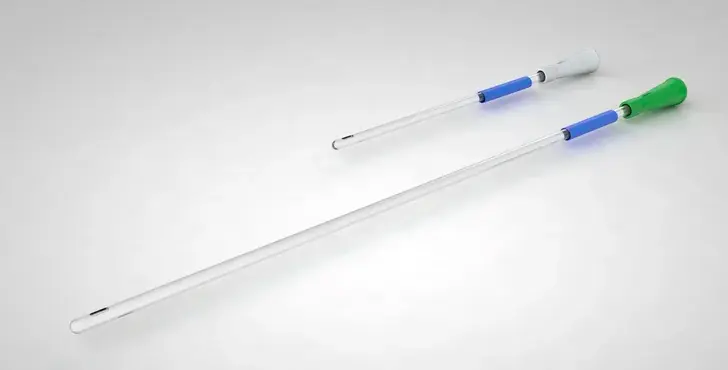
Hydrophilic Urinary Catheter
Key Features:
- Advanced Hydrophilic Coating: Water-activated polymer coating becomes ultra-smooth and slippery, reducing friction by up to 95% for comfortable insertion
- No Separate Lubricant Needed: Pre-coated design eliminates messy lubricant tubes - just activate with water and insert
- Reduces Urethral Trauma: Ultra-low friction significantly reduces micro-trauma, preventing long-term complications from repeated catheterisation
- Lower UTI Risk: Smooth surface reduces bacterial adherence and urethral irritation, helping prevent urinary tract infections
- Ready-to-Use Packaging: Sterile, compact design with activation solution included - perfect for discreet use anywhere
- Available in Multiple Sizes: Various French sizes (8Fr-18Fr) and tip styles (straight, coudé) for male and female anatomies
- Hypoallergenic & Latex-Free: Medical-grade materials safe for sensitive users and those with latex allergies
Packaging: Individual sterile packs | Male & Female lengths available
Hydrophilic Urinary Catheter: Revolutionary Comfort for Intermittent Catheterisation
Hydrophilic Urinary Catheters represent a breakthrough in catheterisation comfort and safety, featuring advanced hydrophilic coating technology that transforms the self- catheterisation experience. Unlike traditional catheters requiring separate lubricant application, these innovative catheters feature water-activated polymer coatings that become exceptionally slippery when moistened, dramatically reducing friction and discomfort during insertion and removal. For individuals requiring regular bladder emptying due to neurogenic bladder, urinary retention, or other conditions, hydrophilic catheters have become the gold standard for maintaining independence with maximum comfort and minimal complications.
Understanding Intermittent Catheterisation Needs
Millions of people worldwide require intermittent catheterisation—the periodic insertion of a catheter to drain urine from the bladder. This medical necessity affects individuals with spinal cord injuries causing neurogenic bladder, multiple sclerosis or other neurological conditions, incomplete bladder emptying from various causes, urinary retention following surgery, enlarged prostate blocking normal urination, and other conditions preventing normal bladder function.
Successful long-term catheterisation depends on products that minimise discomfort and complications while supporting independence and quality of life.
Revolutionary Hydrophilic Coating Technology
Unlike traditional catheters requiring separate lubricating jelly, hydrophilic catheters feature special polymer coatings chemically bonded directly to the catheter surface. When activated with sterile water or saline solution, this hydrophilic (water-loving) coating absorbs moisture and transforms into an ultra-smooth, gel-like layer that remains lubricated throughout the entire insertion and removal process.
This innovative coating technology reduces friction by up to 95% compared to uncoated catheters, creates uniform lubrication from tip to base (not just surface application), remains slippery throughout use (doesn't rub off like external lubricants), and provides consistent performance with every catheterisation.
The permanently bonded coating ensures reliable lubrication that traditional external lubricants simply cannot match.
Why Hydrophilic Catheters Are Clinically Superior
Traditional catheterisation requires applying separate lubricating jelly before insertion—a process that can be messy, inconvenient, and may not provide consistent lubrication along the entire catheter length. The hydrophilic coating eliminates these problems while providing superior benefits including dramatically reduced insertion and removal friction, significantly less urethral irritation and trauma, lower risk of urinary tract infections (UTIs), decreased long-term complication rates, improved patient comfort and compliance, and greater convenience for on-the-go catheterisation.
Clinical studies consistently demonstrate that hydrophilic catheter users experience fewer urethral complications, reduced bleeding, less discomfort, better long-term urethral health, and higher satisfaction compared to those using standard catheters with external lubricant.
Reducing Urethral Trauma and Long-Term Complications
Repeated catheterisation with traditional products can cause cumulative micro-trauma to the delicate urethral lining. Over months and years, this damage may lead to urethral strictures (narrowing from scar tissue), increased susceptibility to infections, chronic irritation and bleeding, reduced catheterisation comfort over time, and potential need for surgical intervention.
The ultra-low friction of hydrophilic catheters dramatically reduces this trauma risk, making them especially important for individuals requiring long-term intermittent catheterisation. Protecting urethral health preserves comfortable, independent catheterisation throughout life.
Lower Urinary Tract Infection Risk
UTIs represent the most common catheter-related complication. The smooth hydrophilic surface helps prevent infections through multiple mechanisms including reduced bacterial adherence to the slippery coating, minimal friction means less irritation and micro-tears where bacteria enter tissues, the closed system design (in ready-to-use formats) reduces contamination opportunities, and no need to handle separate lubricant tubes eliminates one contamination source.
While proper sterile technique remains essential, hydrophilic catheters provide inherent advantages that support better infection prevention compared to traditional catheterisation methods.
Instant Activation - Ready to Use
Using a hydrophilic catheter is remarkably simple and convenient. Most come in ready-to-use packaging where the catheter is pre-soaked in sterile activation solution—simply open the package and the catheter is immediately ready for insertion with no preparation needed.
Alternative formats include a sterile water or saline sachet included in the package—pour the activation fluid over the catheter, wait 30 seconds for full coating activation, and the catheter is ready for comfortable insertion.
This simplicity eliminates the mess and hassle of traditional lubricant application while ensuring optimal lubrication every time.
Ideal for Intermittent Self- Catheterisation
For individuals performing clean intermittent catheterisation (CIC) multiple times daily, hydrophilic catheters offer life-changing comfort improvements. The easy, comfortable insertion makes the necessary routine less stressful and more manageable—particularly important for new users learning self- catheterisation or individuals with reduced hand dexterity.
The convenience and comfort of hydrophilic catheters improve adherence to prescribed catheterisation schedules, leading to better bladder management, reduced complications, and improved overall health outcomes.
Discreet and Portable for Active Lifestyles
Hydrophilic catheters typically come in compact, discreet packaging that fits easily in pockets, purses, bags, or desk drawers. The self-contained design means you don't need to carry separate messy lubricant tubes—everything required is in one sterile package.
This discretion and convenience support active lifestyles, confident travel, professional work environments, and social activities without anxiety about catheterisation needs. Many users appreciate being able to catheterize discreetly in public restrooms without the telltale signs of medical equipment that separate lubricant containers create.
Premium Medical-Grade Materials
Constructed from biocompatible PVC, polyurethane, or silicone with hypoallergenic hydrophilic coatings, these catheters are safe for repeated daily use. The materials are carefully selected to minimize allergic reactions, provide appropriate flexibility and strength for safe insertion, resist kinking or collapsing during use, and maintain smooth surfaces that don't irritate tissues.
Latex-free construction accommodates individuals with latex allergies—a common concern in medical products.
Comprehensive Size and Style Options
Hydrophilic catheters are available in various configurations addressing different patient needs:
French Sizes: Typically 8 Fr to 18 Fr (each French unit equals approximately 0.33mm diameter)
- Smaller sizes (8-12 Fr): Pediatric use, narrow urethras, post-surgical situations
- Medium sizes (12-14 Fr): Most common for adult use
- Larger sizes (16-18 Fr): Thicker urine, prostate issues, specific medical indications
Tip Styles:
- Straight Tip: Standard design for most users with normal anatomy
- Coudé (Curved) Tip: Specially angled tip for navigating past obstructions, enlarged prostates, or urethral strictures
Lengths:
- Male Length: Typically 40cm (16 inches) to reach the male bladder through longer urethra
- Female Length: Typically 7-10cm (3-4 inches) appropriate for shorter female urethra
Healthcare providers determine appropriate catheter specifications based on individual anatomy, medical conditions, and catheterisation needs.
Medical Conditions Benefiting from Hydrophilic Catheters
Hydrophilic catheters support individuals managing various conditions including:
Neurogenic Bladder: Spinal cord injuries (paraplegia, quadriplegia), multiple sclerosis, spina bifida, Parkinson's disease, stroke affecting bladder control, and other neurological conditions disrupting bladder function.
Urinary Retention: Benign prostatic hyperplasia (BPH), urethral strictures, bladder outlet obstruction, post-surgical retention, medications causing retention, and incomplete bladder emptying from various causes.
Post-Surgical Care: Prostate surgery recovery, gynecological surgery, pelvic surgery, urological procedures, and temporary retention following various operations.
Other Conditions: Bladder underactivity, detrusor sphincter dyssynergia, and situations requiring bladder rest or monitoring.
Clinically Proven Superior Outcomes
Extensive clinical research demonstrates that hydrophilic catheters significantly improve patient outcomes including reduced hematuria (blood in urine) compared to uncoated catheters, fewer urinary tract infections over time, decreased urethral stricture development, improved patient comfort and satisfaction scores, better adherence to prescribed catheterisation schedules, and enhanced quality of life for long-term catheter users.
Healthcare providers increasingly recommend hydrophilic catheters as first-line options for patients beginning intermittent catheterisation programs, recognising that initial positive experiences improve long-term compliance and outcomes.
Easy Learning Curve for New Users
For patients new to self- catheterisation, hydrophilic catheters make the learning process less intimidating. The smooth, comfortable insertion builds confidence quickly, helping patients master the technique without the anxiety that discomfort can cause.
This ease of use is particularly valuable for elderly patients, those with cognitive challenges, or individuals with reduced manual dexterity who might struggle with more complex catheterisation procedures.
Cost-Effective Long-Term Value
While hydrophilic catheters may cost more per unit than basic catheters initially, they often prove more economical long-term. Reduced complication rates mean fewer UTIs requiring treatment (doctor visits, antibiotics, potential hospitalisations), less urethral trauma necessitating medical intervention, better overall urological health preventing costly problems, and potentially fewer catheters used over time due to proper technique enabled by comfortable products.
Many insurance plans and healthcare systems recognise this value and provide coverage for hydrophilic catheters for patients requiring regular intermittent catheterisation.
Environmental Considerations
The single-package design actually reduces waste compared to traditional catheterisation requiring separate catheter packages, lubricant tubes, sterile water supplies, and additional materials. Everything needed comes in one sterile package, minimising packaging waste while ensuring proper sterility.
Simple Usage Instructions
Using your hydrophilic catheter involves just a few straightforward steps:
- Hand Hygiene: Wash hands thoroughly with soap and water
- Open Package: Open the sterile package carefully
- Activate Coating: For pre-soaked catheters, they're immediately ready; for others, apply activation solution and wait 30 seconds
- Position and Insert: Gently insert the lubricated catheter into the urethra until urine flows
- Allow Drainage: Let bladder empty completely
- Remove Gently: Withdraw catheter slowly and steadily
- Dispose Properly: Dispose of used catheter in household waste (never flush)
With practice, the entire process takes just minutes and becomes a routine part of daily self-care.
Proper Catheterisation Frequency
Most individuals using intermittent catheterisation catheterise 4-6 times daily based on individual bladder capacity, fluid intake, and medical guidance. Healthcare providers establish appropriate schedules maintaining bladder health while accommodating lifestyle needs.
Hydrophilic catheters' comfort enables adherence to these schedules without the discomfort that might cause people to delay or skip necessary catheterisations.
Travel and On-the-Go Convenience
The compact, self-contained packaging makes hydrophilic catheters perfect for maintaining catheterisation schedules while traveling for work or vacation, during long commutes or road trips, at workplaces or offices, in schools or universities, and during social activities or outings.
Many users keep catheters in multiple locations—home, office, vehicle, travel bag—ensuring they're always prepared for scheduled catheterisations regardless of location.
Quality Assurance and Standards
Reputable hydrophilic catheters undergo rigorous testing including sterility validation through established protocols, biocompatibility testing per ISO 10993 standards, coating integrity and lubrication performance verification, quality control for consistent manufacturing, and compliance with international medical device regulations.
Using quality-assured catheters from established manufacturers protects both patients and healthcare providers from preparation failures, contamination risks, or inconsistent performance.
What's Included in Each Package
Typical hydrophilic catheter packages include:
- Sterile hydrophilic-coated catheter in prescribed size
- Activation solution (pre-soaked or separate sachet)
- Easy-open packaging designed for single-hand operation when possible
- Clear usage instructions
- Disposal guidance
Everything needed for one catheterisation arrives in one convenient, sterile package.
Healthcare Provider Recommendations
Urologists, continence nurses, rehabilitation specialists, and primary care physicians increasingly recommend hydrophilic catheters as preferred options for patients beginning or continuing intermittent catheterisation programs. The clinical evidence supporting superior outcomes is compelling, and patient satisfaction rates are consistently high.
Professional endorsement reflects confidence in the technology and commitment to providing patients with products that support long-term urological health and quality of life.
Proper Storage and Handling
Store unopened catheters at room temperature (15-25°C) in a dry location, keep in original packaging until use to maintain sterility, check expiration dates before use, and inspect packages for damage or loss of sterility (don't use if package is compromised).
Proper storage ensures catheters remain sterile and the hydrophilic coating maintains optimal performance.