
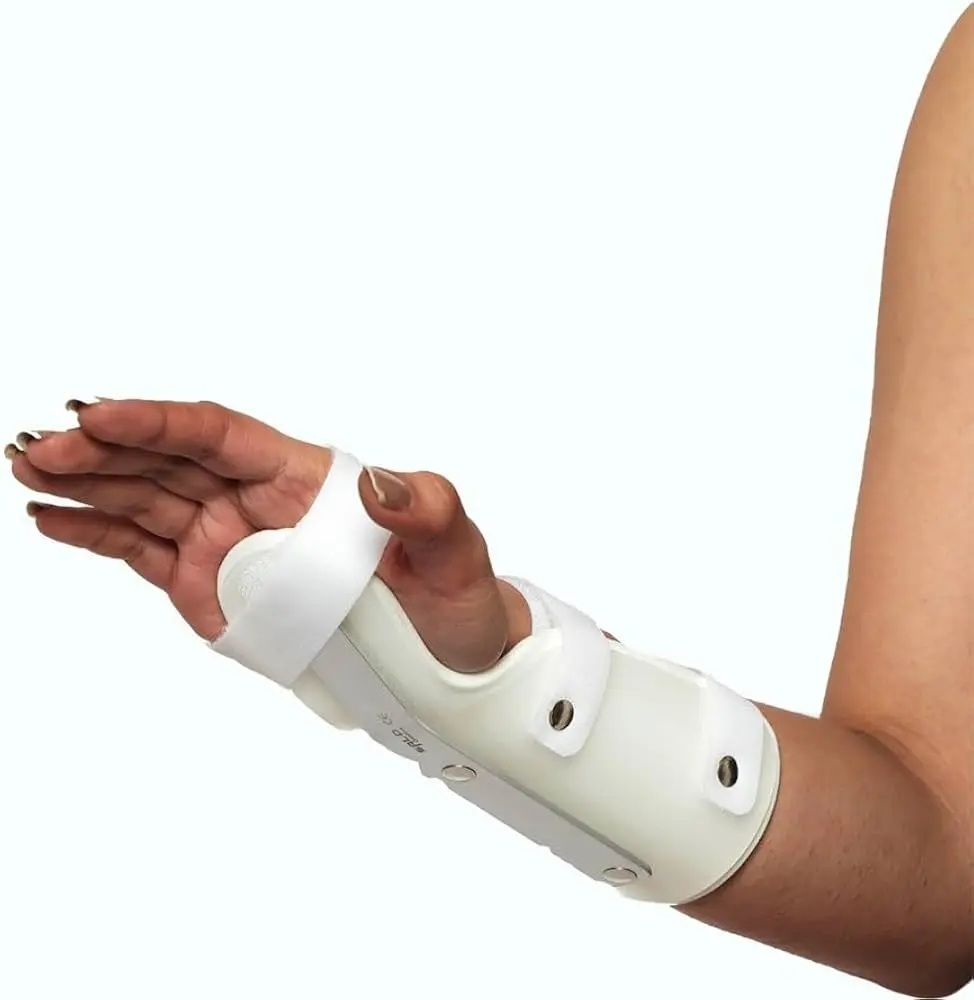
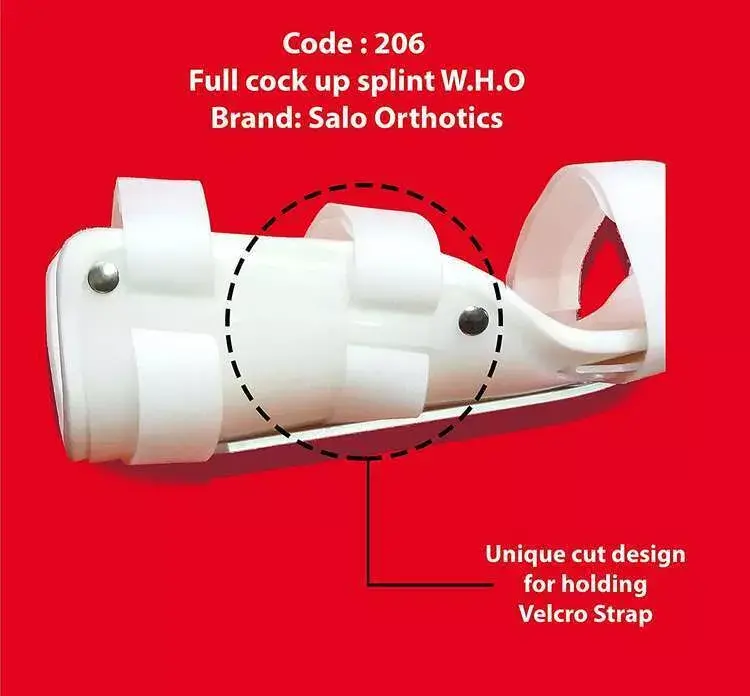
Cock Up Splint (Neutral/Extension)
Features
- Clinically Prescribed Neutral-to-Extension Wrist Positioning
- The Most Widely Prescribed Splint in Upper Limb Clinical Practice
- Volar Low-Profile Design for Full MCP Flexion & Functional Hand Use
- Thermoplastic or Metal-Stayed Construction for Durable Wrist Stabilisation
- Carpal Tunnel Syndrome: First-Line Conservative Management
- Broad Clinical Applicability Across Wrist & Hand Conditions
- Adjustable Velcro Straps for Volume-Responsive Day & Night Wear
Cock Up Splint (Neutral/Extension) Volar Wrist Immobilisation Orthosis for Carpal Tunnel Syndrome, Tendonitis, Radial Nerve Palsy & Wrist Rehabilitation
The Cock Up Splint (Neutral/Extension) formally known as the Wrist Extension Immobilisation Orthosis or Volar Wrist Cock-Up Splint is the single most widely prescribed upper limb orthosis in occupational therapy and hand therapy clinical practice. By positioning the wrist in a clinician-defined neutral to mildly extended alignment while leaving all finger joints and the thumb completely free to move, the cock up splint simultaneously achieves the wrist immobilisation required for therapeutic effect and the hand freedom required for practical daily function a combination that makes it uniquely effective and uniquely practical among all wrist orthotic designs, and that accounts for its status as the foundational splinting intervention across an exceptionally broad range of wrist and hand pathologies.
Why Wrist Position is the Central Clinical Variable
Maintaining the wrist in proper alignment is important because the wrist is the key to the health and balance of the entire hand during functional activities, the wrist is positioned in extension for grasp and prehension a biomechanical reality that underpins the therapeutic logic of the cock up splint. When the wrist is allowed to collapse into flexion as occurs during sleep, during activities requiring sustained grip, or when the wrist flexor muscles are relatively unopposed due to radial nerve palsy or muscle weakness a cascade of adverse consequences follows: median nerve compression within the carpal tunnel increases dramatically, the extrinsic finger flexor tendons are placed in a shortened, mechanically disadvantageous position that reduces grip strength and promotes adaptive shortening, and the intrinsic muscles of the hand are positioned in a length-tension relationship that impairs fine motor dexterity.
The cock up splint corrects this positional problem at its source by maintaining the wrist in the prescribed neutral or extension angle, it simultaneously restores the optimal length-tension relationship of the finger and thumb flexors, maximises the carpal tunnel volume available to the median nerve, and positions the hand in the functional posture from which grasp and prehension can be executed most efficiently and with minimum musculoskeletal stress.
The Dual Position Design: Neutral vs Extension Understanding the Clinical Difference
The ability to prescribe the cock up splint in either a neutral (0°) or extended (15–30°) position is not merely a comfort option it is a clinically significant decision that determines which physiological mechanism the splint primarily targets and therefore which conditions it most effectively treats.
The neutral position is the prescription of choice for carpal tunnel syndrome (CTS) the proper position for wrist splinting in carpal tunnel syndrome is neutral, with the wrist at 0 to 2 degrees of flexion and about 3 degrees of ulnar deviation because the carpal tunnel volume is maximised and intratunnel pressure on the median nerve is minimised at or near this angle. Prescribing the splint at greater extension angles in CTS risks paradoxically elevating carpal tunnel pressure and aggravating the condition rather than relieving it, making precise neutral positioning the evidence-supported standard for this indication.
The mildly extended position (15–30°) is appropriate for conditions where the therapeutic goal is functional hand positioning rather than nerve decompression including tendonitis, de Quervain's tenosynovitis, TFCC injuries, post-fracture wrist rehabilitation, inflammatory arthritis, and radial nerve palsy, where the wrist extension angle optimises the mechanical advantage of the intact finger flexors and places the wrist in the position from which daily functional activities can be most effectively and comfortably performed. The wrist cock-up splint is typically set at 10 to 30 degrees of extension however, each clinic or facility might have slightly different indications, and therapists and doctors working together to determine the optimal position for a common condition is a great example of collaborative clinical decision-making.
Carpal Tunnel Syndrome: The Primary & Most Prevalent Indication
One of the most common applications of cock-up wrist splints is for patients with carpal tunnel syndrome, in which they reduce pressure upon the median nerve and support the wrist in a neutral position to maximise the carpal tunnel volume making the cock up splint a first-line, clinically recommended conservative intervention for the most prevalent compressive neuropathy in the upper limb. Carpal tunnel syndrome affects a significant proportion of the working-age and elderly population, with nocturnal symptoms the tingling, numbness, and pain that awaken patients from sleep being the most universal and functionally disabling complaint. The nocturnal wrist flexion that occurs involuntarily during sleep is the primary driver of these night-time symptoms, as the flexed wrist posture dramatically reduces carpal tunnel volume and concentrates compressive pressure on the median nerve during the prolonged static positioning of sleep. Consistent overnight use of the cock up splint in a neutral wrist position directly interrupts this mechanism, providing clinically meaningful symptom relief that is well-documented across multiple prospective studies and clinical trials.
Radial Nerve Palsy: Restoring Functional Hand Posture
In radial nerve palsy whether arising from humeral shaft fracture, compression injury (Saturday night palsy), or neurological disease the loss of wrist extensor muscle function causes the wrist to drop into a resting flexion posture that renders grip and pinch biomechanically inefficient and functionally severely compromised. The cock up splint substitutes for the absent extensor function by passively supporting the wrist in the functional extension position, restoring the hand to a posture from which the intact finger flexors can generate effective grip strength and the patient can perform daily functional activities during the period of nerve recovery. This substitutive functional support combined with the prevention of extensor tendon overstretching in the flail wrist makes the cock up splint the primary orthotic intervention in radial nerve palsy management across both the acute denervation phase and the prolonged nerve regeneration period.
Inflammatory Conditions: Resting, Protecting & Reducing Pain
For patients managing inflammatory arthritis including rheumatoid arthritis, psoriatic arthritis, and reactive arthritis the cock up splint provides the wrist rest that is the cornerstone of inflammatory flare management. By immobilising the acutely inflamed wrist joint and reducing the mechanical loading that sustains and amplifies synovial inflammation during daily activity, the splint reduces pain, decreases synovial swelling, and protects the joint structures including the extrinsic wrist tendons vulnerable to rupture from inflammatory synovitis during periods of active disease. Similar rest and protection principles apply in wrist tendonitis, de Quervain's tenosynovitis, and triangular fibrocartilage complex (TFCC) injuries, where the cock up splint reduces the tensile and compressive wrist forces that perpetuate tendon and ligament inflammation during daily activities.
Post-Traumatic & Post-Surgical Wrist Rehabilitation
Following distal radius fractures, scaphoid fractures, wrist ligament injuries, and surgical procedures including wrist arthroscopy and ligament reconstruction, the cock up splint provides the protective wrist immobilisation required during the early healing and early mobilisation phases of rehabilitation maintaining the wrist in the prescribed alignment between therapy sessions while allowing the finger exercises that are the foundation of post-injury hand rehabilitation to continue without restriction. The ability to apply and remove the splint independently allows the patient to remove the device for hand therapy exercises and clinical wound care, then reapply it for daily activities and sleep supporting the active, function-preserving rehabilitation approach that achieves the best long-term hand outcomes following wrist trauma and surgery.
Fabrication, Fit & Wearing Schedule Guidance
Custom-fitted and custom-fabricated splints are strongly recommended for most patients, with cock-up wrist splints constructed from a variety of materials including thermoplastics, padding, metal, cloth, plastic, or leather and after the splint is prepared, the patient should be provided with wear and care instructions including cleaning instructions, which vary by splint material with the distal edge of the splint ending just proximal to the distal palmar crease to allow unrestricted MCP flexion, and the proximal edge extending two-thirds of the way up the forearm to provide adequate lever arm for wrist position control without restricting elbow flexion.
Indicated For:
Carpal tunnel syndrome (nocturnal and diurnal), radial nerve palsy and wrist drop, de Quervain's tenosynovitis, wrist tendonitis and tenosynovitis, triangular fibrocartilage complex (TFCC) injuries, distal radius and scaphoid fracture rehabilitation, rheumatoid and inflammatory arthritis wrist protection, wrist sprain and ligament injury, post-operative wrist rehabilitation, repetitive strain injury, Kienböck's disease, and any condition requiring therapeutic wrist immobilisation in the neutral or mildly extended position with preservation of full finger and thumb movement.
Add your review
Your email address will not be published. Required fields are marked *
Please login to write review!
Looks like there are no reviews yet.

M. A. Medical Supports