
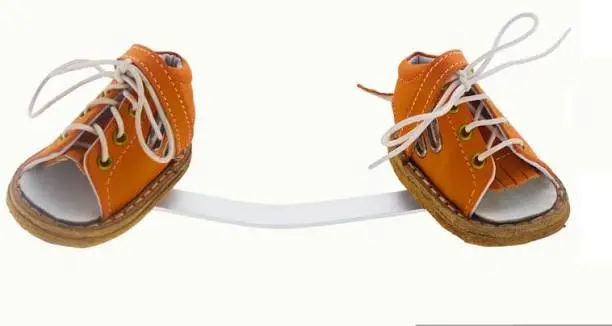
Dennis Brown Splint Shoes
Features
- High-Top Boot Design for Maximum Ankle Capture & Stability
- Open-Toe Configuration for Continuous Foot Monitoring
- Unique Ankle Strap for Secure Heel Seating & Slip Prevention
- Compatible with Standard Denis Browne Aluminium Bar
- Independently Adjustable Rotation Angle for Precise Abduction Prescription
- Soft Leather or Padded Inner Lining for Infant Skin Protection
- Available in Graduated Paediatric Sizing from Newborn to Toddler
Denis Browne Splint Shoes - Paediatric Clubfoot Correction Boots for Ponseti Method Bracing,
Foot Abduction Maintenance & CTEV Relapse Prevention
Denis Browne Splint Shoes are the essential footwear component of the Denis Browne Foot Abduction Orthosis the internationally established bracing system used to maintain clubfoot correction following the Ponseti method of serial manipulation and casting. While the aluminium crossbar is the structural centrepiece of the Denis Browne system, it is the shoe and specifically the quality of the shoe's design, fit, and foot capture mechanism that ultimately determines how effectively the prescribed corrective forces are transmitted to the developing foot, and whether the treatment is tolerated consistently enough to achieve the long-term outcome that the Ponseti method reliably delivers in compliant patients.
The Critical Interface Between Bar and Foot
The Denis Browne bar operates by holding both feet simultaneously in a position of external rotation and dorsiflexion via the rigid aluminium crossbar. However, the mechanical value of the bar is entirely dependent on the shoe's ability to hold the foot securely in the correct position at each end of the bar. A bar of about the length between the baby's shoulders has high-top open-toed shoes attached at the end of the bar in about 70 degrees of outward rotation on the affected side a precise abduction angle that must be maintained consistently throughout every wearing session to achieve the sustained corrective forces that drive soft tissue and bony remodelling in the developing infant foot.
If the shoe allows the heel to lift, the foot to rotate internally within the boot, or the forefoot to adduct away from its corrected position, the therapeutic benefit of the entire Denis Browne system is substantially reduced even if the bar and rotation settings are correctly prescribed. The quality and design integrity of the Denis Browne Splint Shoe is therefore not a secondary consideration but a primary determinant of treatment success.
High-Top Design: Why Boot Height Matters Clinically
The high-top configuration of Denis Browne Splint Shoes is not an arbitrary design feature it is a clinically essential structural characteristic. A low-cut shoe cannot reliably capture the hindfoot and ankle in the prescribed rotation angle under the forces generated by an active, kicking infant. The extended boot collar wraps around and above the ankle, creating a rigid envelope that prevents the foot from rotating internally within the shoe and ensures that the abduction angle set at the bar-to-shoe interface is faithfully reproduced at the foot-to-shoe interface delivering the corrective positional forces precisely where the biological remodelling response to treatment occurs.
Compliance: The Defining Variable in CTEV Outcomes
The clinical evidence base for the Ponseti method is unambiguous: when the bracing protocol is followed consistently, outcomes are excellent; when compliance fails, relapse is the predictable result. The Denis Browne splint must often be worn all night and throughout the day, and while it has been proven to be effective in realigning children's feet and helping them gain a normal level of functionality, the device can be somewhat cumbersome and inconvenient to use — and the shoe is often the primary source of this inconvenience. Shoes that are difficult to don and doff, that cause heel sores or blistering, or that allow the foot to slide out of correct position generate the dissatisfaction and discomfort that drive premature splint removal and the non-compliance that leads directly to deformity relapse.
The Denis Browne Splint Shoes are designed to address every one of these compliance barriers: the ankle strap system provides a secure, reproducible heel-seating mechanism that is straightforward for parents to apply correctly; the padded inner lining prevents the pressure sores and skin irritation that are the most common reasons families reduce wearing time; and the open-toe design allows rapid visual reassurance that the foot is correctly positioned without requiring complete removal of the device.
Structured Wearing Schedule & Long-Term Application
The splint is worn full-time for two to three months, and thereafter at night and naps for two to four years. This demanding schedule reflects the biological timeline of infant skeletal development the window during which the bones, ligaments, and tendons of the foot remain sufficiently mouldable to respond to positional correction. During the full-time wearing phase, the shoe must withstand continuous use across all daily activities including sleeping, feeding, nappy changes, and early movement. During the nocturnal phase, it must be straightforward enough for tired parents to apply correctly at bedtime, every night, for an extended period. The design of the Denis Browne Splint Shoe is calibrated to meet all of these demands across the full duration of the bracing programme.
Clinical Applications Beyond Idiopathic CTEV
While Denis Browne Splint Shoes are most closely associated with post-Ponseti clubfoot management, the Denis Browne Splint is also designed to treat conditions such as developmental dysplasia of the hip (DDH) where the bar and shoe system is configured to maintain hip abduction and promote correct acetabular development following reduction as well as internal tibial torsion, metatarsus adductus, and post-operative positioning following paediatric foot and hip surgical procedures where maintained corrective positioning is required during the healing and remodelling phase.
Indicated For:
Congenital talipes equinovarus (idiopathic, syndromic, and neurogenic), post-Ponseti serial casting maintenance, post-Achilles tenotomy foot positioning, developmental dysplasia of the hip (DDH), internal tibial torsion, metatarsus adductus, post-operative paediatric foot and hip positioning, and prevention of clubfoot deformity relapse in infants and young children requiring long-term foot abduction orthosis use.