
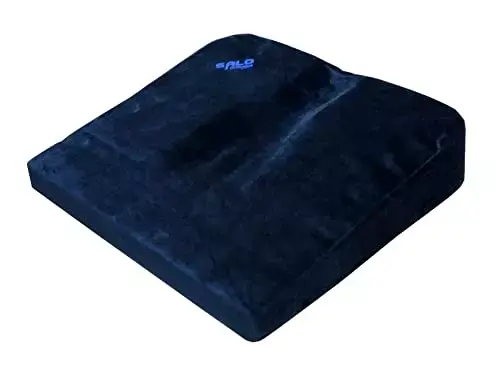
Donut Cushion- Covered Hole
Features
- Covered Central Ring Hole for Hygienic, Comfortable Perineal Decompression
- 360° Ring Profile for Circumferential Perineal Pressure Relief
- Clinically Indicated for Haemorrhoids, Piles, Anal Fissures & Perianal Conditions
- Post-Natal & Post-Episiotomy Recovery: Enabling Comfortable Seated Breastfeeding
- High-Density Foam Ring Construction for Shape-Retaining, Durable Daily Support
- Portable, Lightweight & Compatible with All Seating Surfaces
- Removable, Machine-Washable Cover for Clinical Hygiene Standards
Donut Cushion- Covered Hole Foam Ring Seat Cushion for Haemorrhoids, Coccydynia, Post-Natal Recovery, Post-Surgical Perianal Protection & Comprehensive Seated Perineal Pressure Relief
The Donut Cushion -Covered Hole is a clinically designed, therapeutic ring seat cushion engineered to provide complete perineal and coccygeal pressure elimination during seated activities through its distinctive 360-degree ring profile with a fabric-covered central aperture the specific design feature that distinguishes it from both open-hole donut cushions and contoured U-shaped coccyx cushions, and that delivers a uniquely comprehensive and hygienic approach to seated perianal and tailbone pain relief. By combining the circumferential seated support of the ring shape with the hygienic, skin-protective covering of the central hole, and the structural durability of high-density foam construction, the Donut Cushion Covered Hole addresses the primary therapeutic requirements of the broad clinical population for whom seated perianal and perineal pressure relief is a medical necessity rather than merely a comfort preference.
The Covered Hole: The Critical Design Distinction
The central covered hole is the defining feature that makes this donut cushion clinically and practically superior to conventional open-hole ring cushions in several important respects. An uncovered open ring hole the design of the most widely available donut cushions creates a direct aperture through the centre of the cushion that, while successfully eliminating rigid seated surface contact at the tailbone and perineum, introduces its own set of clinical problems during prolonged use. When the user sits on an open-hole ring cushion, the soft tissues of the perineum and perianal region sag under gravity into the open aperture creating what is clinically described as the hammock effect, where the unsupported tissue is draped across the edge of the ring opening rather than suspended freely above it.
Unlike flat ring cushions that can create a hammock effect and worsen discomfort, a contoured design suspends the coccyx and perineal area providing immediate pain relief for tailbone injuries, hemorrhoids, pregnancy discomfort, post-surgical recovery, and chronic sitting pain the fabric covering of the Donut Cushion Covered Hole eliminates this hammock effect entirely by providing a gentle, supportive fabric surface across the aperture that maintains the perineal tissue in a horizontally supported position without creating the edge-loading and tissue deformation that an open ring generates. The fabric cover creates a true suspension surface soft, flexible, and giving rather than the rigid ring edge contact of an open-hole design, distributing the minimal residual support forces across the full covered aperture area rather than concentrating them at the ring's inner circumferential edge.
The covered design also provides the important practical advantage of eliminating the visual appearance of the central hole a consideration that matters to many users in workplace and social seating contexts where the conspicuous appearance of an open-hole ring cushion draws unwanted attention to what is inherently a personal medical condition. The covered hole design maintains the same therapeutic perineal decompression mechanism while presenting a more discreet, professionally appropriate appearance that supports confident use across all seating environments.
The Ring Shape: Why 360-Degree Support Suits Certain Conditions Better Than U-Shaped Designs
The ring cushion can also alleviate tailbone pain, but may be better for conditions like hemorrhoids and prostate issues the ring cushion is a round cushion with the center cut out, like a donut the circular hole acts as a tailbone cushion that keeps pressure off the tailbone so there is no or minimal direct contact the 360-degree ring shape of the donut cushion provides a fundamentally different weight distribution geometry compared to U-shaped coccyx cushions, with clinically important implications for specific conditions. Where the U-shaped cushion distributes weight primarily across the bilateral ischial tuberosities and posterior thighs leaving the anterior perineal area partially or fully in contact with the seat surface the ring shape surrounds the central aperture on all sides, providing circumferential support that distributes seated body weight across the full 360-degree rim simultaneously, including the anterior perineal area where prostatitis, Bartholin's cyst, perineal surgery wound sites, and anterior haemorrhoidal extensions require support and decompression that U-shaped rear-opening designs do not deliver.
This anterior perineal coverage makes the donut ring cushion specifically clinically superior to U-shaped designs for conditions involving anterior perineal structures including prostatitis and chronic pelvic pain syndrome in men, Bartholin's gland cyst and abscess management in women, anterior haemorrhoidal prolapse, perineal hernia, and any surgical wound or inflammatory condition affecting the anterior perineum where a rear-opening U-shape would provide inadequate coverage.
Haemorrhoids & Piles: The Primary Clinical Indication
Haemorrhoids distended, inflamed vascular cushions at the anorectal junction are among the most prevalent and acutely uncomfortable anorectal conditions in the adult population, affecting a substantial proportion of individuals at some point during their lifetime and reaching peak prevalence during pregnancy, the post-natal period, and in individuals with chronic constipation or straining. The acute presentation of haemorrhoidal prolapse, thrombosis, or acute bleeding creates a seated pain experience of often dramatic severity the direct compressive and shearing forces that standard flat seating applies at the anal verge during sitting generate the venous engorgement, mechanical trauma, and inflammatory provocation that perpetuate the haemorrhoidal episode and prevent the anorectal rest that is the primary conservative management strategy.
The secret lies in an innovative ring design that cradles the body while completely eliminating pressure on sensitive areas unlike flat cushions that simply add height, the donut shape creates a therapeutic void that allows the tailbone to rest naturally, free from contact pressure the donut cushion's central covered hole provides this therapeutic void directly at the anal verge and perianal skin surface, enabling the user to sit without generating the mechanical forces that perpetuate haemorrhoidal vascular engorgement, prevent perianal skin healing, and provoke the acute pain spikes that make sitting intolerable during active haemorrhoidal episodes. This ability to enable seated activity during acute haemorrhoidal management is clinically important for patients whose occupational and daily living requirements make complete avoidance of seated activities impractical providing a means of continuing essential seated activities while simultaneously protecting the haemorrhoidal tissue from the mechanical forces that would otherwise prolong the episode.
Post-Natal Recovery: Supporting the New Mother Through Perineal Healing
The post-natal period represents one of the most widespread and clinically significant applications of the donut cushion combining the perineal tissue trauma of vaginal delivery with the haemorrhoidal development that commonly accompanies the third trimester and the delivery process itself to create a multi-source perianal and perineal pain presentation of often severe intensity. The particular importance of seated comfort in the post-natal period stems from the sustained seated breastfeeding positions that successful establishment of breastfeeding demands across the first weeks of the newborn period potentially multiple hours per day of sustained seated activity at precisely the time when the perineal wound is at its most acute and most vulnerable to the mechanical trauma of direct contact pressure.
Donut pillow for tailbone pain relief cushion coccyx and hemorrhoid pillow for sitting donut seat cushion for pressure relief, prostate, postpartum, pressure sores the postpartum indication in the product descriptor reflects the universal recognition of donut cushion application in post-natal care as a first-line comfort and wound protection measure, prescribed by midwives, obstetricians, and postnatal care nurses as a routine component of the perineal wound care package for women following vaginal delivery with perineal involvement.
Post-Surgical Protection: Perianal & Pelvic Surgery Rehabilitation
Following surgical procedures involving the perianal region, pelvic floor, and perineum including haemorrhoidectomy, pilonidal cyst excision, perianal fistula repair, anal sphincter reconstruction, prostatectomy, cystectomy, and gynaecological procedures involving the posterior vaginal wall and perineum the donut cushion provides the seated mechanical protection that allows patients to resume the seated activities of daily life during recovery without exposing the surgical wound to the compressive and shearing contact forces that would disrupt healing, cause wound dehiscence, introduce infection, and significantly prolong the post-operative recovery period.
Donut pillows can provide much-needed pressure relief from the tailbone they can also prevent pressure sores, improve blood flow and allow sitting for long periods of time pain-free can be used for post-surgical procedures the blood flow improvement identified in this clinical description reflects the important secondary vascular benefit of perianal pressure relief: by eliminating the compressive ischaemia at the surgical wound site that sustained seated contact pressure would otherwise generate, the donut cushion maintains the local microcirculatory perfusion that is the primary determinant of wound healing speed, tissue viability, and infection resistance in the immediate post-operative period.
Prostatitis & Chronic Pelvic Pain in Men
The donut cushion has a specific and clinically important application in the management of chronic prostatitis and chronic pelvic pain syndrome in men conditions characterised by persistent perineal pain, suprapubic discomfort, and pain with sitting that significantly impair occupational function, quality of life, and daily independence. The perineal discomfort of prostatitis is directly aggravated by the pressure that the seated body weight places on the perineal structures overlying the prostate gland the same mechanical mechanism that the donut cushion's central covered hole directly addresses. By eliminating perineal contact pressure during sitting, the donut cushion provides meaningful symptomatic relief that enables occupational seated work and daily activities to continue with significantly reduced pain provocation, complementing the pharmacological and physical therapy management of the underlying condition.
Pressure Ulcer Prevention in Immobile & Wheelchair Users
For elderly, immobile, and wheelchair-dependent patients in whom prolonged sitting without repositioning creates sustained ischaemic tissue loading at the ischial tuberosities and perianal region, the donut cushion's ring profile and central covered hole provide a meaningful contribution to pressure injury prevention distributing seated body weight across the ring's broader contact surface and eliminating the central perineal and sacrococcygeal loading that concentrated seated pressure would otherwise generate at high-risk anatomical locations. Seniors who are immobile without ambulating for long periods of time, as well as those who have significant pressure sores represent the population in whom consistent, appropriate pressure redistribution seating is most clinically critical, and for whom the donut cushion's circumferential ring support provides a practically accessible, cost-effective first-line pressure care intervention that complements more advanced pressure redistribution mattresses and wheelchair cushions in the comprehensive pressure management programme.
Practical Guidance: Correct Positioning & Daily Use
Place the cushion on the chair so that it is pushed up against the back of the chair and positioned in the middle of the seat when you sit on the cushion, your tailbone should be centred directly over the hole in the middle of the cushion, with your buttocks comfortably seated on the cushion itself the correct positioning of the donut cushion is critical to its therapeutic effectiveness. The cushion should be placed flush against the back of the chair seat before sitting, ensuring that when the user sits fully back into the chair, the covered central hole aligns directly beneath the tailbone and perineum. Sitting at the front of the cushion a common positioning error shifts the contact zone forward so that the ischial tuberosities rest on the inner rim of the ring rather than the outer ring body, creating the very edge-loading pressure concentration that the ring design is intended to prevent.
Indicated For:
Haemorrhoids and piles acute and chronic perianal pain management, coccydynia from trauma, fracture, bruising, and hypermobility, post-natal perineal recovery following episiotomy, perineal tearing, and haemorrhoidal development, post-haemorrhoidectomy and post-pilonidal cyst excision seated wound protection, prostatitis and chronic pelvic pain syndrome in men, post-prostatectomy and post-gynaecological surgery perineal decompression, anal fissure and fistula-in-ano seated pain relief, Bartholin's gland cyst management, pressure ulcer prevention in immobile and wheelchair-dependent patients, pilonidal sinus management, pregnancy-related perianal and haemorrhoidal discomfort, sciatica and lumbar radiculopathy, and any condition requiring circumferential perineal pressure elimination during seated daily and occupational activities.
Add your review
Your email address will not be published. Required fields are marked *
Please login to write review!
Looks like there are no reviews yet.

M. A. Medical Supports