
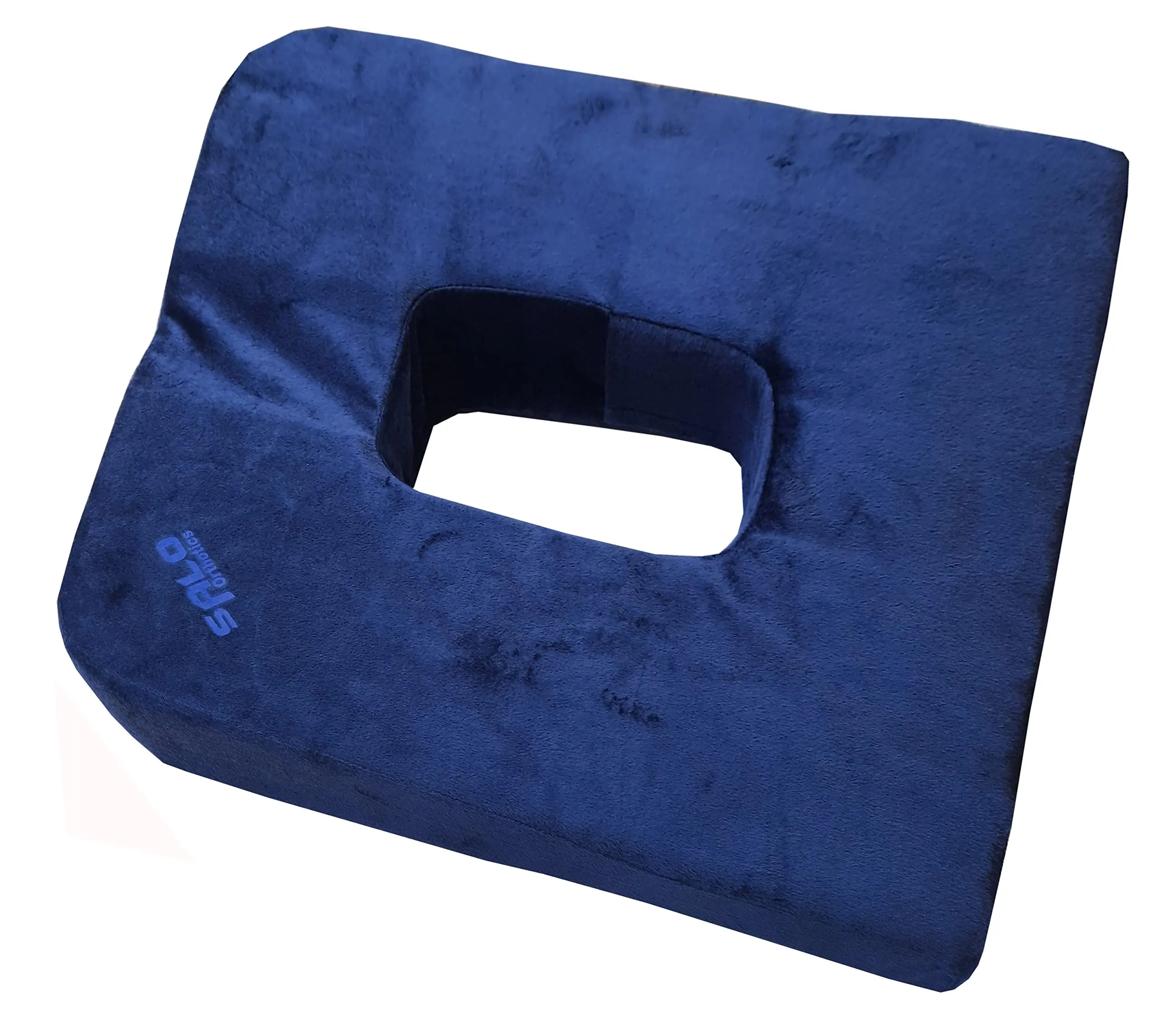
Donut Cushion (Visible Hole)
Features
- Open-Centre Visible Hole for Maximum Unrestricted Airflow & Coccygeal Suspension
- Circumferential 360° Ring Support for Broad, Even Bilateral Weight Distribution
- Moulded High-Density Polyurethane Foam for Durable, Non-Flattening Ring Support
- Clinically Indicated for Haemorrhoids, Piles, Anal Fissures & Perineal Conditions
- Superior Perianal Ventilation Through the Visible Open Aperture
- Reduces Pressure on Pelvic, Coccyx, Perineal & Anal Region Across Multiple Conditions
- Portable, Non-Slip & Universally Compatible for All Seated Environments
Donut Cushion (Visible Hole) Open-Centre Foam Ring Seat Cushion for Coccydynia, Haemorrhoids, Post-Natal Recovery, Post-Surgical Perianal Protection & All-Round Seated Pressure Relief
The Donut Cushion (Visible Hole) is a clinically established, open-centre therapeutic ring seat cushion designed to provide complete, immediate, and consistently maintained pressure relief at the coccyx, sacrum, and perineum during seated activities through its fully open, visually accessible central aperture the defining design feature that distinguishes it from both covered-hole donut cushions and U-shaped coccyx cushions, and that delivers the most direct, unobstructed form of tailbone and perineal decompression available in seat cushion design. The open-centre design relieves direct pressure on the tailbone, helping to reduce pain and discomfort during daily sitting it is commonly recommended to ease pressure after childbirth, haemorrhoid treatment, or lower body surgery. By combining this complete coccygeal suspension mechanism with the circumferential 360-degree ring support profile, high-density moulded foam construction, and superior perianal ventilation of the fully open aperture, the Donut Cushion Visible Hole delivers a seated pain relief experience that is clinically appropriate, practically straightforward, and immediately effective across the full spectrum of perianal and tailbone pain presentations.
The Visible Open Hole: Understanding Its Clinical Significance
The fully visible, open central aperture of this donut cushion is its most clinically and practically distinctive feature and understanding why this open design is specifically chosen for certain clinical presentations over the covered-hole alternative requires a clear appreciation of the therapeutic mechanisms that the open hole delivers that a covered aperture cannot replicate. The donut pillow is a round cushion with the centre cut out, like a donut the circular hole acts as a tailbone cushion that keeps pressure off the tailbone, so there is no or minimal direct contact.
The open hole's primary therapeutic advantage over the covered hole is the unrestricted airflow it permits directly across the perineal and perianal skin surface during the entire period of seated use. When the user sits on the open-centre donut cushion, the central aperture creates a continuous ventilation channel between the ambient room air and the perianal skin a channel that is completely absent in covered-hole designs where a fabric membrane across the aperture, however breathable, substantially reduces direct air circulation at the skin surface. This perianal ventilation effect is clinically most significant in the following contexts: active haemorrhoidal episode management, where moisture at the anal verge aggravates pruritus ani and skin irritation; post-haemorrhoidectomy wound healing, where maintaining a dry perianal environment reduces the risk of wound maceration and secondary infection; pilonidal cyst and sinus management, where maintaining skin dryness at the natal cleft is an important component of conservative and post-surgical care; and post-episiotomy perineal healing, where perianal air exposure supports the drying of the perineal repair site that promotes wound edge approximation and healing.
The Donut Shape vs the U-Shape: Clinical Selection Between Ring and Coccyx Cushion Designs
The ring cushion can also alleviate tailbone pain, but may be better for conditions like hemorrhoids and prostate issues while tailbone pain is the most common reason for using a ring cushion, hemorrhoids, cysts, and prostate problems involving this area may benefit from this cushion. This clinically important distinction in prescription guidance reflects the biomechanical difference between the 360-degree ring profile and the U-shaped rear-opening profile a difference that determines which conditions each design most effectively addresses.
The U-shaped coccyx cushion distributes body weight across the bilateral posterior ischial tuberosities and thighs, with the rear opening providing posterior tailbone and anal decompression. However, the U-shape leaves the anterior perineal area the region anterior to the anal verge, beneath the perineal body, and at the urethral and vaginal outlets in contact with the seat surface, as the arms of the U-shape do not extend forward to provide anterior perineal support and decompression.
The 360-degree ring of the open-centre donut cushion surrounds the central decompression aperture on all sides anterior, posterior, medial, and lateral providing circumferential support that decompresses both the posterior coccyx and anal region and the anterior perineal structures simultaneously. This anterior perineal decompression is the critical clinical advantage of the ring design over the U-shape for conditions involving anterior perineal structures: prostatitis and chronic pelvic pain in men, where the perineal pressure over the prostate gland is the primary seated pain source; Bartholin's gland cyst and vestibular disorders in women, where anterior perineal contact pressure provokes pain during sitting; anterior haemorrhoidal prolapse, where the prolapse extends anteriorly beyond the range of posterior U-shaped cutout coverage; and post-anterior perineal repair, where protecting the surgical site from seated contact requires anterior as well as posterior perineal decompression.
Haemorrhoids: The Most Prevalent Clinical Indication
By allowing you to sit without pressure, soreness from tailbone injuries and haemorrhoids can heal faster it is not a wonder cushion, but it can help with pain control and permit more relaxed sitting. This appropriately measured clinical description of the donut cushion's role in haemorrhoidal management captures both the genuine therapeutic value of the device and its correct positioning as a comfort and pain control measure within a comprehensive haemorrhoidal management programme rather than as a primary treatment of the underlying vascular condition.
The mechanism through which the open-centre donut cushion benefits haemorrhoidal sufferers operates through several interrelated pathways. First, the complete elimination of direct contact pressure at the anal verge removes the mechanical trauma that direct seated contact generates at the inflamed, oedematous haemorrhoidal tissue preventing the compressive and shearing forces that provoke haemorrhoidal prolapse, bleeding, and acute pain during seated activities. Second, the open aperture's ventilation effect reduces the perianal moisture that aggravates haemorrhoidal pruritus and skin irritation maintaining a drier perianal environment that is less conducive to the secondary skin complications that frequently compound primary haemorrhoidal discomfort. Third, the elimination of seated perianal compression improves the local venous return from the haemorrhoidal plexus reducing the sustained venous engorgement that the compressive effect of standard seating generates at the inferior haemorrhoidal plexus during prolonged sitting.
Coccydynia Management: Tailbone Pain Relief Through Complete Coccygeal Suspension
The centre cutout completely suspends the tailbone above the seating surface, eliminating direct pressure on the coccyx providing immediate pain relief for tailbone injuries, haemorrhoids, pregnancy discomfort, post-surgical recovery, and chronic sitting pain. For patients with acute or chronic coccydynia arising from direct trauma such as a fall onto the buttocks, repetitive microtrauma from cycling or rowing, childbirth-related coccygeal stress fracture, or idiopathic coccygeal hypermobility the complete coccygeal suspension that the open-centre donut cushion provides is the most direct, mechanically unambiguous approach to seated tailbone pain management available without prescription or clinical intervention.
By resting each buttock evenly on the outer ring of a donut cushion, leaning forward slightly removes pressure from the tailbone these pillows are particularly helpful when recovering from surgery or injury to the tailbone. The correct seated position on the open-centre donut cushion with the coccyx centred directly over the visible hole, the ischial tuberosities resting evenly on the bilateral ring sections, and the user seated fully back with the anterior pelvis supported by the front arc of the ring achieves the biomechanical goal of complete coccygeal suspension with maximum seated stability and comfort.
Post-Natal Recovery: Enabling New Mothers to Sit Comfortably
The post-natal period is among the most clinically significant and practically important indications for the open-centre donut cushion combining the perineal tissue trauma of vaginal delivery with the haemorrhoidal development common during the third trimester and delivery process. The unique ring shape gently cradles the body, promoting better posture and reducing stress on pressure points ideal for postpartum recovery, individuals with haemorrhoids, or anyone experiencing lower back pain, this cushion helps maintain comfort during extended periods of sitting.
The open-centre design is specifically advantageous in the post-natal context because the open aperture allows the midwife and obstetric nurse to advise the new mother on perianal airing a traditional and clinically supported component of perineal wound care that recommends periodic exposure of the perineal repair site to open air to support wound drying and healing. The open-centre donut cushion allows this airing to occur continuously during seated breastfeeding sessions, rather than only during specific lying-down airing periods extending the total daily perianal air exposure and potentially accelerating perineal wound healing during the critical first two weeks of post-natal recovery.
Prostatitis & Chronic Pelvic Pain Syndrome
While tailbone pain is the most common reason for using a ring cushion, haemorrhoids, cysts, and prostate problems involving this area may benefit from this cushion. For men with chronic prostatitis and chronic pelvic pain syndrome conditions characterised by persistent perineal pressure, dysuria, and pain with prolonged sitting that significantly impair occupational and social function the open-centre donut cushion provides the perineal pressure elimination that enables sustained seated work and daily activities with substantially reduced pain provocation.
The 360-degree ring design's anterior perineal coverage is particularly important in prostatitis management, as the prostate gland's anatomical position beneath the anterior perineum means that seated pressure in this region generates the prostatic compression that provokes or aggravates prostatic pain and the voiding symptoms associated with chronic prostatitis. Donut pillows can provide much-needed pressure relief from the tailbone they can also prevent pressure sores, improve blood flow and allow sitting for long periods of time pain-free. The improved local tissue blood flow that complete perineal decompression enables is particularly clinically relevant in prostatitis, where reduced prostatic venous congestion is a recognised component of the symptomatic improvement sought through conservative management.
Post-Surgical Protection: Perianal & Pelvic Wound Healing
Following haemorrhoidectomy, pilonidal cyst excision, perianal fistula repair, anal sphincterotomy, prostatectomy, and gynaecological perineal repair procedures, the open-centre donut cushion provides the mechanically protected, well-ventilated seated environment that optimises the conditions for perianal wound healing during the rehabilitation period. The open aperture's ventilation advantage over covered-hole designs is clinically most pronounced in this post-surgical context where maintaining a dry, well-aerated perianal wound environment is directly associated with reduced infection rates, faster wound granulation, and superior cosmetic and functional outcomes compared to the warm, moist, occluded wound environment that covered-hole and standard seat cushions generate.
Pressure Ulcer Prevention in Immobile & Wheelchair-Dependent Patients
Donut pillows can provide much-needed pressure relief from the tailbone they can also prevent pressure sores, improve blood flow and allow sitting for long periods of time pain-free seniors who are immobile without ambulating for long periods of time, as well as those who have significant pressure sores, benefit from this type of cushion. For elderly, immobile, and wheelchair-dependent patients in whom prolonged sitting without independent repositioning creates sustained ischaemic tissue loading at the sacrococcygeal and perianal anatomical sites, the open-centre donut cushion provides first-line pressure redistribution that reduces peak tissue contact pressures at the most vulnerable posterior pelvic locations. The open-centre ventilation additionally maintains the dry perianal skin environment that is the most important single factor in pressure ulcer prevention as moist, macerated perianal skin is substantially more susceptible to ischaemic pressure injury than dry, intact skin with a healthy stratum corneum barrier function.
Practical Positioning, Care & Universal Seating Compatibility
Place the cushion on the chair so that it is pushed up against the back of the chair and positioned in the middle of the seat when you sit on the cushion, your tailbone should be centred directly over the hole in the middle of the cushion, with your buttocks comfortably seated on the cushion itself. The open visible hole makes correct positioning verification straightforward the user can visually confirm that the coccyx is centred over the aperture before sitting fully back, ensuring accurate therapeutic positioning at every use without the guesswork that covered-hole designs require.
You can use this in the office, as a car seat cushion, wheelchair or at home it can also be used on aeroplanes, at sporting events, in theatres and more. The removable, machine-washable outer cover maintains clinical hygiene standards throughout extended daily use with the cover's regular washing complemented by the open aperture's continuous natural ventilation of the central hole perimeter, where the fabric ring edges that frame the open centre are the most hygienically demanding surfaces of the entire cushion due to their proximity to the perianal region during sitting.
Indicated For:
Haemorrhoids, piles, sciatica, back pain, spinal stenosis, pressure sores, tailbone injury, hip pain, post-surgery prostate, coccyx pain, hernia, pregnancy and postpartum pain as well as coccydynia from trauma, fracture, bruising, and hypermobility, pilonidal cyst and sinus management, post-haemorrhoidectomy and perianal surgical wound protection, post-natal perineal recovery with perianal airing requirement, prostatitis and chronic pelvic pain syndrome, Bartholin's gland cyst and vestibular disorder seated pain, anal fissure and fistula-in-ano management, pressure ulcer prevention in immobile and wheelchair-dependent patients, post-episiotomy wound healing with ventilation requirement, and any condition requiring both complete perineal pressure elimination and maximum perianal air circulation during seated daily and occupational activities.
Add your review
Your email address will not be published. Required fields are marked *
Please login to write review!
Looks like there are no reviews yet.

M. A. Medical Supports