
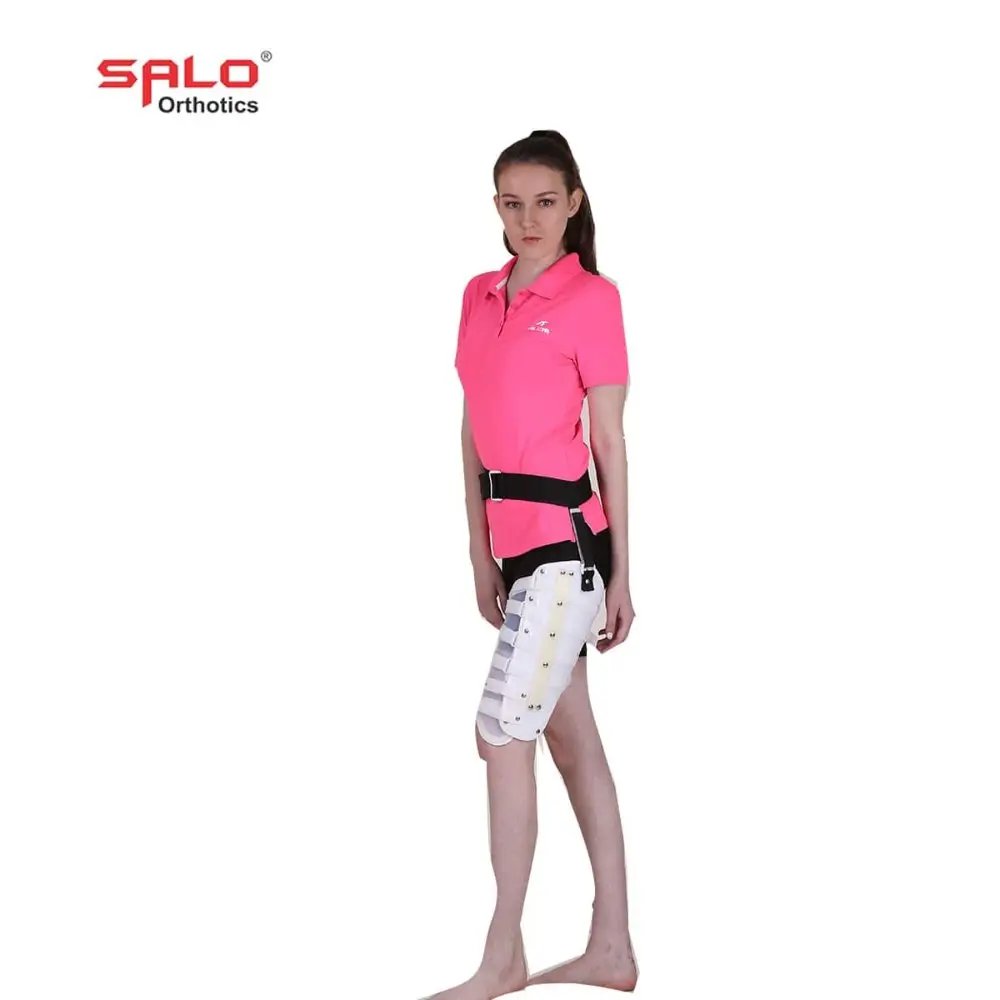
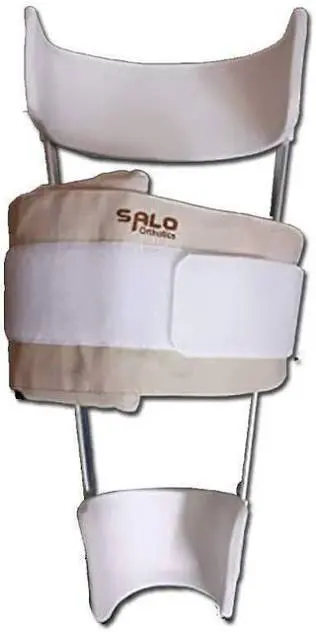
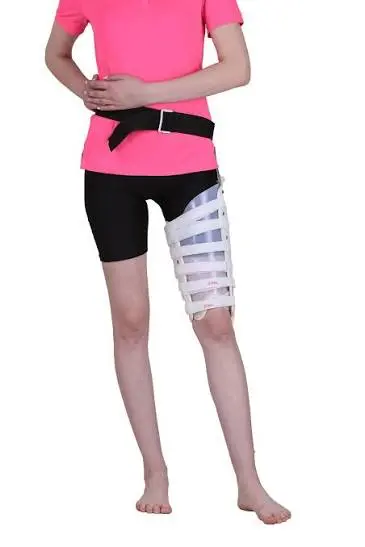
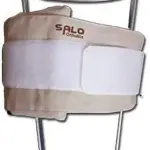
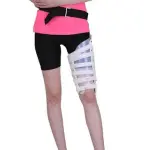
Femoral Corset
Features
- Proximal Thigh Capture for Superior KAFO Suspension & Control
- Mediolateral Stability Through Bilateral Upright Connection
- Weight Sharing with the Thigh to Offload Distal Structures
- Indicated for Short Residual Limbs & Poor Knee Control in Amputees
- Custom-Fitted Leather or Thermoplastic Construction
- Adjustable Closure System for Volume-Responsive Secure Fit
- Versatile Application Across Orthotic & Prosthetic Clinical Contexts
Femoral Corset Custom Thigh Corset for KAFO Suspension, Prosthetic Weight Sharing, Mediolateral Stability & Distal Limb Offloading
The Femoral Corset is a foundational component of lower limb orthotics and prosthetics practice a custom-fitted thigh enclosure that functions as the proximal anchor, suspension platform, and mediolateral stability element within complex below-knee orthotic and prosthetic systems. Extending from the upper thigh to just proximal to the femoral condyles, the femoral corset works in direct mechanical partnership with medial and lateral metal uprights to form an integrated structural system that transmits, controls, and distributes the forces of body weight and lower limb movement across the thigh delivering a level of proximal stability and load sharing that calf band suspension systems and modern liner-based mechanisms cannot replicate in the clinical presentations for which the corset design is specifically indicated.
Historical Context & Enduring Clinical Relevance
The thigh corset and side-bar suspension system is among the oldest and most clinically validated designs in lower limb prosthetics and orthotics predating modern thermoplastic and silicone liner technologies by decades. While advances in socket design and suspension technology have progressively reduced the prevalence of corset suspension in mainstream prosthetic practice, the femoral corset retains clear, evidence-supported clinical indications where its unique biomechanical properties make it the prescription of choice. The joints and thigh corset suspension is used by transtibial amputees and is one of the original suspension designs, used today by patients who have very short residual limbs or who experience poor control of the knee during ambulation clinical presentations that remain as prevalent today as when the corset design was first developed, and for which no functionally equivalent modern alternative has entirely replaced it.
The Biomechanics of Femoral Corset Suspension & Load Sharing
The primary biomechanical functions of the femoral corset are suspension, mediolateral stability, and thigh-level weight sharing three interrelated mechanical contributions that together produce an orthotic or prosthetic system of exceptional proximal control and load distribution capability.
As a suspension mechanism, the corset wraps circumferentially around the thigh, creating a broad proximal grip that prevents the below-knee orthotic or prosthetic assembly from migrating distally during the swing phase of gait the pistoning motion that is the most common functional complaint of amputees using inadequate suspension systems and that produces skin abrasion, socket discomfort, and loss of rotational control during walking. The large surface area of the corset contact distributes the suspension forces broadly across the thigh, avoiding the localised skin pressure and soft tissue irritation that can occur with narrow strap or cuff suspension designs a significant comfort advantage in patients with sensitive or fragile thigh skin, including elderly patients and those with a history of skin complications.
As a mediolateral stability element, the corset's rigid connection to the medial and lateral uprights controls frontal plane forces at the knee resisting the valgus and varus moments that occur during stance phase and that, in patients with knee ligament insufficiency, quadriceps weakness, or post-fracture instability, would otherwise cause the knee to collapse or buckle during weight-bearing. Thigh bands provide structural stability to the orthosis, and if the distal portion of the extremity cannot tolerate full weight bearing, the proximal thigh band may be shaped to form a weight-bearing brim similar to a quadrilateral transfemoral prosthetic socket enabling the femoral corset to function as a weight-bearing brim in its most advanced configuration, completely eliminating distal limb loading in patients for whom any weight-bearing through the tibia, ankle, or foot is clinically contraindicated.
Clinical Indications in Transtibial Prosthetics
In transtibial prosthetics, the femoral corset and metal side-bar suspension is specifically prescribed in two primary clinical scenarios. The first is the patient with a very short transtibial residual limb where the short lever arm and small socket contact area provide insufficient rotational and mediolateral control without proximal augmentation, and where the thigh corset extends the effective mechanical control of the prosthetic system from the socket to the thigh, dramatically improving stability and control during walking. The second is the patient with poor knee control or instability during ambulation where the medial and lateral uprights connecting the femoral corset to the prosthetic socket provide direct mechanical reinforcement of the knee joint, preventing the lateral thrust, hyperextension, or mediolateral instability that would otherwise compromise safe walking and limit the patient's functional independence.
Clinical Indications in KAFO & Orthotic Management
Within knee-ankle-foot orthosis (KAFO) design, the femoral corset serves as the proximal stabilisation component that anchors the entire brace to the thigh ensuring that the mechanical correction and joint control delivered by the orthosis is maintained accurately throughout the gait cycle without proximal migration, rotation, or positional inaccuracy that would compromise the clinical outcome. For patients managing neurological conditions such as post-polio syndrome, spinal cord injury, multiple sclerosis, or cerebral palsy where significant thigh and knee muscle weakness requires a comprehensive mechanical support system the femoral corset provides the proximal control that transforms the KAFO from a distal support device into a full lower limb management system with the capacity to assist standing and walking in patients with severe neuromuscular deficits.
In femoral fracture management, the corset component of a fracture brace provides the thigh-level compressive and supportive environment that stabilises the fracture fragments through soft tissue hydraulics and controlled mechanical loading an application pioneered by Sarmiento's functional fracture bracing principles and widely adopted in the conservative and post-operative management of femoral shaft fractures.
Fabrication, Materials & Fitting
The femoral corset is individually custom-fabricated to the patient's thigh dimensions either from traditional leather, which offers durability, breathability, and ease of modification, or from modern thermoplastic materials such as polypropylene or polyethylene, which provide lighter weight, more consistent shaping, and superior hygiene performance. The choice of material is guided by the patient's clinical needs, activity level, weight, skin condition, and the specific biomechanical requirements of the orthotic or prosthetic system being constructed.
The fitting process requires careful attention to the key anatomical landmarks that determine the corset's functional effectiveness the proximal brim level, the distal trim line relative to the femoral condyles, the medial and lateral upright attachment points, and the closure system tension. Regular clinical review is essential to monitor skin condition under the corset, assess the adequacy of suspension and mediolateral control, and adjust the corset trim, padding, or closure system as the patient's limb volume and clinical status evolve during rehabilitation.
Indicated For:
Transtibial amputees with very short residual limbs requiring thigh-level suspension, transtibial amputees with knee instability or poor knee control during ambulation, KAFO systems for neurological and orthopaedic conditions requiring proximal thigh stabilisation, femoral fracture functional bracing, complete distal limb offloading via weight-bearing brim configuration, post-stroke hemiplegia with significant thigh and knee muscle weakness, post-polio syndrome lower limb management, spinal cord injury ambulation with KAFO, and any clinical presentation requiring proximal thigh-level control, suspension, or weight sharing within a below-knee orthotic or prosthetic system.
Add your review
Your email address will not be published. Required fields are marked *
Please login to write review!
Looks like there are no reviews yet.

M. A. Medical Supports