
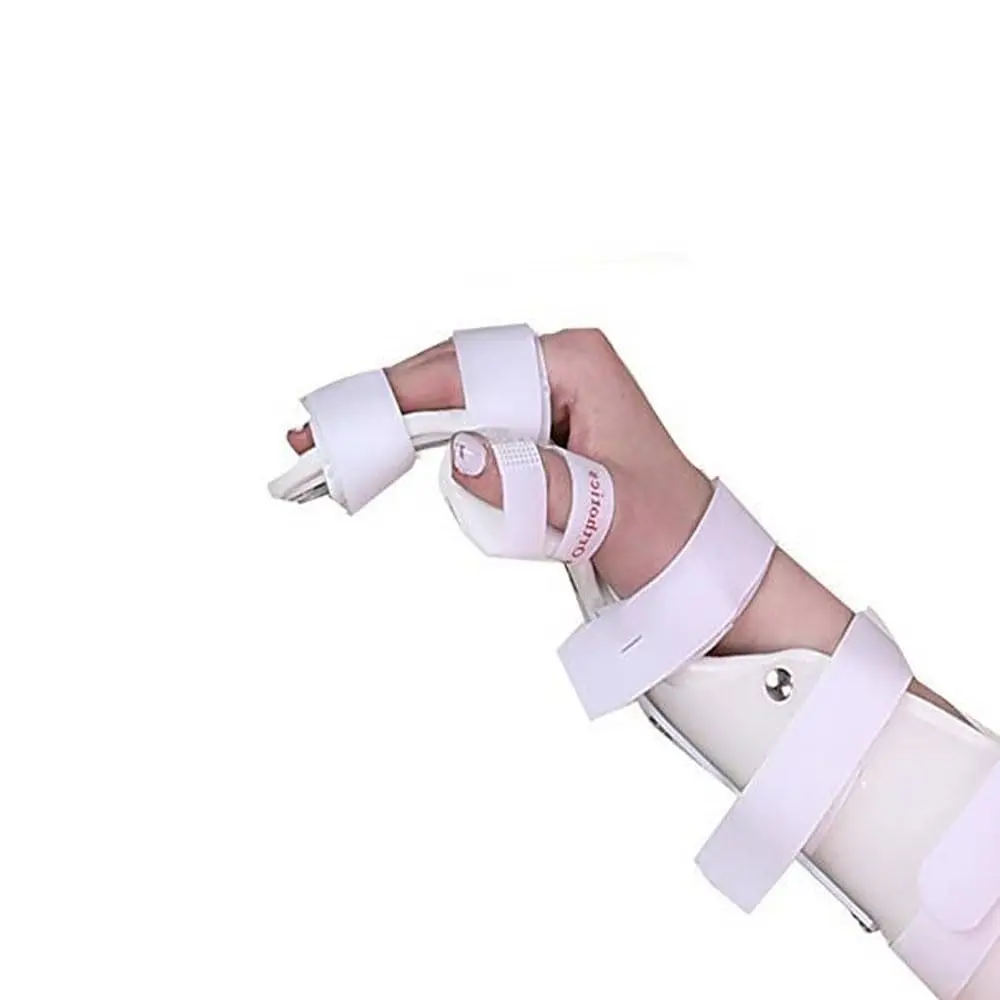
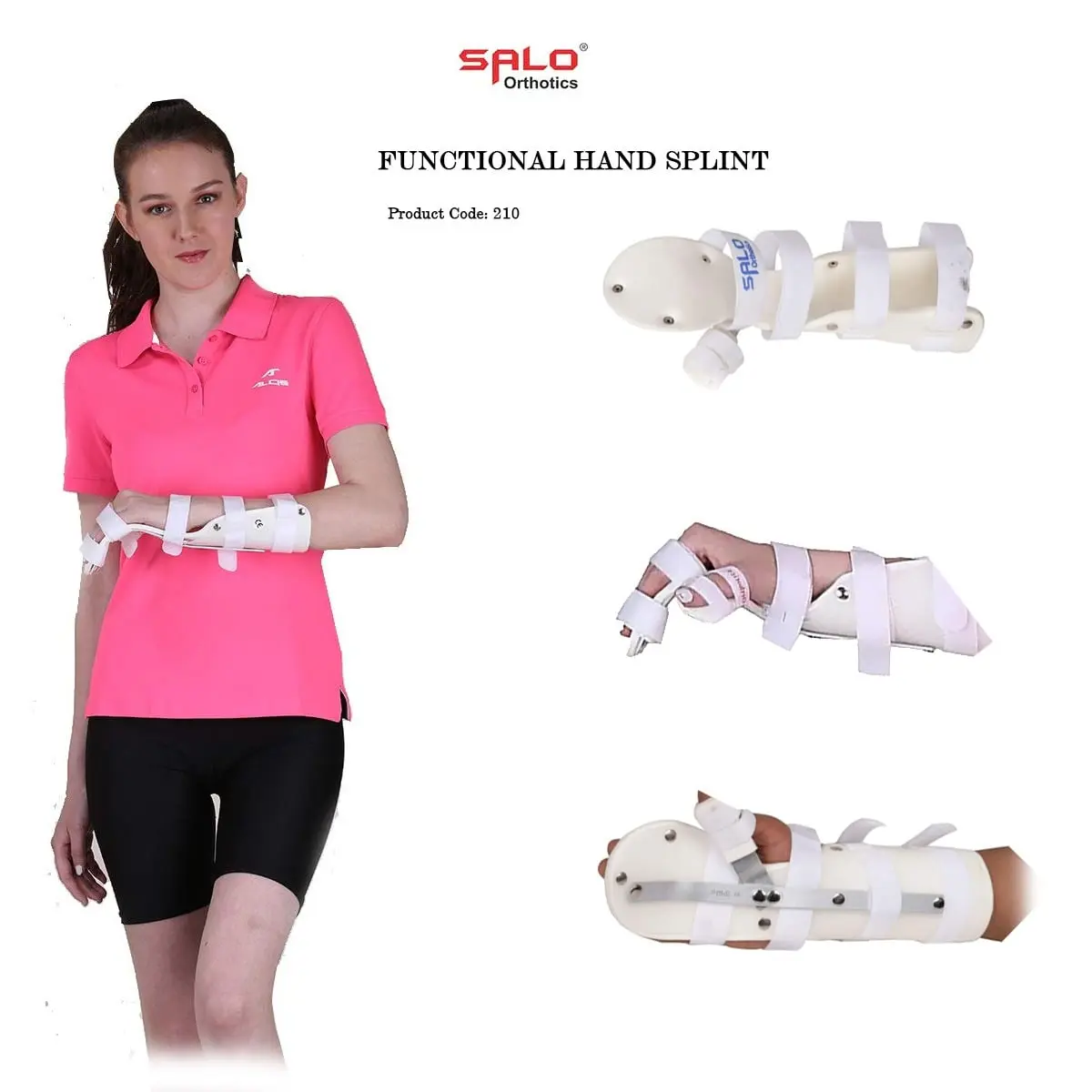

Functional Hand Splint
Features
- Functional Positioning for Active Grasp & Release During Daily Activities
- Dynamic Spring-Assisted Finger Extension for Grasp-Release Rehabilitation
- Wrist Support in Functional Extension for Optimised Grip Biomechanics
- Clinically Indicated for Stroke, Traumatic Brain Injury & Cerebral Palsy
- Prevents Flexion Contracture While Enabling Active Therapeutic Participation
- Custom-Mouldable Thermoplastic Construction for Precise Anatomical Fit
- Applicable for Both Neurological & Orthopaedic Hand Rehabilitation
Functional Hand Splint Dynamic Wrist-Hand Orthosis for Neurological Spasticity, Stroke Rehabilitation, Cerebral Palsy & Post-Surgical Hand Function Restoration
The Functional Hand Splint is a purpose-designed dynamic wrist-hand orthosis that occupies a unique and clinically critical position in upper limb rehabilitation bridging the therapeutic gap between the passive protection of a resting hand splint and the unassisted functional demands of daily hand use. By positioning the wrist and fingers in the extension configuration required for effective voluntary grip while providing spring-assisted finger opening following active grasp, the functional hand splint enables patients with neurological upper limb impairment to engage in the active, task-oriented hand rehabilitation that drives neuroplastic recovery transforming the orthosis from a passive protective device into an active partner in the rehabilitation process that expands what the patient can functionally achieve every time it is worn.
The Rehabilitation Philosophy: Why Function Matters in Hand Splinting
The fundamental clinical distinction between a functional hand splint and a resting or immobilisation hand splint lies in the therapeutic philosophy each embodies. A resting hand splint prioritises protection, positioning, and passive contracture prevention clinical goals of unquestionable importance but achieves them at the cost of hand function during the wearing period, requiring the patient to remove the splint entirely for any active hand use. The functional hand splint takes a fundamentally different approach: it delivers its therapeutic positioning and contracture prevention effect not through immobilisation but through dynamic, movement-permitting support that simultaneously enables the patient to practise the functional tasks that are the most powerful drivers of neurological recovery and motor learning.
A dynamic orthosis used for function works by allowing movement at specific parts of the hand, supporting the part of the hand through allowing motion that may be lost due to injury, surgery, or various other conditions a concise clinical definition that captures the essence of the functional hand splint's therapeutic value: it does not replace movement but enables it, does not restrict function but supports it, and does not merely protect the hand from deterioration but actively drives its recovery.
Neuroplasticity & the Grasp-Release Training Mechanism
The clinical evidence base for task-oriented, repetitive upper limb training as a driver of neuroplastic recovery following stroke and other neurological injuries is among the strongest in rehabilitation research. Neuroplasticity the brain's capacity to reorganise its functional architecture in response to experience and practice is the biological mechanism through which meaningful motor recovery occurs in the neurologically impaired upper limb, and the volume, intensity, and functional specificity of practice are the primary determinants of the extent of neuroplastic change achieved. The functional hand splint directly operationalises this evidence by enabling patients with moderate-to-severe hand spasticity and paresis to perform the repetitive grasp-and-release movements reaching for, gripping, lifting, placing, and releasing objects that constitute the most neurologically potent form of upper limb rehabilitation practice.
These unique orthoses position the wrist and fingers into extension in preparation for object manipulation the user is able to grasp objects by voluntarily flexing fingers, and once the fingers relax, the extension spring system assists in re-opening the hand to release the object the spring-assisted opening component is particularly important in this context, as the inability to release an object following voluntary grip is one of the most prevalent and functionally limiting deficits in post-stroke hand rehabilitation, and one that effectively prevents task-oriented grasp practice in patients who lack sufficient voluntary finger extension to re-open the hand without assistance. The functional hand splint's spring extension system eliminates this barrier, enabling the patient to repeat grasp-and-release cycles with the affected hand across the high practice volumes that neuroplastic recovery demands.
Wrist Extension: The Biomechanical Foundation of Functional Grip
The wrist extension positioning provided by the functional hand splint's base component is not merely a comfort feature it is a biomechanical prerequisite for functional grip performance. The wrist occupies a central position in the kinematic chain of upper limb reaching and grasping: when the wrist is held in a neutral or mildly extended position, the extrinsic finger flexors operate at an optimal point on their length-tension curve, generating maximum grip force per unit of muscular activation. When the wrist collapses into flexion as it does in radial nerve palsy, post-stroke wrist drop, and spastic hand presentations where wrist extensor weakness is compounded by flexor spasticity the extrinsic finger flexors shorten to an inefficient length that dramatically reduces grip force capacity even when the patient has sufficient voluntary activation to attempt a grip.
By maintaining the wrist in functional extension, the functional hand splint restores the biomechanical efficiency of finger flexor contraction, enabling the patient to generate a functionally meaningful grip force from whatever voluntary muscle activation they possess maximising the functional utility of the patient's existing neuromuscular capacity and enabling them to engage in object manipulation tasks that their unsupported wrist position would make biomechanically impossible.
Cerebral Palsy: Functional Splinting in Paediatric Neurological Management
The functional hand splint has a well-established and evidence-supported role in the management of upper limb involvement in unilateral cerebral palsy where spasticity, voluntary motor control deficits, and the progressive deformity risk of untreated flexor hypertonia create a complex clinical picture requiring orthotic intervention that both manages the underlying neuromuscular disorder and supports the child's engagement in the bimanual functional activities that are the cornerstone of paediatric hand rehabilitation. The application of a functional upper limb orthosis together with a home-based programme of specific tasks in children with unilateral cerebral palsy results in greater improvement in structure and function, activity and participation positioning the functional hand splint not as a standalone intervention but as a component of a comprehensive, occupation-focused rehabilitation approach that combines passive orthotic support with active task-specific practice to achieve the best functional outcomes for children with hemiplegic cerebral palsy.
Orthopaedic Applications: Tendon Repair & Post-Surgical Hand Rehabilitation
Beyond neurological presentations, the functional hand splint serves important clinical purposes in orthopaedic hand rehabilitation. Following flexor tendon repair where the primary risk is adhesion formation between the repaired tendon and its surrounding sheath during the healing phase controlled active motion protocols require the patient to perform carefully defined finger movements that achieve tendon gliding without overstressing the repair site. The functional hand splint provides the wrist positioning and digital guidance that enables these controlled active motion exercises to be performed correctly and safely, preventing the uncontrolled wrist loading and finger postures that would risk tendon rupture while ensuring that the therapeutic tendon excursion required to prevent adhesion formation is achieved within every exercise session.
For metacarpal and phalangeal fractures managed with early mobilisation protocols where premature but controlled motion has been shown to produce superior long-term outcomes compared to prolonged immobilisation the functional hand splint provides the structural hand support required to protect the healing fracture while enabling the therapeutic active motion that prevents joint stiffness and tendon adherence.
Wearing Schedule, Clinical Goals & Outcome Measurement
The wearing schedule for the functional hand splint is determined by the treating occupational therapist based on the patient's diagnosis, neurological status, upper limb function level, and rehabilitation goals. In neurological applications, the splint is typically worn during structured therapy sessions where it enables the high-volume, task-oriented practice that the rehabilitation programme prescribes and may also be prescribed for specific functional activities during daily life where grasp-and-release support significantly expands the patient's independence. In orthopaedic applications, the wearing schedule follows the specific protocol associated with the surgical procedure performed.
Outcome measurement at regular clinical reviews tracks the functional gains achieved with the splint in situ using standardised assessments of grip strength, total active motion, tip-to-palm distance, and functional performance measures and the maintenance of these gains without the splint, which is the ultimate measure of neurological recovery and the progressive reduction in orthotic dependence that is the long-term therapeutic goal.
Indicated For:
Post-stroke upper limb spasticity and paresis with moderate-to-severe hand involvement, traumatic brain injury upper limb rehabilitation, cerebral palsy hemiplegic hand management, brachial plexus injury functional hand support, radial nerve palsy and wrist drop with finger involvement, flexor tendon repair controlled active motion protocols, metacarpal and phalangeal fracture early mobilisation, post-hand surgery functional rehabilitation, any neurological or orthopaedic condition where wrist and finger extension support is required to enable functional grasp-and-release activity, and any clinical presentation requiring the combination of hand contracture prevention and active functional hand rehabilitation within a single wearing session.
Add your review
Your email address will not be published. Required fields are marked *
Please login to write review!
Looks like there are no reviews yet.

M. A. Medical Supports