
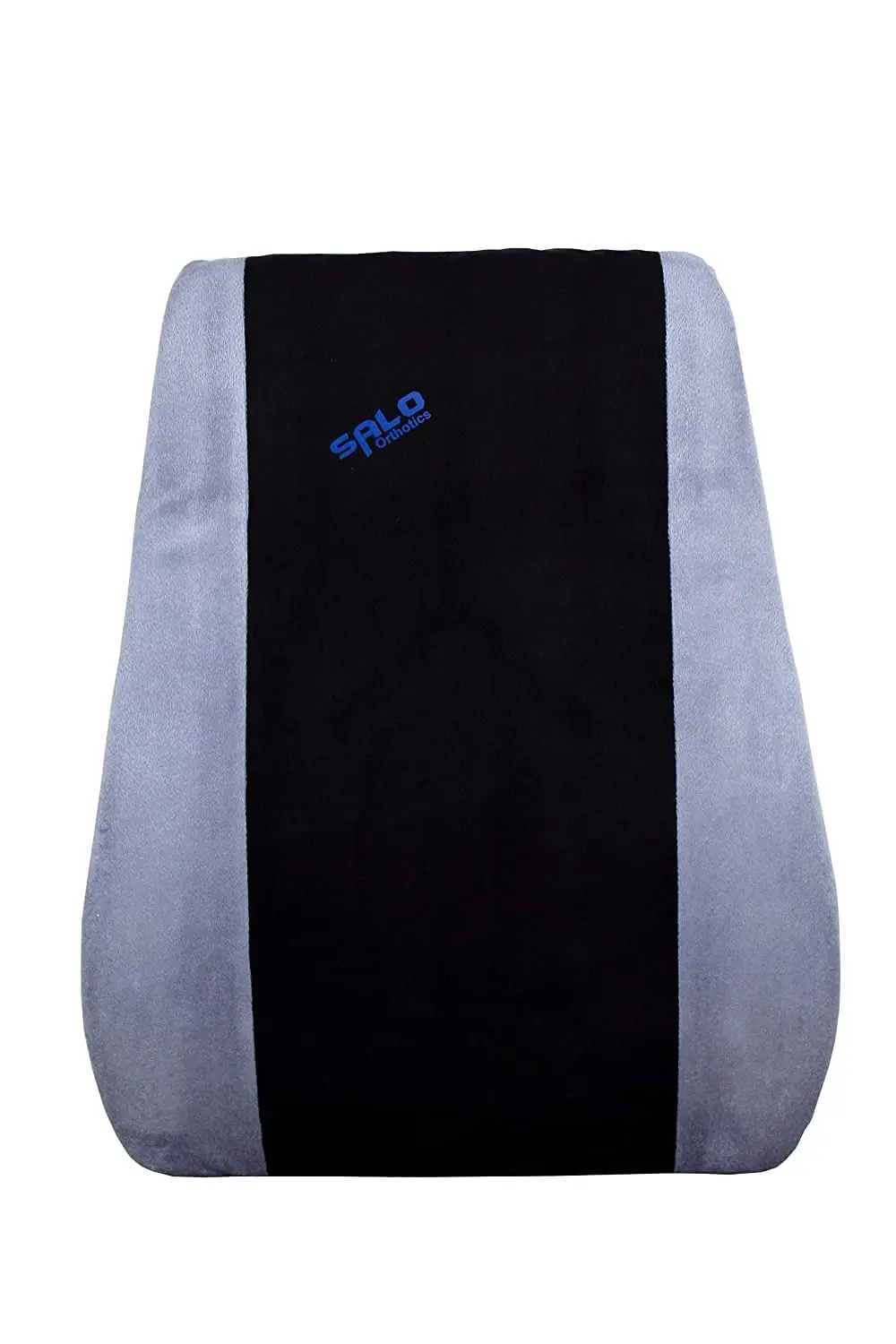
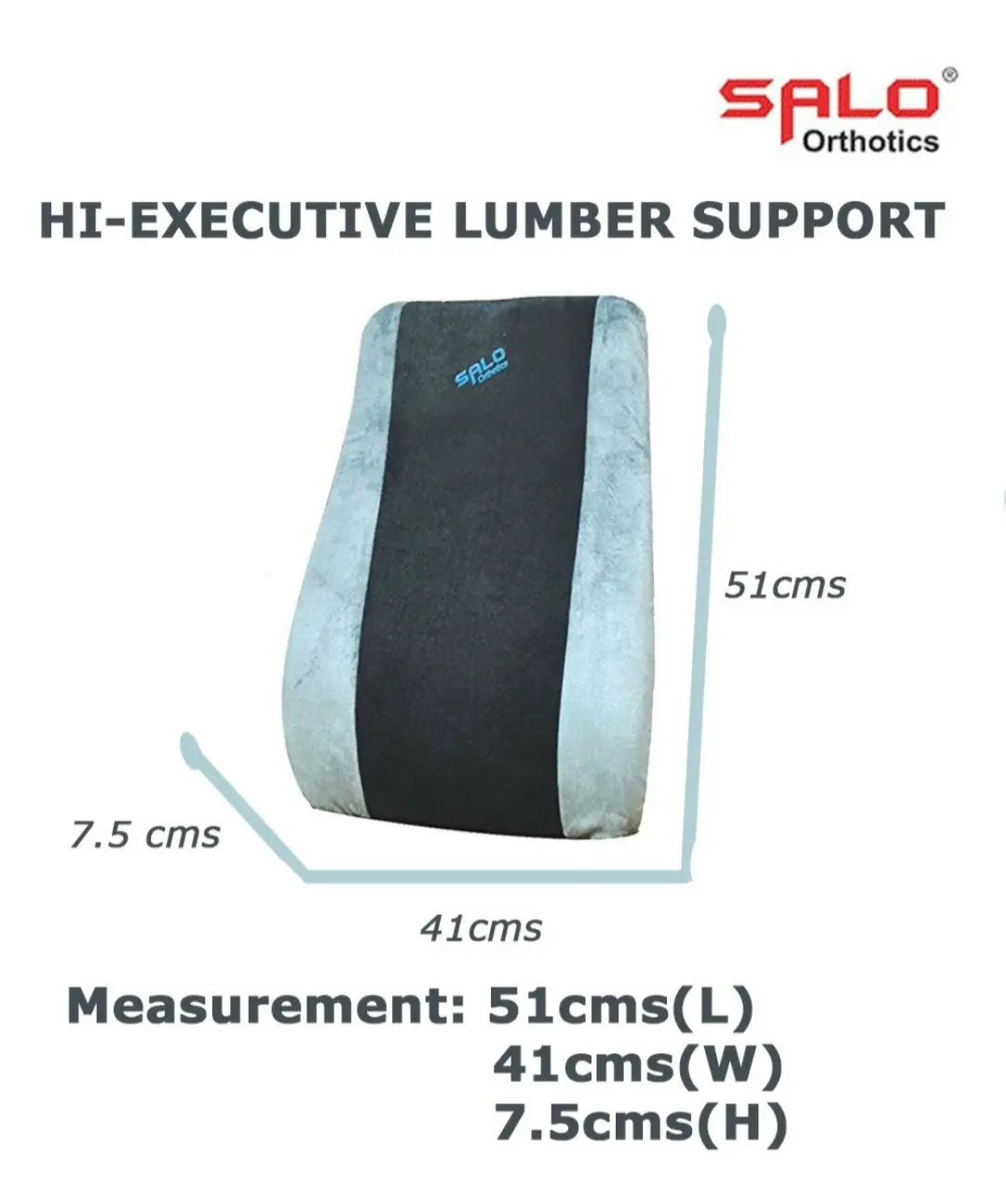
High Executive Back Support
Features
- Full-Length High-Back Coverage from Lumbar to Upper Thoracic Spin
- Contoured S-Curve Design That Mirrors the Natural Spinal Curvature
- Premium Memory Foam Core for Personalised, Pressure-Distributing Back Support
- Integrated Lumbar Prominence for Targeted Lower Back Pain Relief
- Adjustable Dual Straps for Secure Positioning at the Correct Spinal Height
- Breathable Mesh or PU Outer Surface for Professional Appearance & Thermal Comfort
- Universally Compatible with Executive Chairs, High-Back Office Seats & Car Seats
High Executive Back Support Full-Length Ergonomic Back Cushion for Complete Spinal Coverage, Lumbar & Thoracic Pain Relief & Executive Seated Posture Correction
The High Executive Back Support is a premium, full-length ergonomic back cushion engineered to deliver comprehensive posterior spinal support from the lumbar region to the upper thoracic spine addressing the complete seated postural support requirements of executives, professionals, and high-level office workers whose demanding work schedules demand sustained, intensive seated concentration across full working days, extended board meetings, and long-distance business travel. By extending the supportive profile of a conventional lumbar cushion upward through the thoracic spine to provide total back coverage, the High Executive Back Support transcends the limitations of standard lumbar-only supports delivering the multi-level spinal alignment and full posterior contact support that only a true high-back coverage system can achieve.
Why High-Back Coverage Is Clinically Superior to Lumbar-Only Support
The fundamental clinical limitation of the conventional lumbar cushion despite its well-established benefits for lower back pain relief is its restriction of supportive contact to the lower back segment alone. While the lumbar spine is undoubtedly the primary site of seated pain generation and disc loading, the thoracic spine, upper back, and posterior shoulder girdle are equally vulnerable to the postural dysfunction, muscular fatigue, and referred pain that prolonged unsupported seated posture generates particularly in executive roles where sustained keyboard use, screen reading, videoconferencing, and document review impose continuous muscular demands on the thoracic erector spinae, rhomboids, and trapezius musculature throughout the working day.
High back chairs provide full-back lumbar support as well as support for the upper back and shoulders the backrest extends from the lower back all the way to the upper back, providing support for the entire spine, making high-back chairs an excellent choice for those who spend a lot of time sitting and need complete back support the clinical rationale for high-back coverage is straightforward: the entire posterior spinal column benefits from supported contact with the chair back during prolonged sitting, not merely the lumbar segment. When the upper and middle thoracic spine are unsupported, the thoracic erector spinae and paraspinal musculature must maintain sustained low-level contraction to prevent the thoracic spine from sagging forward into the kyphotic, round-shouldered posture that is the characteristic occupational postural deformity of desk workers generating the progressive thoracic muscle fatigue, interscapular pain, and cervicothoracic tension that are as prevalent and functionally disabling as lumbar pain in executive populations.
The Full Spinal Cascade: Understanding Thoracolumbar Postural Interdependence
The clinical importance of full-length back support extends beyond simple mechanical coverage of a larger spinal area it reflects a deeper biomechanical reality: the cervical, thoracic, and lumbar spinal curves are not independent structures but a single, biomechanically integrated column whose regional curves exist in reciprocal, interdependent positional relationships. When the lumbar lordosis is lost in unsupported sitting, the pelvis tilts posteriorly, the thoracic kyphosis increases as the thoracolumbar junction flexes forward, and the cervical spine extends to maintain horizontal gaze the progressive postural cascade that converts an upright, naturally curved spine into the C-shaped slumped posture that concentrates mechanical loading at the thoracolumbar junction, increases cervical muscle activation demands, and generates the multi-level pain pattern that characterises advanced occupational postural dysfunction.
The High Executive Back Support interrupts this postural cascade at multiple levels simultaneously the lumbar prominence restores the lumbar lordosis and anteriorly tilts the pelvis, the mid-thoracic support zone prevents the upper back from sagging forward under gravitational load, and the upper thoracic coverage zone supports the upper thoracic spine and posterior shoulder girdle in an aligned, retracted position that reduces the cervicothoracic junction stress that forward head posture and rounded shoulder posture generate during sustained desk work. This multi-level postural intervention is clinically more effective than lumbar-only support precisely because it addresses the full spinal cascade rather than one component of it providing the comprehensive postural framework within which the entire spine can maintain healthy alignment simultaneously.
Memory Foam Technology: Personalised Contouring Across the Full Back Surface
The premium memory foam construction of the High Executive Back Support is particularly clinically significant in the context of full-length back coverage, where the anatomical variability across the lumbar, thoracic, and cervicothoracic regions creates a diverse and complex contact surface that rigid or semi-rigid cushion materials cannot conform to accurately. The lumbar region has a variable lordotic curve depth that differs substantially between individuals from the flat or even reversed lumbar curve of individuals with severe hypolordosis to the pronounced anterior convexity of those with exaggerated lordosis. The thoracic region has a natural posterior convexity that must be accommodated without generating excessive posterior thrust on the thoracic spine. The cervicothoracic junction region has bony prominences and variable soft tissue depth that require gentle, even contact distribution.
The memory foam's temperature-sensitive viscoelastic response addresses all of these anatomical variables within a single continuous support surface softening and yielding at the lumbar contact zone to the depth of the individual's lordotic curve, providing appropriate posterior contact at the mid-thoracic level without excessive pressure on the spinous processes, and distributing contact forces evenly across the full height of the cushion's posterior spinal contact zone. Memory foam combined with an adjustable lumbar support system provides incredible ergonomic stability to reduce back pain adjust the ratchet back height specifically so you get the lumbar support where you need it most the combination of memory foam personalised contouring with the adjustable positioning straps of the High Executive Back Support creates a dual-adaptation system that addresses both individual anatomical variation and precise positional calibration within a single clinically comprehensive device.
Executive Ergonomics: The Occupational Health Case for Investment in Back Support
The High Executive Back Support is a clinically informed response to the well-documented occupational health burden of work-related musculoskeletal disorders (WRMSDs) in professional and executive populations. Lower back pain is the leading cause of disability worldwide, and prolonged seated office work is among its most significant occupational risk factors with evidence consistently demonstrating dose-response relationships between daily sitting duration and the prevalence and severity of lower back and thoracic musculoskeletal complaints. For executives and senior professionals whose roles demand extended daily seated work across high-pressure, cognitively demanding tasks, the musculoskeletal health implications of inadequate seated support extend beyond personal comfort to encompass sustained concentration capacity, decision-making quality, and the sustained high-performance professional function that demanding leadership roles require.
Whether you choose a low-, mid- or high-back chair, it should have several ergonomic features that improve your posture, protect your health, and increase your productivity and the High Executive Back Support provides these ergonomic features as a portable, chair-agnostic addition that transforms any standard chair regardless of its inherent ergonomic specification into a properly supported, full-spine-aligned seated workstation. The practical and economic implication is significant: a single High Executive Back Support converts an inadequately supportive executive chair into a clinically appropriate ergonomic seating solution without the substantial expenditure of a premium ergonomic chair replacement.
Professional Aesthetics: Design Appropriate for the Executive Environment
The High Executive Back Support is engineered not only to meet the functional ergonomic requirements of executive back support but to do so within the professional visual context of high-level office, boardroom, and business travel environments where the appearance of seated accessories is a relevant practical consideration. The premium outer surface available in PU leather, bonded leather, or breathable professional-grade mesh delivers a sophisticated, boardroom-appropriate aesthetic that integrates seamlessly with the visual language of high-end executive seating without the clinical or domestic appearance that undermines the professional setting in which the cushion is used.
Fitting, Positioning & Daily Use Guidance
The High Executive Back Support should be positioned with the lower edge at the level of the upper sacrum and the lumbar prominence aligned with the natural lumbar curve at the L3–L4 level the anatomical position that delivers maximum lumbar lordosis restoration while allowing the remainder of the cushion to provide proportionate thoracic support above. The dual adjustable straps secure the cushion at this position, preventing downward migration during the recline, forward lean, and lateral reaching movements of active executive seated work. Users should sit fully back into the cushion, allowing the full posterior contact surface of the High Executive Back Support to engage simultaneously with the lumbar and thoracic regions adopting the upright, posteriorly-supported posture that is the foundational position for healthy executive seated work.
Indicated For:
Executive and senior professional prolonged desk work, boardroom and conference room seated use, lower back pain from office chair inadequacy, thoracic back pain and interscapular pain from upper back unsupported sitting, forward head posture and round-shouldered postural dysfunction secondary to thoracic kyphosis, cervicothoracic junction pain from combined lumbar and thoracic postural cascade, long-distance business travel in car seats and airline seating, lumbar disc disease and thoracic facet joint pain aggravated by seated work, post-operative lumbar or thoracic spine return to executive work, and any professional or executive individual requiring comprehensive full-length posterior spinal support across the complete working day in office, boardroom, and travel seated environments.
Add your review
Your email address will not be published. Required fields are marked *
Please login to write review!
Looks like there are no reviews yet.

M. A. Medical Supports