
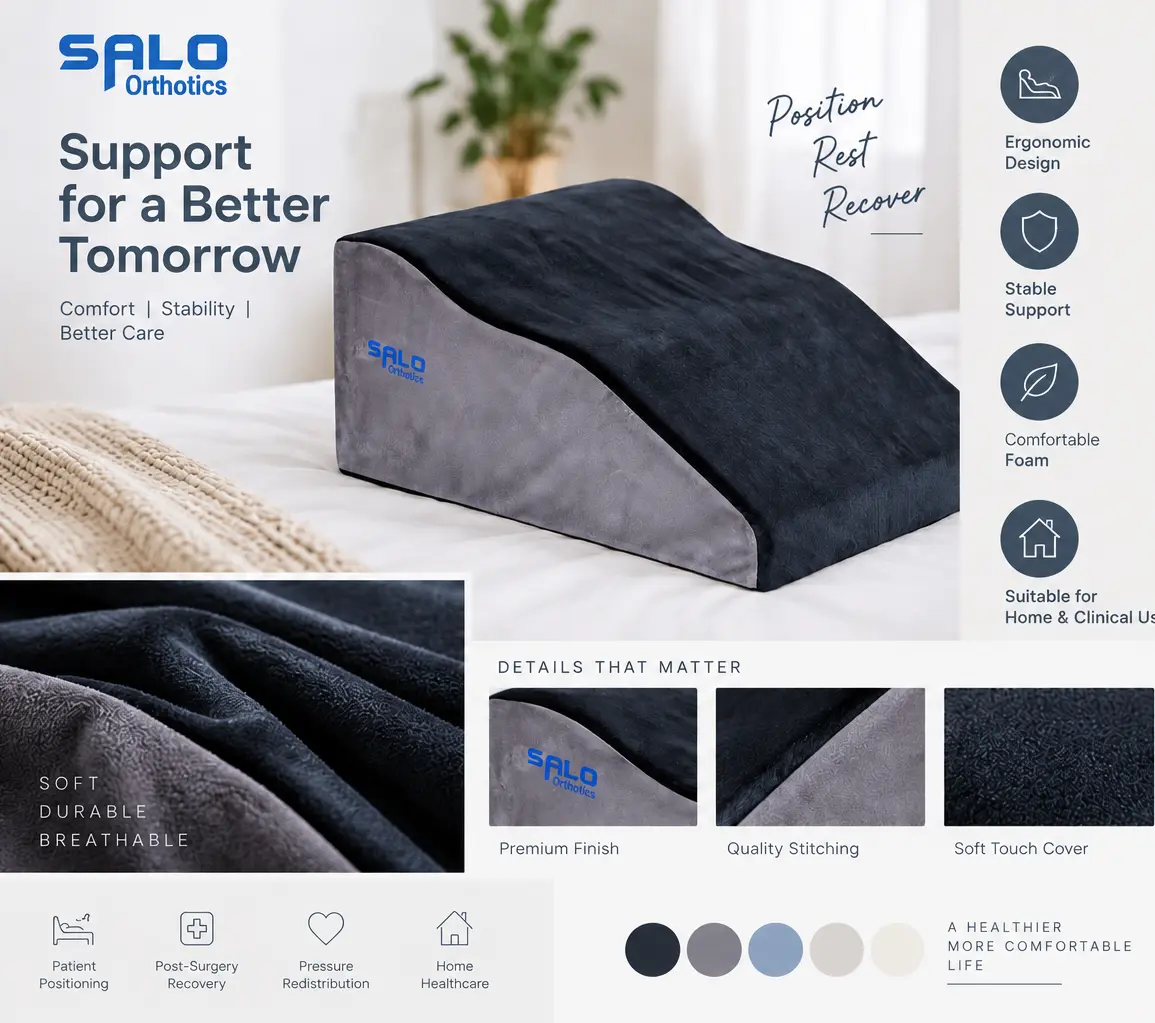
Leg Elevation Pillow (Size - 11")
Features
- Maximum Therapeutic Elevation at 11 Inches for Severe Swelling & Lymphoedema Management
- Medical-Grade High-Density Foam Core for Structural Integrity at Maximum Elevation
- Graduated Slope Profile for Full-Length Lower Limb Support from Heel to Thigh
- Accelerates Post-Surgical Oedema Resolution for Faster Return to Mobility
- Clinically Indicated for Lymphoedema, Chronic Venous Insufficiency & Varicose Veins
- Versatile Multi-Position Use for Leg Elevation, Lumbar Support & Reading
- Fluid-Resistant, Breathable, Machine-Washable Medical-Grade Cover
Leg Elevation Pillow (11 Inch) High-Incline Medical-Grade Foam Wedge for Severe Oedema, Lymphoedema, Chronic Venous Insufficiency, Post-Surgical Swelling & Maximum Gravitational Venous Drainage
The Leg Elevation Pillow (Size - 11") is a premium, medical-grade high-incline foam wedge cushion engineered to deliver maximum gravitational lower limb elevation for clinical presentations requiring a greater therapeutic elevation height than standard 8-inch wedges can provide. By raising the lower limbs to an 11-inch elevation above the recumbent mattress surface substantially exceeding the heart level in virtually all adult anatomical configurations this pillow generates the steeper gravitational pressure gradient that drives more rapid, more complete venous blood and interstitial fluid return from the elevated lower limbs toward the central circulation, addressing the severe post-surgical oedema, established lymphoedema, advanced chronic venous insufficiency, and significant lower limb swelling presentations that demand the highest clinically practical level of passive gravitational drainage during therapeutic rest and sleep.
Why 11 Inches: Understanding the Clinical Rationale for Higher Elevation
The selection of the appropriate leg elevation height is a clinically significant decision that should be driven by the severity of the oedema, the underlying condition driving fluid accumulation, and the patient's anatomical and comfort considerations not by a one-size-fits-all approach to elevation prescription. For swelling or circulation issues, a higher incline is recommended to elevate the legs above heart level higher wedges of 10–12 inches or more are for users requiring significant elevation, typically to reduce severe swelling or pain the 11-inch elevation pillow is specifically indicated for the subset of clinical presentations in which standard 8-inch elevation while effective for mild-to-moderate oedema provides insufficient gravitational drainage force to achieve the rate of fluid clearance required for clinical effectiveness.
The physiological basis for this indication is straightforward: the gravitational drainage force acting on the venous and lymphatic fluid columns of the elevated lower limb is directly proportional to the vertical height difference between the elevated foot and the level of the heart. An additional 3 inches of elevation above the 8-inch standard as the 11-inch pillow provides generates a measurably greater hydrostatic pressure gradient between the foot and the heart, increasing the passive venous and lymphatic return rate proportionally. In clinical presentations where fluid accumulation is severe, where lymphatic transport capacity is significantly impaired, or where the normal venous pressure gradient has been substantially disrupted by chronic disease, this additional elevation gradient can be the determining factor in whether overnight leg elevation achieves clinically meaningful fluid drainage or merely maintains the existing oedema volume without reduction.
The Distinction Between 8-Inch and 11-Inch Clinical Indications
Understanding when to prescribe the 11-inch elevation pillow over the standard 8-inch variant requires a clear clinical framework for elevation height selection. The 8-inch pillow identified as the everyday sweet spot for routine oedema and recovery is appropriate for mild-to-moderate post-surgical oedema in the first two to four weeks following lower limb procedures, for pregnancy-related dependent leg swelling, for varicose vein symptom management, for restless leg syndrome, and for the musculoskeletal pain relief indications of knee arthritis and sciatica where the primary therapeutic goal is pressure redistribution and spinal flexion relief rather than aggressive fluid drainage.
The 11-inch elevation pillow is specifically indicated in more severe or refractory presentations: established lymphoedema where impaired lymphatic transport severely limits the rate of interstitial fluid clearance achievable through standard elevation; advanced chronic venous insufficiency with persistent severe leg swelling despite consistent use of lower elevation levels; severe post-surgical oedema following major lower limb reconstructive procedures including complex tibial osteotomies, below-knee amputation revision surgery, and extensive soft tissue flap reconstructions where the degree of surgical trauma, the extent of lymphatic disruption, and the volume of post-operative inflammatory exudate produce oedema of exceptional severity requiring the maximum available gravitational drainage; and presentations where the patient's body habitus, leg length, and anatomical heart-to-foot height relationship require greater elevation to achieve the above-heart positioning that provides effective venous drainage during recumbent use.
Lymphoedema Management: The Highest-Demand Clinical Indication
A medical-grade device designed to provide essential support and comfort to patients recovering from surgery, managing lymphoedema, or experiencing chronic venous insufficiency lymphoedema, arising from impaired lymphatic transport capacity following lymph node dissection, radiotherapy to regional lymphatic chains, primary lymphatic system malformation, or filariasis, presents the most demanding clinical challenge for leg elevation therapy. Unlike venous oedema where the excess interstitial fluid is relatively low in protein content and is efficiently cleared through the intact lymphatic system once venous hypertension is reduced lymphoedema is characterised by the accumulation of high-protein lymphatic fluid in the interstitial space due to the absence or impairment of the lymphatic channels through which this fluid would normally be cleared.
The high protein content of lymphoedema fluid makes it more viscous, more resistant to gravitational drainage, and more prone to stimulating the fibrotic changes in subcutaneous tissue that are the hallmark of long-standing lymphoedema and that progressively reduce the tissue compliance required for effective elevation-driven fluid mobilisation. Managing this more challenging fluid accumulation requires the greatest available gravitational drainage force which is precisely what the 11-inch elevation pillow provides through its maximum-incline positioning above the heart level. Consistent nightly use of the 11-inch elevation pillow as a component of the complete decongestive therapy programme alongside manual lymphatic drainage, multilayer compression bandaging, and lymphoedema-specific exercise contributes to the overnight maintenance of the limb volume reductions achieved during intensive day-time decongestive therapy, preventing the nocturnal re-accumulation that standard elevation heights may incompletely control in severe lymphoedema presentations.
Post-Surgical Recovery: Severe and Complex Presentations
Patients recovering from surgeries, especially procedures involving the legs, knees, or lower back, often require leg elevation to minimise swelling and inflammation ergonomic solutions like wedge pillows and leg elevation pillows are crucial for this purpose, designed to elevate the legs at an optimal angle, improving blood flow and reducing swelling the 11-inch elevation pillow's application in post-surgical oedema management is most clinically justified following the procedures that generate the most severe and prolonged post-operative lower limb swelling. These include complex lower limb reconstructive surgery with extensive soft tissue dissection and lymphatic disruption, bilateral lower limb procedures where the combined oedema volume is substantially greater than unilateral presentations, major vascular reconstructive surgery where the post-operative venous hypertension from disrupted venous architecture generates severe dependent oedema, and revisional orthopaedic procedures where the established scar tissue and lymphatic disruption from prior surgery limits the effectiveness of standard elevation heights in achieving adequate post-operative fluid drainage.
Spinal Alignment at Maximum Elevation: Addressing the Lumbopelvic Consideration
A clinically important consideration in the prescription of higher-elevation leg pillows is the lumbopelvic effect of greater leg elevation angles during supine recumbency. As the legs are elevated to progressively greater heights, the hip flexion angle increases correspondingly, generating an anteriorly directed force on the lumbar spine through the hip flexor tension that tends to flatten the lumbar lordosis and increase lumbosacral disc loading during prolonged recumbent elevation. The foam wedge's gradually designed slope helps elevate a patient's legs and straightens their spine to ease pain the 11-inch leg elevation pillow's gradual, continuously graded slope profile minimises this lumbopelvic effect by distributing the hip flexion angle across the full length of the wedge rather than concentrating it at an abrupt angular step, allowing the lumbar spine to adopt a comfortable, sustainable neutral alignment during the extended elevation periods that lymphoedema and severe oedema management demand.
DVT Risk Reduction: Safety at Maximum Elevation Height
Reducing swelling is about more than just comfort one of the primary reasons doctors emphasise foot elevation is because it can significantly reduce the risk of developing DVT if left untreated, a clot can break off and travel to the lungs, causing a pulmonary embolism the DVT risk reduction benefit of leg elevation is directly proportional to the degree of venous stasis reduction achieved, which in turn is proportional to the elevation height above the heart. The 11-inch elevation pillow delivers the greatest available venous stasis reduction of any standard elevation height, making it the preferred choice for post-surgical patients at the highest DVT risk those with prior DVT history, known thrombophilia, severely impaired venous return, major lower limb reconstructive surgery, or extended post-operative immobility periods where the absence of ambulatory calf muscle pump activity makes passive gravitational venous drainage the primary available mechanism for preventing lower limb venous stasis.
Chronic Venous Insufficiency & Venous Ulceration: Advanced Disease Management
In advanced chronic venous insufficiency characterised by the skin changes, lipodermatosclerosis, and venous ulceration of severe long-standing venous hypertension consistent nightly leg elevation at maximum effective height is a cornerstone of conservative management alongside compression therapy. The 11-inch elevation pillow provides the gravitational venous drainage intensity required to meaningfully reduce the venous hypertension that drives the progressive skin changes and wound healing impairment of advanced venous disease contributing to the oedema reduction, tissue pressure normalisation, and microcirculatory improvement that are the prerequisites for venous ulcer healing and the prevention of new ulceration in the periulcer skin.
Practical Positioning, Care & Patient Guidance
Proper positioning of the 11-inch elevation pillow requires the same anatomical alignment principles as lower-height elevation wedges heel placement at the highest point of the wedge, the slope supporting the calf and posterior thigh, and no popliteal gap at the knee with the additional consideration that the greater elevation height requires a longer adaptation period for patients unfamiliar with high-incline leg positioning during sleep. Initial use of the 11-inch pillow at the lower-slope end, with progressive migration of the leg position toward the full-height heel placement as the patient adapts to the higher elevation angle, is a practically useful introduction strategy that improves overnight comfort and sleep compliance during the first week of maximum-height elevation use.
Breathable and washable materials for a cooling, comfortable, and easy experience the removable, fluid-resistant, machine-washable cover should be cleaned at regular intervals weekly for routine maintenance and immediately following any wound drainage contamination maintaining the clinical hygiene standards that medical-grade wound care environments demand and that are particularly important when the leg elevation pillow is used in contact with post-surgical wounds, venous ulcer dressings, and compression bandaging during the healing phase of advanced lower limb disease.
Indicated For:
Severe post-surgical lower limb oedema following major reconstructive, vascular, and orthopaedic surgical procedures; established primary and secondary lymphoedema maintenance elevation within complete decongestive therapy programmes; advanced chronic venous insufficiency with persistent severe oedema despite standard elevation; venous ulceration management and periulcer skin oedema reduction; bilateral post-surgical lower limb swelling requiring maximum gravitational drainage; post-DVT syndrome significant lower limb oedema; severe pregnancy oedema in the third trimester; complex regional pain syndrome lower limb oedema; major lower limb trauma oedema management; post-amputation residual limb elevation during socket fitting and rehabilitation; patients requiring maximum-incline gravitational venous drainage during overnight and rest-period therapeutic leg elevation who have demonstrated insufficient response to standard 8-inch elevation height interventions.
Add your review
Your email address will not be published. Required fields are marked *
Please login to write review!
Looks like there are no reviews yet.

M. A. Medical Supports