
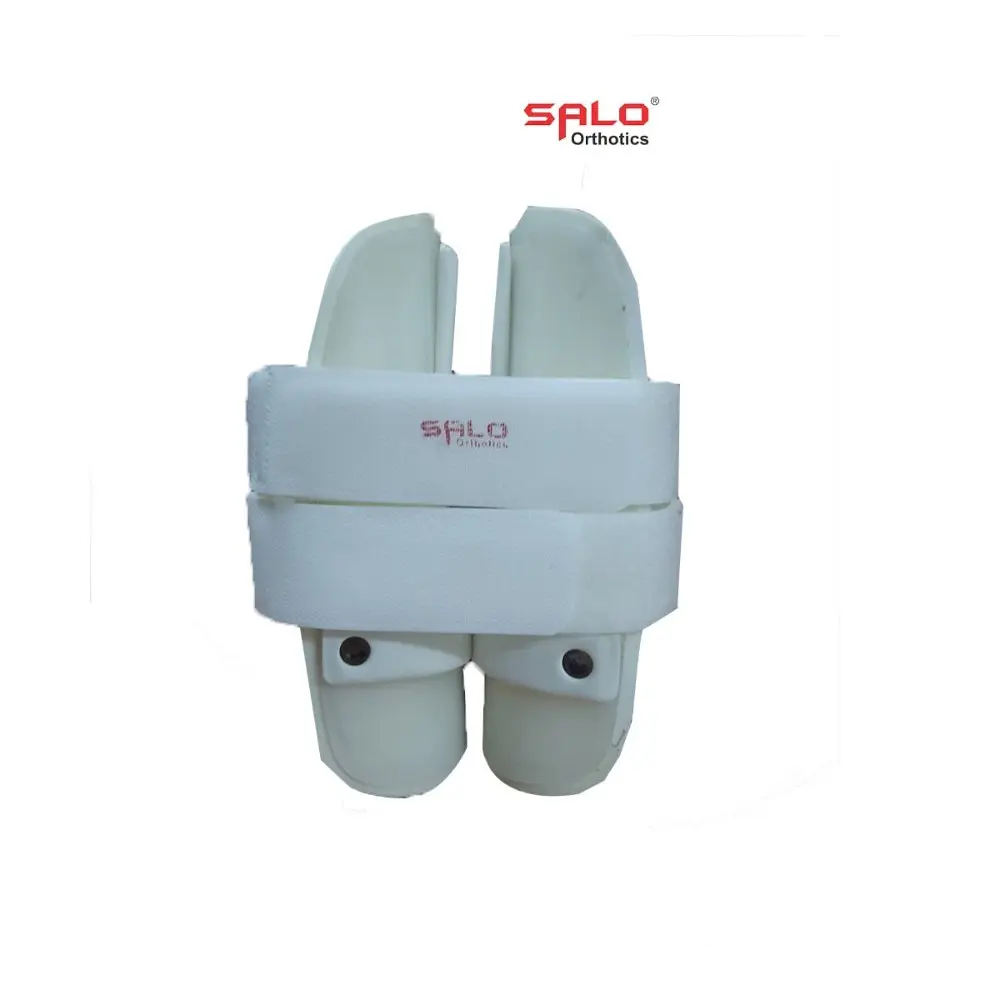
Mermaid Splint
Features
- Bilateral Conjoined Design for Simultaneous Both-Leg Correction
- Two Conjoined Polypropylene Valves for Structural Rigidity & Lightweight Comfort
- Effective Correction of Axial Knee Deformities During Active Disease Phase
- Addresses Bandy-Leg, Bow-Leg & Tibia Vara Deformities
- Velcro Strap Closure for Quick, Secure & Parent-Friendly Application
- Soft Foam Padding for Infant & Toddler Skin Protection
- Overnight Positional Correction for Maximum Developmental Impact
Mermaid Splint Bilateral Paediatric Bow Leg Corrective Orthosis for Genu Varum, Blount's Disease, Tibia Vara & Lower Limb Axial Deformity Management
The Mermaid Splint is a purpose-designed bilateral paediatric corrective orthosis developed specifically for the management of genu varum (bow leg) and related axial lower limb deformities in infants, toddlers, and young children. Named for the distinctive appearance created by its conjoined bilateral shell which holds both lower limbs together within a single integrated orthotic structure the Mermaid Splint delivers a gentle, sustained, and simultaneously bilateral corrective positional force to both legs during rest and sleep, actively guiding the developing bony and soft tissue structures of the lower limb towards correct anatomical alignment during the critical window of paediatric skeletal plasticity when orthotic intervention is most biologically effective.
Understanding Genu Varum: Physiological vs Pathological Bow Leg
Genu varum the outward bowing of the lower legs resulting in a gap between the knees when the feet are placed together is a normal and expected finding in infants and toddlers up to approximately 18 to 24 months of age, reflecting the physiological tibial torsion and varus alignment that is typical of the intrauterine position and early post-natal skeletal development. In the vast majority of healthy children, this physiological bowing gradually resolves spontaneously as the child begins weight-bearing and the lower limb's mechanical axis progressively corrects towards neutral alignment over the first two to three years of life.
However, a clinically significant subset of children present with bowing that persists beyond the expected self-resolution window, continues to worsen rather than improve, or arises from a pathological cause most commonly Blount's disease (tibia vara), in which abnormal compression of the medial aspect of the proximal tibial physis drives progressive varus angulation that will not resolve without intervention; rickets and metabolic bone disease, where impaired mineralisation prevents normal bony modelling; or post-traumatic growth disturbance following physeal injury. In these presentations, active corrective intervention of which the Mermaid Splint is the first-line orthotic option is required to prevent the deformity from progressing to a severity that necessitates surgical correction.
Why the Bilateral Conjoined Design Matters Clinically
The defining structural feature of the Mermaid Splint the conjoined bilateral configuration that holds both lower limbs within a single connected shell is not merely an aesthetic characteristic but a clinically purposeful design decision rooted in the biomechanics of bilateral genu varum correction. In a symmetrically bow-legged child, the corrective forces required at each knee are mirror images of each other: a medially directed force at the lateral aspect of each knee, with opposing counter-forces at the medial thigh and medial calf of each limb simultaneously. The conjoined shell achieves this bilateral corrective force system within a single integrated device, eliminating the need for two separate splints that must be individually positioned and separately secured simplifying the application process for parents, ensuring that both limbs receive simultaneous and symmetrically equivalent corrective forces throughout each wearing session, and creating the mechanical coupling between the two lower limbs that makes the Mermaid Splint uniquely effective for bilateral presentations.
The Developmental Biology of Overnight Splinting
The prescription of the Mermaid Splint for overnight use is grounded in the biological properties of the paediatric skeletal system and the mechanical principles of Wolff's Law the established principle that bone adapts its structure and alignment in response to the mechanical forces acting upon it. In young children, the bones of the lower limb are composed predominantly of woven bone with a high proportion of cartilaginous growth plate tissue, making them significantly more responsive to sustained mechanical loading and positional forces than the mature lamellar bone of adults. Corrective forces applied consistently and for sustained periods during sleep when the child is stationary and the forces can act uninterrupted on the developing tissue produce their greatest biological effect through progressive remodelling of the physeal growth pattern, periarticular soft tissue lengthening on the compressed medial side, and gradual correction of the angular relationship between the femoral and tibial mechanical axes.
The clinical importance of intervening during the active phase of the deformity before significant bony structural change has occurred cannot be overstated. The Mermaid Splint is specifically designed for this early intervention window, where the deformity is present but the tissues remain sufficiently plastic to respond meaningfully to conservative positional correction, and where consistent overnight splinting can halt progression and initiate correction before the degree of deformity advances to the threshold that requires surgical management.
Practical Design for Real-World Family Compliance
The clinical effectiveness of any paediatric orthosis is inseparable from the family's ability and willingness to apply it correctly and consistently across the prescribed wearing schedule. The Mermaid Splint addresses each of the practical barriers to compliance that are most commonly cited by parents: the Velcro strap system allows rapid, straightforward, and independently correct application at bedtime without specialist assistance; the soft foam padding prevents the discomfort and skin irritation that cause children to resist splint wear and parents to reduce wearing time; and the lightweight polypropylene construction avoids the bulk and weight that make rigid bilateral splints intolerable for young children during sleep. These features collectively support the consistent, prolonged wearing schedules that produce the cumulative corrective effect that determines clinical outcomes in paediatric deformity management.
Monitoring, Review & Treatment Duration
Regular clinical review throughout the course of Mermaid Splint use is essential to assess the child's response to treatment, monitor skin integrity at all pressure points, verify that the device continues to fit correctly as the child grows, and determine the appropriate duration and end point of orthotic management based on clinical and radiographic assessment. The treating orthopaedic surgeon or orthotist will typically review the child at intervals of six to twelve weeks, assessing the tibiofemoral angle clinically and radiographically to document the trajectory of correction and adjust the management plan accordingly. Device sizing should be reviewed at each appointment, as the rapid growth characteristic of early childhood means that a splint that fitted correctly at the start of treatment may require adjustment or replacement within a few months to maintain the therapeutic effectiveness of the corrective interface.
Indicated For
Paediatric genu varum (bow leg) persisting beyond the physiological self-correction window, Blount's disease (tibia vara) in early-onset presentations amenable to conservative management, metabolic bone disease-related tibial bowing (rickets, renal osteodystrophy), bilateral bow leg requiring simultaneous two-limb corrective intervention, pathological bandy-leg deformity, post-traumatic varus malalignment in skeletally immature patients, and any paediatric axial lower limb deformity presenting during the active developmental phase where consistent overnight positional correction is the primary therapeutic strategy.
Add your review
Your email address will not be published. Required fields are marked *
Please login to write review!
Looks like there are no reviews yet.

M. A. Medical Supports