GFC Tubes Explained: How Growth Factor Concentrate Tubes Work in Hair Restoration and Skin Rejuvenation
GFC Tubes Explained: How Growth Factor Concentrate Tubes Work in Hair Restoration and Skin Rejuvenation
Growth Factor Concentrate (GFC) therapy has become a talking point in hair restoration and aesthetic medicine, and it all starts with a deceptively simple piece of equipment: the tube. Understanding what a GFC tube does, and how it differs from the PRP tubes many clinics already use, helps practitioners choose the right consumables and deliver more consistent results. Here's a practical overview.
What Is a GFC Tube?
A GFC tube is a sterile, single-use blood collection tube designed for preparing autologous growth factor concentrate, meaning a preparation made entirely from the patient's own blood. Standard 10ml tubes are individually pouched and fitted with a secure screw cap.
What sets it apart is its activator-based design. Inside the tube, a platelet activator triggers the release of growth factors stored in the platelets, so the concentrate can be prepared in the clinic through a short, repeatable workflow, typically a single spin.
GFC vs. PRP: What's the Difference?
Many clinics already offer platelet-rich plasma (PRP), and the two treatments are related but not identical. The key difference is what ends up being injected.
- PRP is a concentrate of platelets suspended in plasma. PRP tubes usually contain an anticoagulant, such as citrate, to prevent clotting so the platelets stay intact.
- GFC is the growth factor-rich fraction released after the platelets have been activated. Here the platelets are intentionally activated inside the tube, and the resulting solution concentrates the signaling proteins platelets normally release at an injury site, without the cell layer that PRP contains.
Neither is automatically "better." They are different tools, and the right choice depends on clinical goals, practitioner experience, and the evidence available for a given indication.
How Growth Factors Work
Platelets store growth factors in their alpha granules and release them when activated. Key factors in platelet-derived preparations include bFGF, VEGF, IGF-1, TGF-β1, and PDGF-BB, all of which play roles in wound healing and tissue regeneration. In scalp and skin treatments, they are thought to act on several fronts at once:
- Stimulating dermal fibroblasts and collagen production
- Encouraging new capillary growth around hair follicles and in the skin
- Supporting follicle cells in the growth phase of the hair cycle
- Helping regulate local inflammation during tissue repair
Common Clinical Applications
Hair restoration. Hair loss is the most common indication. GFC is injected into thinning areas of the scalp to stimulate underactive follicles and improve scalp health. Clinical use has been associated with reduced shedding and improved density and thickness over time, particularly in androgenetic alopecia (male and female pattern hair loss). It may be used alone for early-to-moderate thinning, or alongside topical minoxidil, oral therapy, or hair transplant surgery to support recovery.
Skin rejuvenation. In aesthetic practice, autologous platelet preparations are used for fine lines, acne scarring, melasma, stretch marks, thin skin around the eyes, and rejuvenation of the face, neck, and hands. GFC is commonly applied through microneedling or intradermal micro-injections.
Dental and orthopaedic use. Platelet concentrates are well established in dentistry, for example in implant and periodontal work, and are used in some orthopaedic and sports medicine settings. Practitioners should choose the preparation that matches their clinical goal and the evidence behind it.
The Preparation Workflow
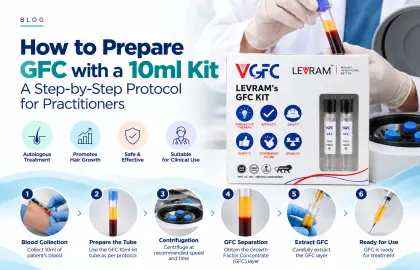
While the exact protocol should always follow the tube manufacturer's instructions, a typical GFC preparation looks like this:
- Prepare the patient and draw venous blood using sterile technique. Label every tube with the patient's details before drawing.
- Fill the tube to the indicated level and invert gently as directed.
- Allow activation. A common protocol involves standing time of around 30 minutes in the tube.
- Centrifuge according to the validated protocol for your specific tube and centrifuge.
- Draw off the growth factor-rich fraction from the top layer with a sterile syringe.
- Apply by injection or microneedling, as clinically indicated.
Consistency matters. Research on platelet-derived preparations has shown that growth factor yields can differ significantly between protocols, and some commercial systems can give unpredictable levels of bioactive factors from sample to sample. For that reason, clinics should stick to the protocol recommended for their tube, centrifuge, and activator system, and apply it the same way every time.
Choosing Between Tube Sizes
GFC tubes are commonly available in smaller and larger capacities, such as 5ml and 10ml.
- 5ml tubes suit focused, small-area treatments or lower-volume protocols.
- 10ml tubes give more concentrate per draw, which helps with larger areas, multi-zone treatments, or combined scalp and facial sessions.
Many clinics keep both sizes in stock and match the tube to the treatment plan.
Safety and Responsible Use
Because GFC is autologous, its safety profile in clinical use is generally considered favorable, with little risk of allergic reaction or disease transmission from donor material. Even so, a few principles apply:
- Trained practitioners only. Treatment should be carried out by qualified clinicians in a clinical setting.
- Sterile, single-use consumables. Never reuse tubes, needles, or syringes.
- Patient screening. Treatment may be unsuitable for patients with certain blood disorders, active infection at the treatment site, or those on anticoagulant therapy.
- Proper consent and documentation. Follow local regulations for autologous blood-derived procedures.
Setting Realistic Expectations
GFC is a relatively new therapy. Early evidence in hair loss is promising, but much of it comes from small studies, so honest communication is essential. Good practice includes:
- Explaining that multiple sessions are usually needed
- Making clear that results develop gradually and vary between patients
- Avoiding any promise of guaranteed outcomes
- Assessing candidacy carefully, since treatment tends to suit early-to-moderate thinning better than advanced baldness
Storage and Handling of Unused Tubes
- Keep unopened tubes in their original sealed pouch, in a cool, dry place away from direct sunlight
- Follow the storage conditions printed on the pack
- Check the expiry date before use
- Do not use a tube if the pouch is damaged or the seal is compromised
- Dispose of used tubes as clinical sharps and biohazardous waste
What to Look for When Buying GFC Tubes
- Sterility and packaging: Individually pouched, sealed, single-use tubes
- Clear instructions for use: Including fill level, activation time, and centrifuge settings
- Capacity options: The tube sizes you need for your treatment mix
- Quality documentation: Manufacturing and quality certifications relevant to your region
- Reliable supply: Consistent availability and delivery, with bulk pricing options for regular use
Final Thoughts
The humble GFC tube is where the whole treatment begins. A sterile, well-designed, activator-based tube, combined with a consistent protocol and honest patient communication, is the foundation for dependable results in hair restoration and skin rejuvenation. As with any emerging therapy, the clinics that do best are those that pair good equipment with solid training, careful patient selection, and realistic expectations.
GFC Kits

-58%
-50%

-55%
Latest Posts