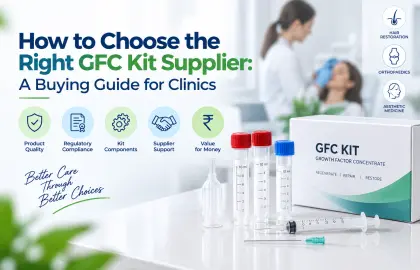
The Business Case for GFC: Pricing, Margins, and Patient Value for Clinics
The Business Case for a 10ml GFC Kit: Pricing, Margins, and Patient Value for Clinics
Adding a new treatment to your menu is both a clinical and a financial decision. For hair restoration clinics, GFC (Growth Factor Concentrate) is attracting growing patient interest, and an extended-volume 10ml kit can change how you price, package, and deliver sessions. This guide walks through how to think about the numbers so you can make a confident, practical decision.
The figures in this article are illustrative frameworks, not guaranteed outcomes. Your actual costs, pricing, and results will depend on your market, patient mix, and the supplier terms you negotiate.
Why Volume Matters Commercially
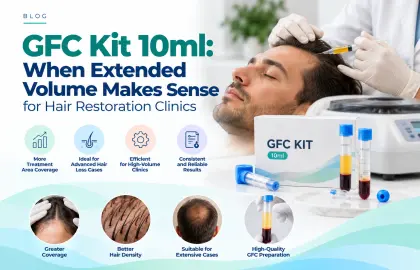
A 10ml kit processes a 10ml blood draw into roughly 7-8ml of concentrate, according to manufacturer specifications. That extra volume matters for business in three ways:
- Broader coverage per session. You can treat large or multi-zone areas in a single visit without rationing product.
- Fewer compromises. Treating the hairline, temples, crown, and vertex together supports a more complete, professional result.
- Premium positioning. Comprehensive scalp treatments can justify a higher session fee than a limited, single-zone treatment.
Step 1: Work Out Your Real Cost Per Session
Many clinics only count the kit price, which understates true cost. A fuller per-session cost includes:
- Kit cost (tubes, syringe, needle, collection set)
- Consumables (antiseptic, gloves, topical anesthetic, injection needles or micro-needling tips)
- Practitioner time (blood draw, processing, injection, consultation)
- Room and equipment time (including centrifuge use and maintenance)
- Overheads (rent, utilities, admin, marketing)
A simple formula to keep in your spreadsheet:
Cost per session = kit + consumables + staff time + room/equipment share + overhead share
Once you know this number, you can set prices with confidence rather than guessing what the market will bear.
Step 2: Decide Your Pricing Model
Different clinics take different approaches. Common options include:
Per-session pricing. Straightforward and easy to explain, but patients may be tempted to delay or skip sessions.
Treatment packages. A series of sessions at a bundled rate encourages commitment to the full protocol, which tends to support better results and better retention. Because GFC protocols typically involve multiple sessions followed by maintenance, packages are a natural fit.
Tiered offerings. Many clinics offer a smaller-volume option for localized concerns and a premium comprehensive option using the extended-volume kit for full-scalp or multi-zone treatment.
Add-on pricing. Offering GFC alongside micro-needling, laser therapy, or topical treatments as a combined program can raise average ticket value while giving patients a more complete plan.
Research local competitors and stay realistic about what your patient base will pay, but avoid competing purely on being the cheapest. Clinical quality and consistent results are what build a lasting reputation.
Step 3: Understand Your Break-Even Point
Break-even tells you how many treatments you need to perform to cover your setup costs. Consider:
- Initial investment (centrifuge, training, marketing materials, consent and photography systems)
- Ongoing cost per session
- Your price per session or package
Break-even sessions = initial investment ÷ (price per session − cost per session)
If your clinic already offers PRP or other injectables, you may already own much of the necessary equipment, which can shorten the payback period significantly.
Step 4: Use Bulk Purchasing Wisely
Suppliers often offer better rates for larger orders, and some provide dedicated clinic and hospital pricing. To make bulk buying work for you:
- Estimate monthly treatment volume realistically before ordering large quantities
- Check expiry dates and storage requirements so stock doesn't go to waste
- Ask about quote options for repeat or standing orders
- Prioritize supplier reliability and consistent quality over the lowest possible unit price
A request-a-quote conversation with a supplier is a good opportunity to ask about documentation, lead times, and ongoing support, not just price.
Step 5: Protect Margins with Consistent Processes
The fastest way to erode profitability is inconsistency. Common leaks include:
- Wasted kits from processing errors
- Repeated sessions to correct poor technique
- Patient dissatisfaction from unmet expectations
- Staff time lost to unclear protocols
Standardize your workflow: a written checklist, timed activation, calibrated centrifuge settings, and staff training. A reliable process protects both outcomes and margins.
Step 6: Build Patient Retention
GFC therapy works through a series of sessions plus periodic maintenance, which makes it a strong retention opportunity. Ways to support it:
- Set expectations early. Explain the full treatment plan, not just the first session.
- Track progress. Standardized before-and-after photos (with consent) help patients see gradual change and stay motivated.
- Schedule ahead. Book the next session before the patient leaves.
- Follow up. Short check-ins after treatment build trust and catch concerns early.
- Offer maintenance plans. Periodic top-up sessions can become a steady, predictable source of repeat visits.
Step 7: Market the Treatment Honestly
Patients are increasingly informed and cautious. Strong marketing for GFC focuses on:
- Clear, plain-language education on what GFC is and how it differs from PRP
- Realistic expectations: results develop gradually and vary by individual
- Transparency about candidacy, since the treatment tends to suit early-to-moderate thinning best
- Real, consented patient photos and honest timelines rather than exaggerated claims
Overpromising may bring in bookings quickly, but it damages trust and reputation over time. Honest communication tends to produce better reviews and more referrals.
Who Are Your Best Target Patients?
An extended-volume kit is especially useful for:
- Patients with widespread or multi-zone thinning
- Women with diffuse thinning
- Patients seeking support after a hair transplant
- People who want a non-surgical option before considering more invasive treatments
- Existing clients already using other aesthetic or hair services at your clinic
Risks and Responsibilities
A sound business case includes the less glamorous side too:
- Training and competence. Make sure every practitioner is properly trained and supervised.
- Sterility and safety. Strict aseptic technique is non-negotiable.
- Consent and documentation. Keep thorough records and follow local regulations for autologous blood-derived treatments.
- Realistic outcomes. Not every patient is a good candidate, and saying so protects your reputation.
Questions to Ask Before You Commit
- What is my true cost per session, including time and overheads?
- What price will my local market support for a comprehensive treatment?
- How many sessions per month can I realistically perform?
- Do I already have the equipment and trained staff I need?
- Which supplier offers reliable quality, documentation, and bulk pricing?
Final Thoughts
A 10ml GFC kit can be a smart commercial addition when it's matched to the right patients, priced on a clear understanding of your real costs, and delivered through consistent, well-documented processes. The clinics that do best with GFC tend to focus less on short-term volume and more on honest consultation, solid technique, and long-term patient relationships.
GFC Kits
-58%
-50%

-55%
Latest Posts