Managing Back Pain and Discomfort During Pregnancy: Practical Relief Tips
Managing Back Pain and Discomfort During Pregnancy: Practical Relief Tips
Back pain is one of the most common complaints during pregnancy, affecting a large majority of expectant mothers at some point in their journey. While some discomfort is a normal part of your body adapting to carry and support a growing baby, there's a lot you can do to ease the ache and sleep, sit, and move more comfortably. Here's a practical guide to understanding why it happens and what actually helps.
Why Pregnancy Causes Back Pain
Several physical changes during pregnancy contribute to back discomfort:
- Weight gain and shifting center of gravity - As your belly grows, your posture naturally adjusts, placing extra strain on your lower back.
- Hormonal changes - The hormone relaxin loosens ligaments and joints in preparation for childbirth, which can also reduce stability in the spine and pelvis, contributing to discomfort.
- Muscle separation - As the uterus expands, abdominal muscles can stretch and separate, reducing core support for the back.
- Postural changes - Many mothers unconsciously lean back to counterbalance a growing belly, which increases strain on the lower back muscles.
Back pain tends to be most common in the lower back and pelvic area, and often worsens as pregnancy progresses, though it can appear at any stage.
Where You're Likely to Feel It
- Lower back pain - The most common type, often related to postural shifts and loosened joints.
- Pelvic girdle pain - Discomfort around the pelvis, hips, or lower back, sometimes worsened by activities like walking, climbing stairs, or turning over in bed.
- Upper back and shoulder tension - Less common, but can occur due to postural changes or increased breast size and weight.
Sleep-Related Relief Strategies
Since back pain often worsens at night - especially when lying flat or in unsupported positions - sleep setup plays a big role in managing discomfort.
Side-sleeping with support Side-sleeping, generally recommended throughout pregnancy, takes pressure off the back compared to lying flat. Adding support in key areas makes a significant difference:
- Under the belly - Reduces pulling and strain on the lower back and abdominal muscles while side-sleeping.
- Between the knees - Keeps the hips aligned, reducing strain on the lower back and pelvic joints.
- Under the hips - Provides additional pelvic support, particularly helpful for pelvic girdle discomfort.
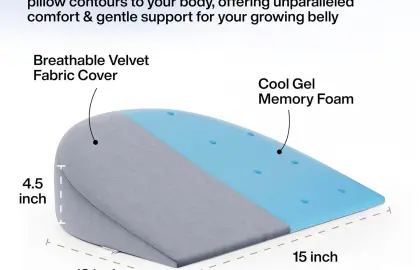
A compact wedge pillow works well for these targeted placements since it can be repositioned throughout the night as discomfort shifts from one area to another - something a larger, fixed-shape body pillow doesn't always allow for as easily.
Avoiding prolonged back-sleeping Lying flat on the back for extended periods can increase lower back strain (in addition to other circulation-related reasons back-sleeping is generally discouraged later in pregnancy). Propping a wedge pillow behind the back while side-sleeping can help discourage rolling onto the back during the night.
Daytime Relief Strategies
1. Mind Your Posture Standing tall with shoulders back and avoiding excessive arching or slouching helps reduce strain. Using a supportive chair with good lower back support while sitting can also help, especially during long periods at a desk.
2. Wear Supportive Footwear Flat, supportive shoes reduce additional strain that heels or unsupportive footwear can place on posture and back alignment.
3. Lift Correctly When picking things up, bend at the knees rather than the waist, and avoid twisting while lifting to protect the lower back.
4. Take Movement Breaks Sitting or standing in one position for too long can increase stiffness. Gentle position changes and short walks throughout the day can help relieve built-up tension.
5. Use a Support Pillow While Sitting A wedge pillow isn't just for nighttime - placing it behind your lower back while sitting on the couch or at a desk can provide the same targeted support during the day.
Gentle Exercise and Movement
Light, pregnancy-safe movement can help strengthen supporting muscles and ease tension, though it's important to check with your doctor before starting any new exercise routine. Commonly recommended options include:
- Prenatal yoga, which focuses on gentle stretching and posture awareness
- Walking, which supports circulation without high impact
- Pelvic tilts, a simple exercise often recommended to relieve lower back tension
- Swimming or water-based exercise, which reduces pressure on joints and the spine
Heat and Gentle Self-Care
- A warm (not hot) compress or heating pad on the lower back can help relieve muscle tension - check with your doctor on safe temperature and duration guidelines during pregnancy.
- Gentle massage, particularly from a prenatal-trained massage therapist, can also offer relief for some mothers.
When to Contact Your Doctor
While mild-to-moderate back discomfort is common during pregnancy, reach out to your healthcare provider if you experience:
- Sudden, severe, or worsening back pain
- Back pain accompanied by fever, vaginal bleeding, or contractions
- Numbness, tingling, or weakness in the legs
- Pain that doesn't improve with rest or positioning changes
These could indicate something beyond typical pregnancy-related discomfort and warrant medical evaluation.
Final Thoughts
Back pain during pregnancy is common, but it doesn't have to be something you simply endure. Small adjustments better sleep positioning, mindful posture, gentle movement, and the right support tools can make a meaningful difference in daily comfort. A wedge pillow, in particular, offers a flexible way to target discomfort wherever it shows up, whether that's your lower back, hips, or belly, making it easier to get through both restful nights and long days more comfortably.
Pregnancy Care Products

-16%

-33%
Latest Posts